

Much argument has been put across on the underlying reasons for the success of Kenyans and Ethiopians in middle and long-distance athletics. Great names including Kipchoge Keino, Tegla Loroupe, Paul Tergat have emerged as athletic giants from Kenya. From Ethiopia, Abebe Bikila, Tirunesh Dibaba, Haile Gebrselassie and Kenenisa Bekele have conquered the track. Pondering on the argument, a MMUST Sports Science Scholar Dr. Peter Bukhala and his colleague Dr. Benoit Gaudin of French Institute for Research and Development (IRD) delved into the discourse. “Should this athletic success of Kenyans and Ethiopians be explained only from a genetic point of view?” the two scholars asked.
During the 1st East Africa Running Athletics Conference in Addis Ababa 2016, five MMUST staff brought their socio-cultural perspectives that were published in the book titled “Kenya and Ethiopia Athletics: Towards an Alternative Scientific Approach” with Benoit Gaudin and Bezabih Wolde as editors, and published by IRD. The MMUST authors each with a book chapter included Dr. Peter Bukhala, Mr. Issa Kweyu, Dr. Eunice Majanga, Dr. Rose Opiyo and Dr. James Ouda. The chapters provide alternative arguments based on socio-cultural explanations to their athletic success.
The book is a product of the 1st East Africa Running Athletics Conference, with thematic areas that include history of running in Kenya and Ethiopia, sociology of running, economics, politics, anthropology, disability, gender and sports for development. The book will be launched in April 2018 in Nairobi
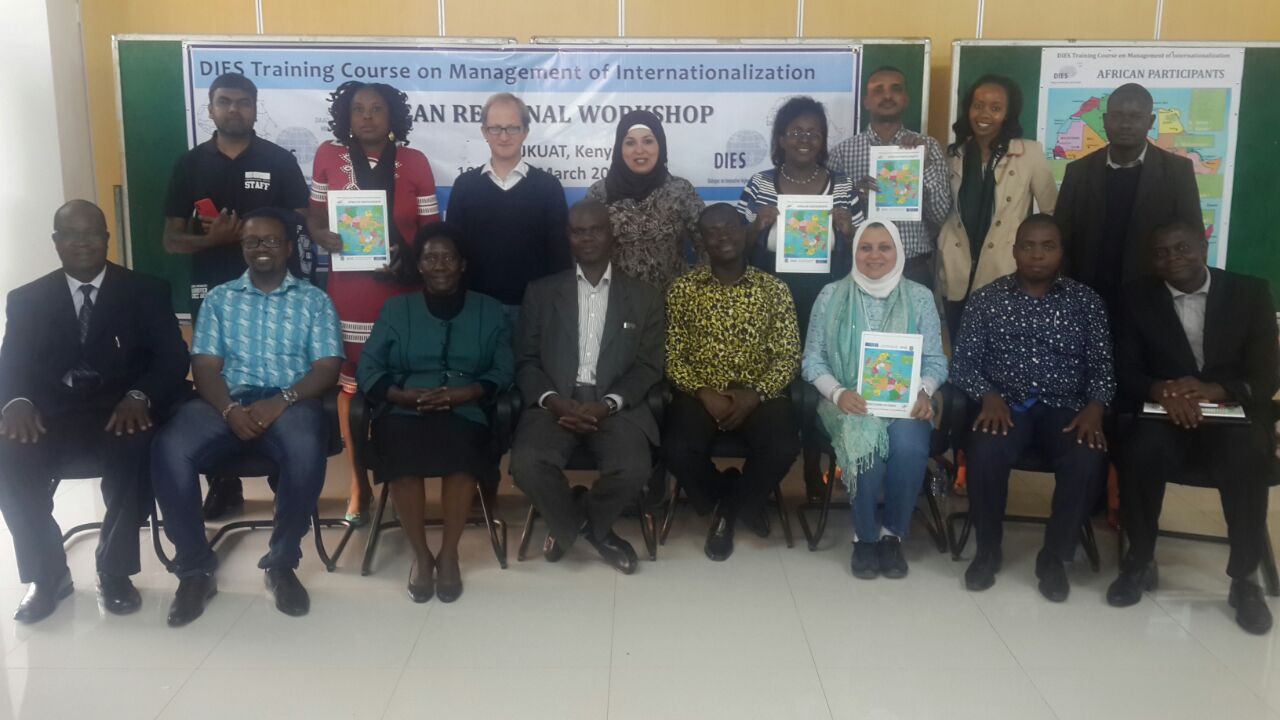 Globalization has stimulated movement towards Internationalisation of Higher Education. This is a pet topic and passion of the MMUST Scholar, Professor Elizabeth Abenga, an expert in Curriculum and Instructional Technology, Internationalisation, and founding Director of International Relations and Academic Linkages at MMUST. Internationalisation of higher education is gaining importance in the operations of all university functions.
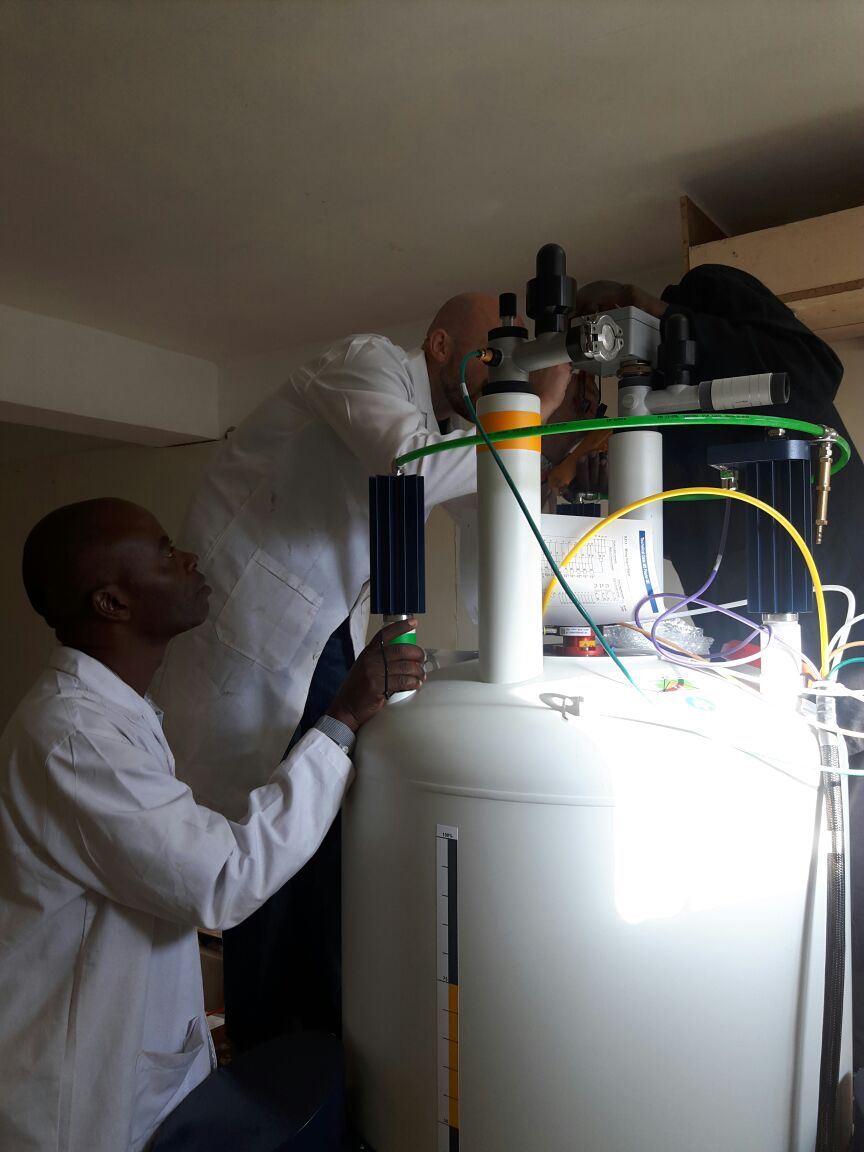 MMUST acquired the first ever Nuclear Magnetic Resonance (NMR) machine in Eastern and Central Africa. NMR is a modern spectroscopic analytical instrument used by researchers to determine the structure of organic substances present in living things and the environment. The Head of Department of Pure and Applied Chemistry Dr. Francis Orata said that “With this latest model of NMR machine, we have the capacity to tell the exact kind of substances that are present in medicinal plants, nutritive traditional vegetables, and other organic materials from living things. It is even possible for us to determine the exact poisonous substances such as aflatoxins in contaminated maize. And we as well can elucidate the compounds contained in genetically modified organisms (GMOs)”.
 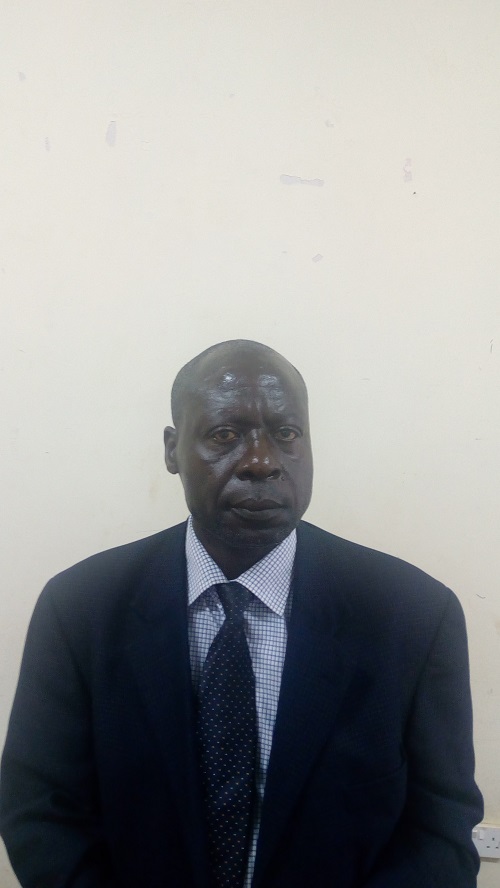 “African governments need to transform their political systems to embrace Development Politics”. This is the rallying call by the MMUST Scholar, Professor Frank K. Matanga, a Political Scientist in the School of Disaster Management & Humanitarian Assistance (SDMHA).
 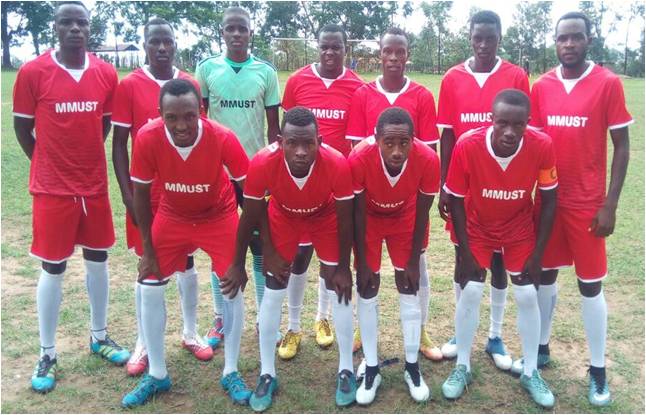 Competition for qualification to the Kenyan Premier League was hot on the afternoon of Sunday 18th March 2018. Tough battle in FKF National Division Two Western Zone League between MMUST FC and Bungoma All Stars yielded a 1:1 draw.
  The Kenya Society for Sports Medicine (KSSM) has appointed Dr. Peter Bukhala of MMUST as Vice Chairman. Dr. Bukhala of the Department of Health Promotion and Sports Science has been instrumental in the formation of KSSM. This society includes a wide range of professionals such as medical doctors, physiotherapists, sports scientists, athletic trainers and coaches.
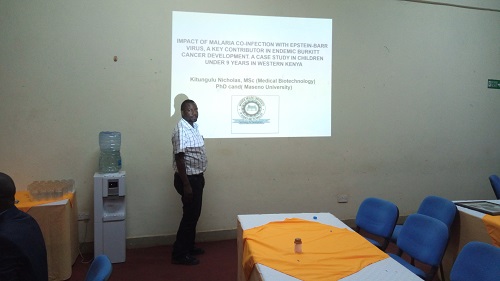 “There is a major killer of children and especially boys on the rise in western Kenya”. This is an alarm raised by the MMUST Medical Biotechnologist Nicholas Kitungulu during the MMUST Melting Pot Research Seminar series on 15th March 2018. An endemic cancer known as “Burkitt lymphoma”, which manifests in the form of fever, swollen glands, frequent or severe infections, shortness of breath or cough, chest pain, swollen stomach, extreme tiredness and weight loss, has been associated with over 70% of cancer-related child deaths in sub-Saharan Africa.