MMUST AFRIAK Fellows Interact with Community Indigenous Knowledge Holders as They Visit Motomwaka’s Indigenous Botanical Garden in Kakamega County
MMUST AFRIAK fellows on 10th March, 2026, interacted with a community indigenous knowledge holder, Johns Wambetsa popularly known as Motomwaka during their visit to his indigenous botanical garden at Navakholo, in Kakamega County. Mr. Wambetsa is a 93-year old revered indigenous knowledge holder. The team, comprising of fellows from 11 African countries, including, South Africa, Cameroon, Tanzania, Botswana, Malawi, Ghana, Zimbabwe, Lesotho, West Africa, Somalia was led by the Project Coordinator, Dr. Lucy Mandillah.
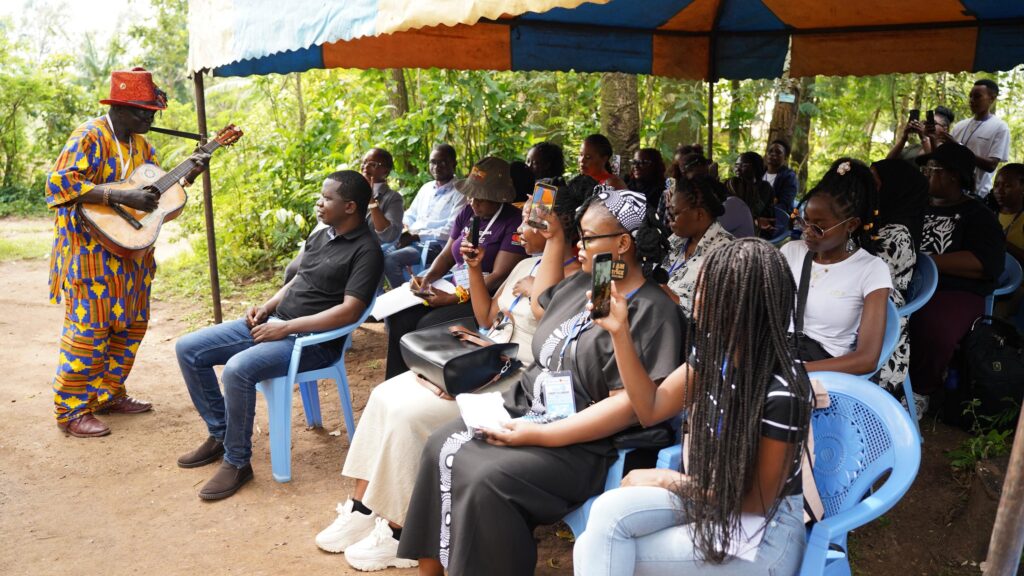
During the field visit, the fellows were treated to traditional music and dance, which punctuated the impactful sharing and learning that took place. Besides Motomwaka, the fellows also interacted with the ‘Moto Mwaka family’, which consisted of community members mentored by Moto Mwaka.
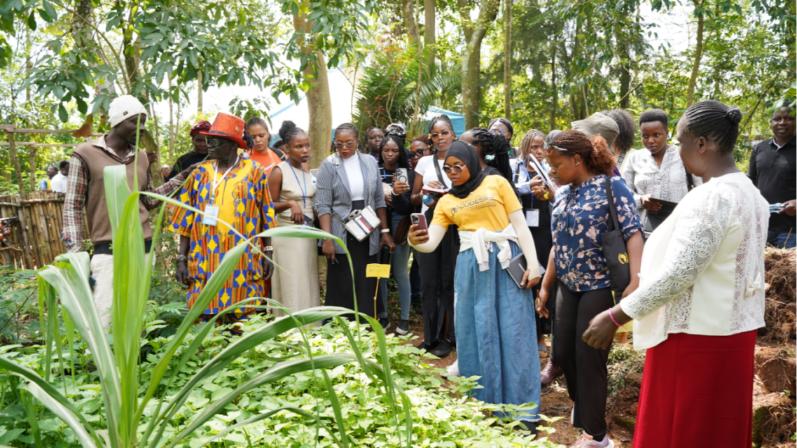
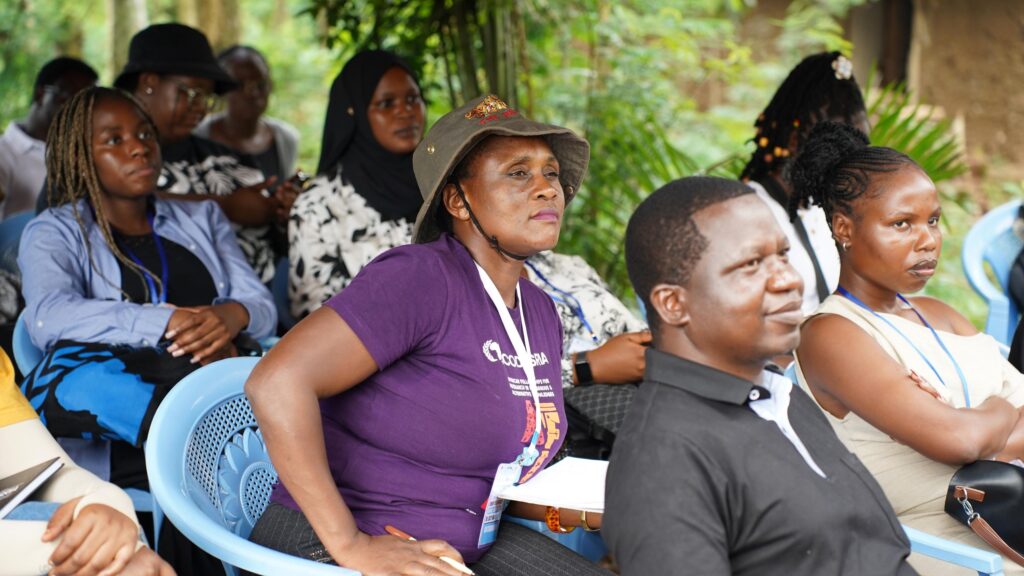
Fellows learn during the field visit.
The event revealed a tapestry of professions and countries, making the entire interaction richer and continental. Some of the notable fellows who interacted closely with the knowledge holder were a clinical nutritionist from Ghana, environmental preservation experts from Tanzania, and indigenous medicine specialists from Botswana.
“I am happy that the fellows and community knowledge holders held discussions and shared critical insights on indigenous plants. However, various challenges also emerged including, lack of recognition of the knowledge holders, lack of finance and market access as well as water scarcity. Reflections on medicinal plants and indigenous knowledge practices provided critical materials for knowledge and future research for the fellows. Indeed, these were not just medicinal plants but a showcase of a Living Indigenous Knowledge Laboratory. I am sure this experience will aid the fellows in their various research pathways,” said Dr. Mandillah, who is also the Deputy Director Institute of Indigenous, Cultural Studies and Climate Change.
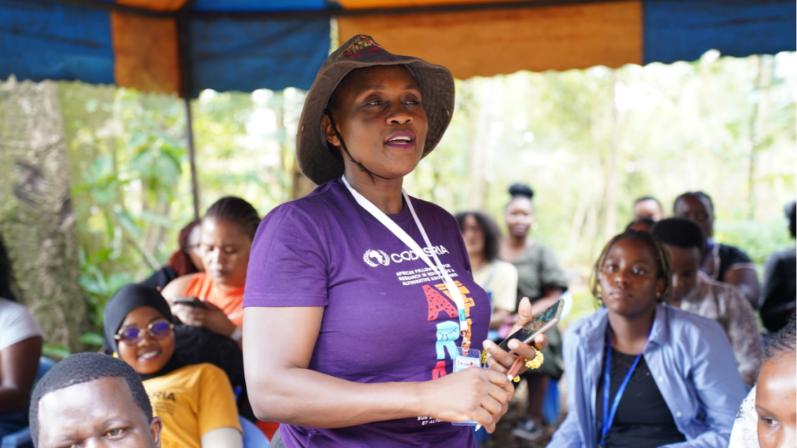
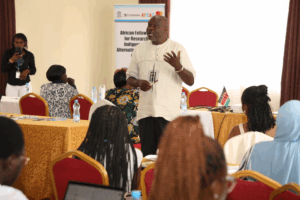
The Project Coordinator and Deputy Director Institute of Indigenous, Cultural Studies and Climate Change, Dr. Lucy Mandillah speaks at the event.
During a tour of the indigenous botanical garden, Moto Mwaka led the group through his fields showing them a treasure trove of medical plants such as Solanium Nigram (Lisutsa) and stinging nettle used to treat ailments like fibroids. The multi-storage garden showcased sustainable farming practices with techniques like sink seedbed, which filters water, preventing overflow and ensuring efficient irrigation; Switzerland bed, which are temporary nurseries for young seedlings before transplanting; and a permanent seedbed.
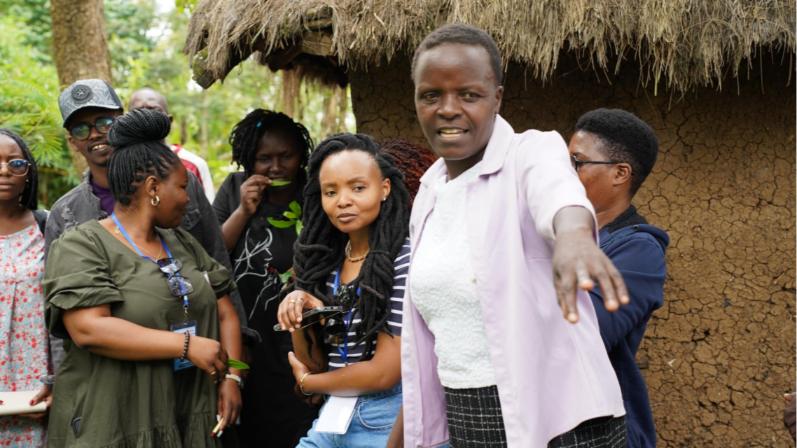
A community member shows the fellows what is going on in the traditional botanical garden.
The farm also featured indigenous trees like Kigelia Aethiopium (Murabe) whose bark is mixed with maize anthers to treat breast and prostate cancer, pressure and menstrual issues. The visit to the seed bank, a clever storage room, highlighted the community’s resourcefulness in preserving indigenous seeds. Motomwaka’s seed bank was a cool, dark, human-friendly storage room that is sustainable, cheap, and health-oriented, used to preserve indigenous seeds such as beans and maize. These cereals were previously stored in guards but are currently stored in glass bottles due to environmental changes.
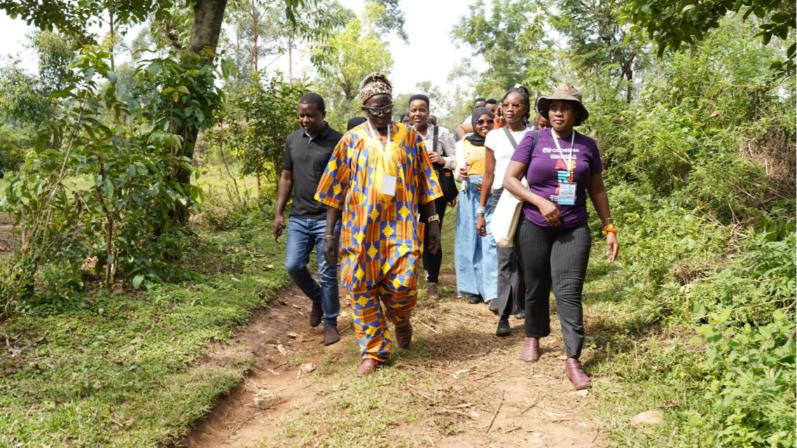
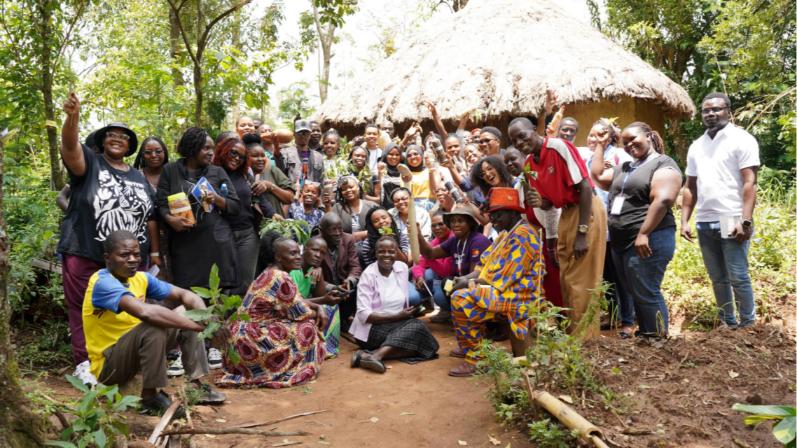
From left, Dr. David Barasa, Motomwaka (centre) and Dr. Lucy Mandillah together with the fellows.
The event was a good avenue for creating networks and memories regarding indigenous knowledge. “I am grateful to have been chosen as the day’s knowledge holder by the Institute of Indigenous Knowledge at MMUST and CODESRIA,” said Motomwaka.
By Dr. Lydia Anyonje, Caren Nekesa, and Ms. Diana Julianna
Photos by Gabriel Juma.