MMUST AFRIAK Fellows Explore Kakamega Tropical Rainforest in Search of Nature’s Blueprints for Indigenous Wisdom in Health and Vanishing Biodiversity
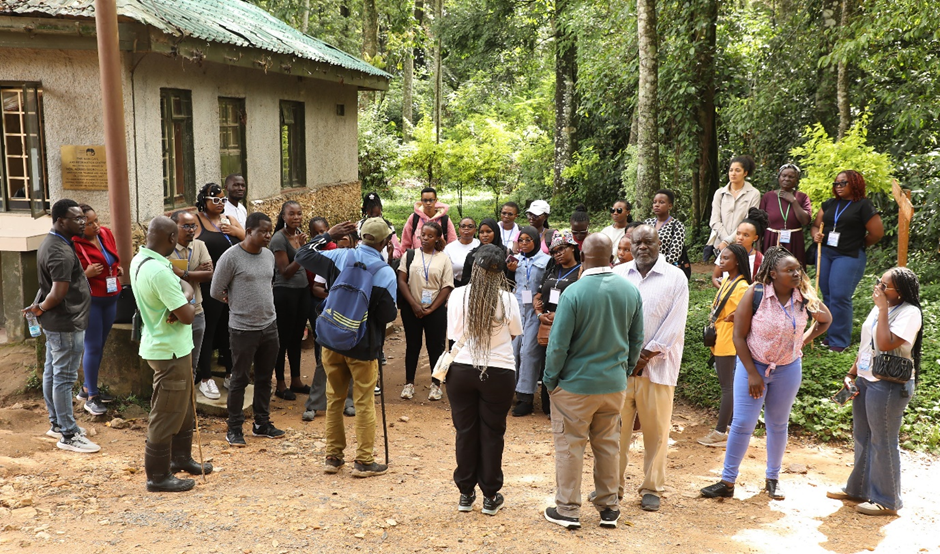
MMUST AFRIAK Fellows on 19th March, 2026, embarked on a high-level expedition into the Northern Section of the Kakamega Tropical Rainforest. Led by MMUST AFRIAK Mentor, Prof. Kenneth Simala and the Project Coordinator, Dr. Lucy Mandillah, the fellows sought nature’s blueprints, a mission to document indigenous health wisdom and safeguard knowledge for the vanishing biodiversity. The expedition began with a symbolic act of restoration. Guided by revered knowledge keeper, ‘Moto Mwaka’, who also donated the seedlings, the fellows and the MMUST UNESCO Club planted 20 medicinal and culturally significant indigenous trees on campus. Each tree represented a fellow’s home nation in a stand for global conservation and the preservation of genetic codes for future health innovations.
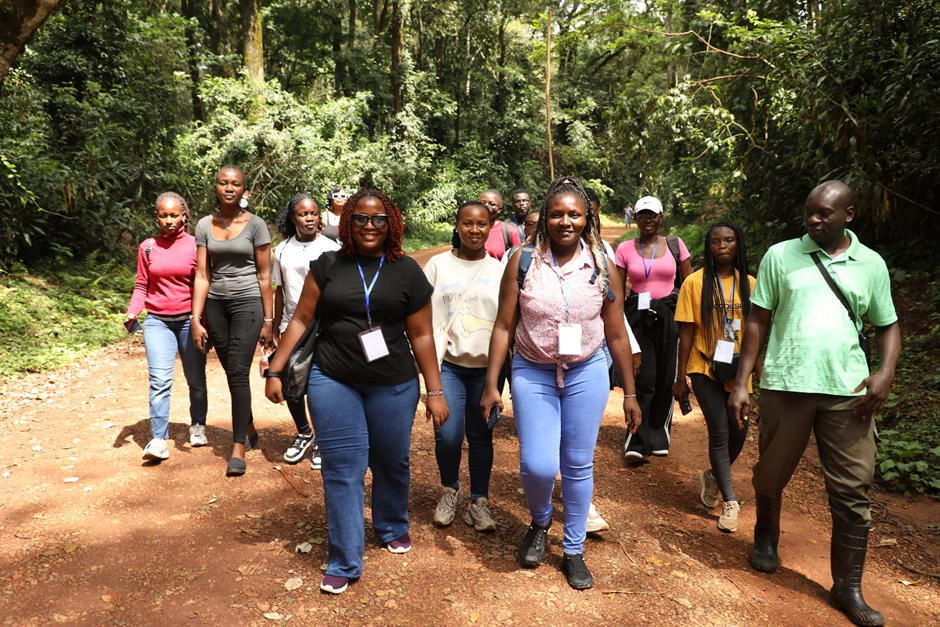
One of the groups on the forest trails. (Far right) Mr. Shitandai Dennis ‘the Snake man’, leading the team.
The tree planting exercise was facilitated by the University’s Greening initiative, represented by Dr. Betty Opilo. The trees planted included Fundumia Latifolia, whose barks and roots are used in treatment of malaria; Acacia tortilis, roots and barks used in treatment of STIs, strengthen joints, and repels snakes from homesteds; Diospyros Abyssinica, traditionally planted at gates to repel those with evil intentions; Funtumia Letropher, known for its traditional use in security (keeps away thieves); Leptostachya, used to attract customers in business settings; Markhamia PlatyCalyx, roots used to treat bloody diarrhea and kidney issues, while leaves are used to improve eye sight; Vernonia Amygladalina, utilized in treating throat cancer and skin rashes; Cyphomandra Betacea, rich in iron and used to stimulate appetite; Aliancy Thoningii, ‘Imbindi’and Nuxia Congesta were also planted for their vital roles in the ecosystem’s medicinal tapestry.
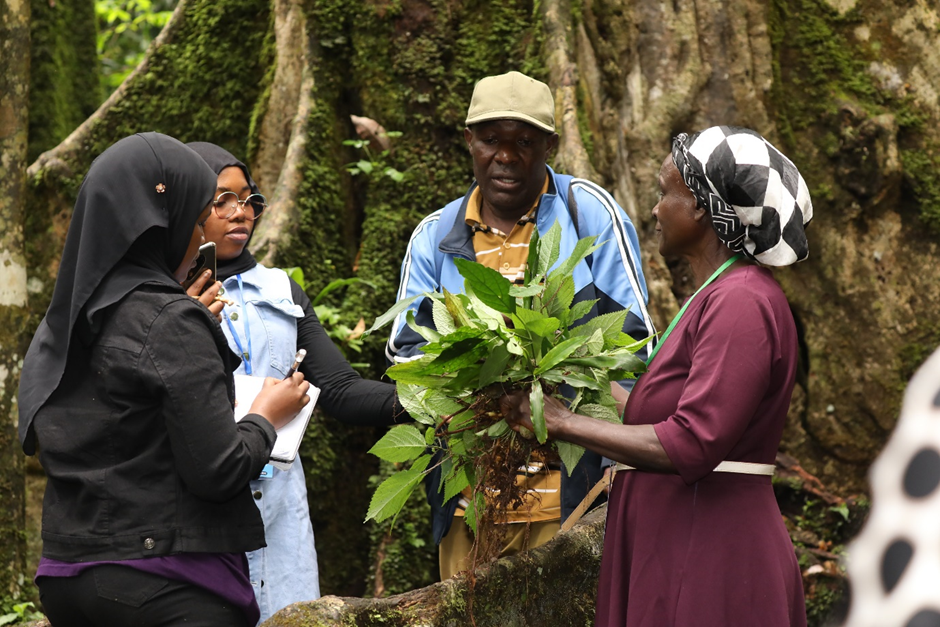
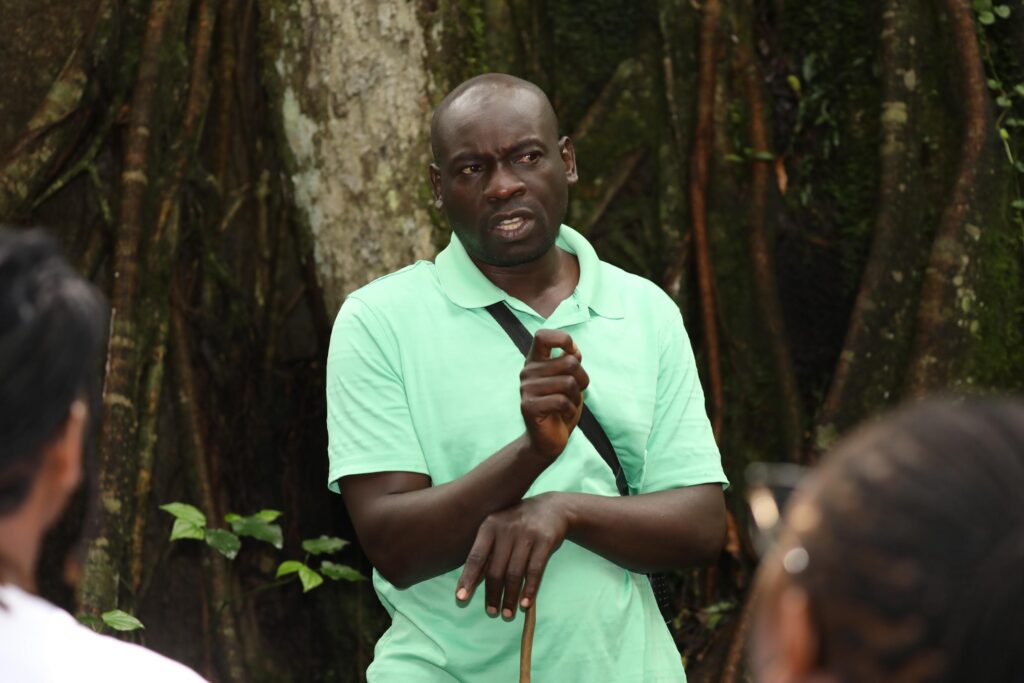
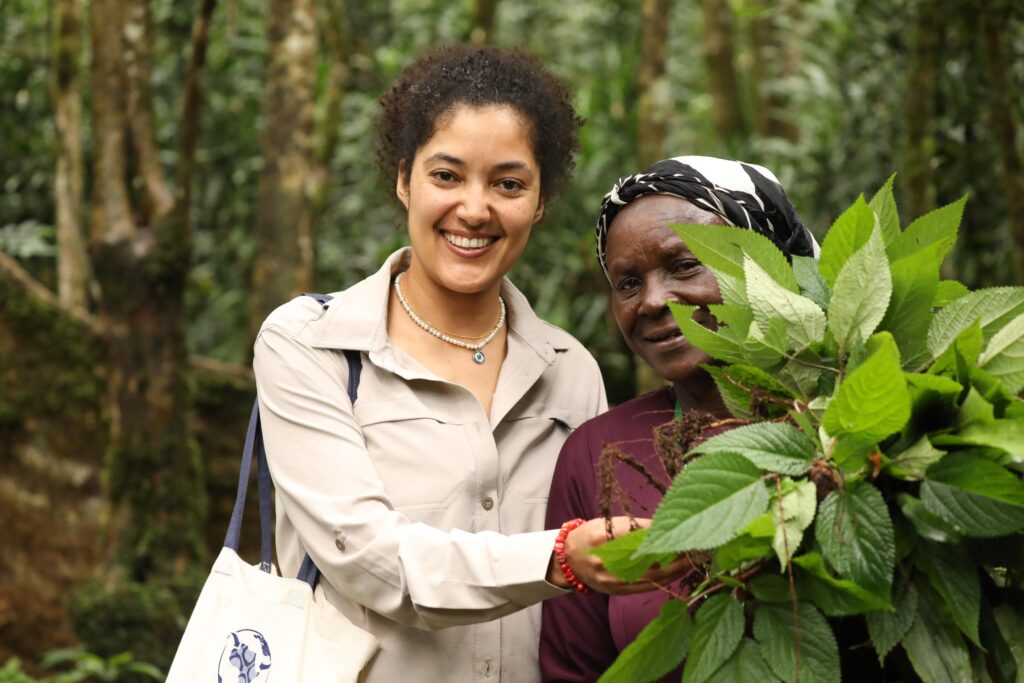
Mr. Nickson Sajita popularly known as ‘Papa ndege’ explaining some of the herbs collected by the knowledge keeper to the fellows.
The urgency of the mission became clear during the expedition in the Northern part of Kakamega Tropical Rainforest. Accompanied by the guides, Mr. Nickson Sajita popularly known as ‘Papa ndege’ and Mr. Shitandai Dennis ‘the Snake man’, the fellows witnessed a world at a crossroads. While the forest remains a powerhouse of diversity, hosting 380 tree species, 500 types of butterflies, 36 species of snakes, and 350 bird species, much of this heritage is under threat. The rare Ipraza monkey and the Potto, a primate found only in this forest, are facing declining populations as their habitats shrink. “Out of the bird species here, 75% are fully dependent on this forest to survive. If we do not protect this ecosystem, we risk losing not just these species, but the profound indigenous knowledge tied to them,” the guides noted.
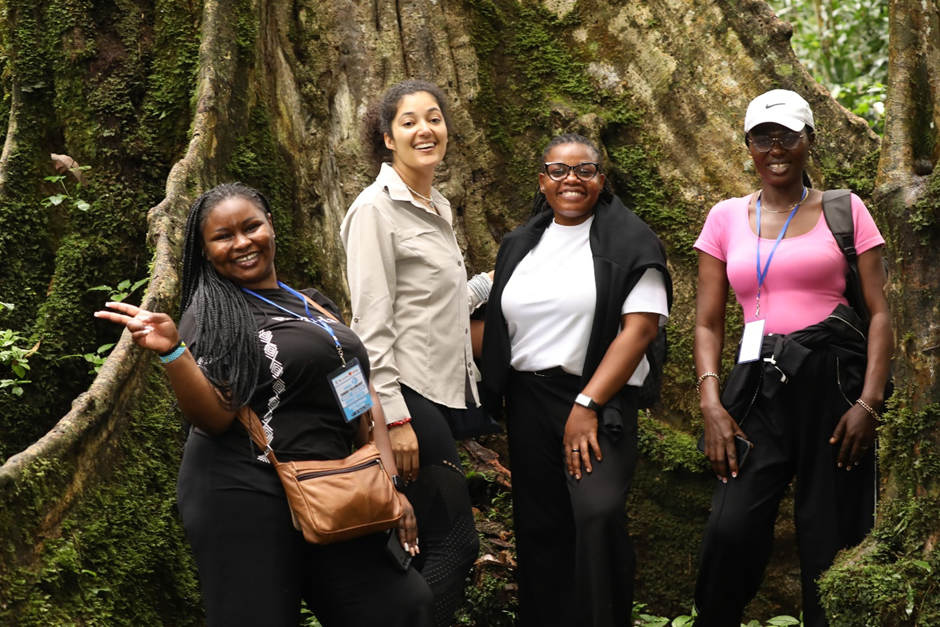
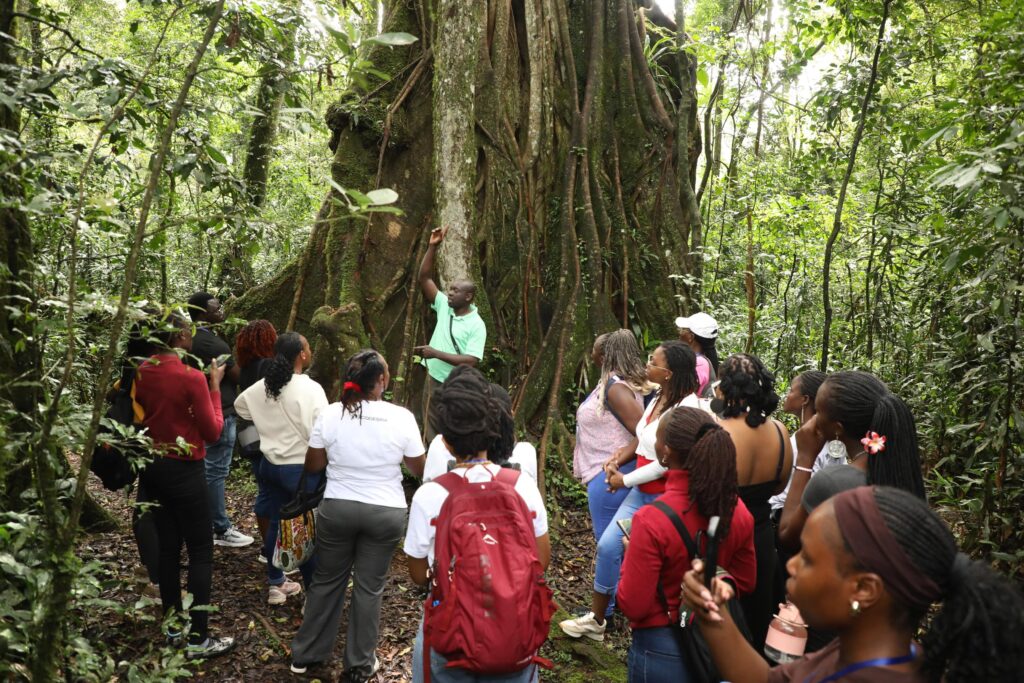
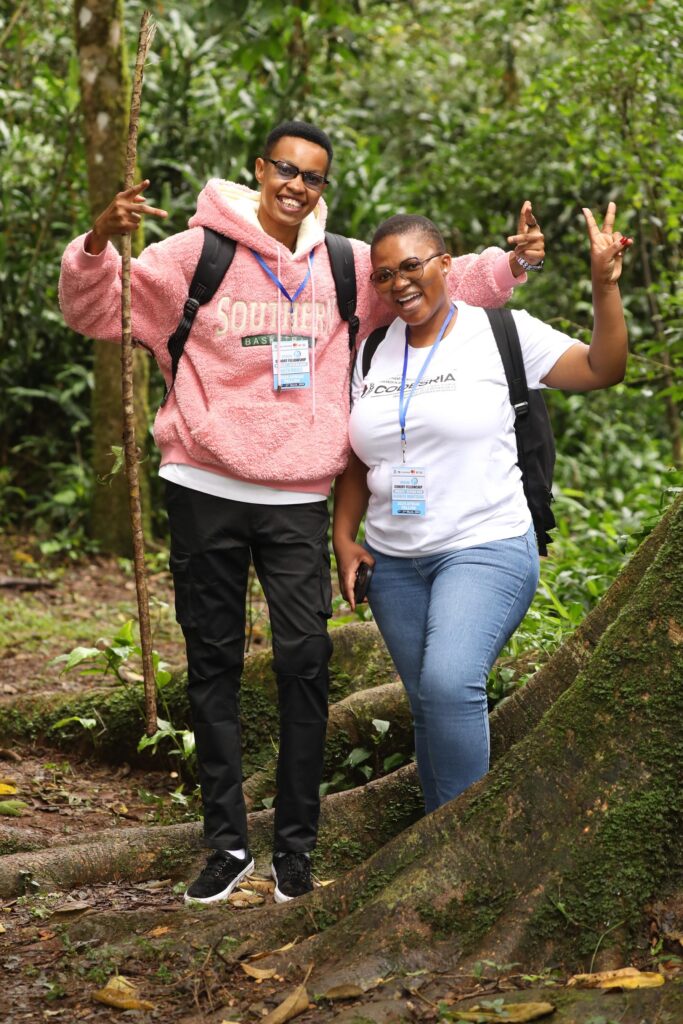
Fellows share moments under the ficus lutea tree, previously used as a place for worship.
Beyond the well-known inhabitants, the forest houses over 1200 plant species, ranging from ancient hardwoods to delicate herbs, and more than 25 species of mushrooms. It is a sanctuary for primates such as the black and white colobus monkey, blue monkey, and the red-tailed monkey. Despite this richness, the guides challenged the fellows to explore ants, saying that they rarely encounter researchers interested in researching ants.
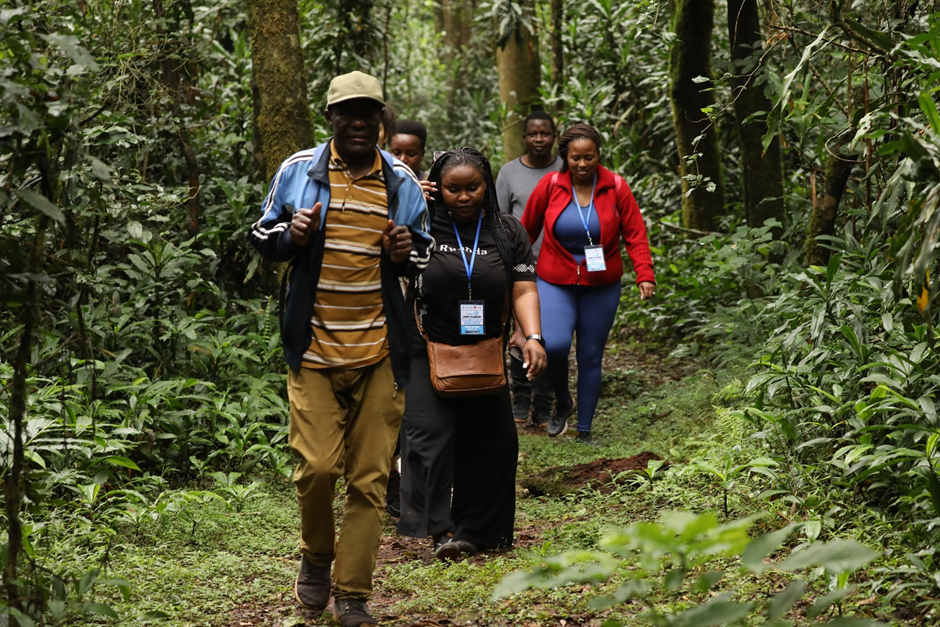
One of the moments through the trails.
The forest is currently managed by the Kenya Wildlife Service (KWS) and the Kenya Forest Service (KFS). While KWS restricts activities to tourism, research, and education, the KFS allows regulated community utilization, including cattle grazing, collection of wood for fuel and building materials such as thatching grass and sand.
Also participating in the expedition were Prof. Peter Bukhala and Dr. David Barasa.
As the fellows concluded their field visit from the forest, one lesson was clear, that Indigenous Knowledge is the bridge between a healthy planet and a healthy person. By documenting these vanishing secrets today, the MMUST AFRIAK Fellows are ensuring that the wisdom of the past becomes the medicine of tomorrow.
By Caren Nekesa
Photos by Shiundu Masafu