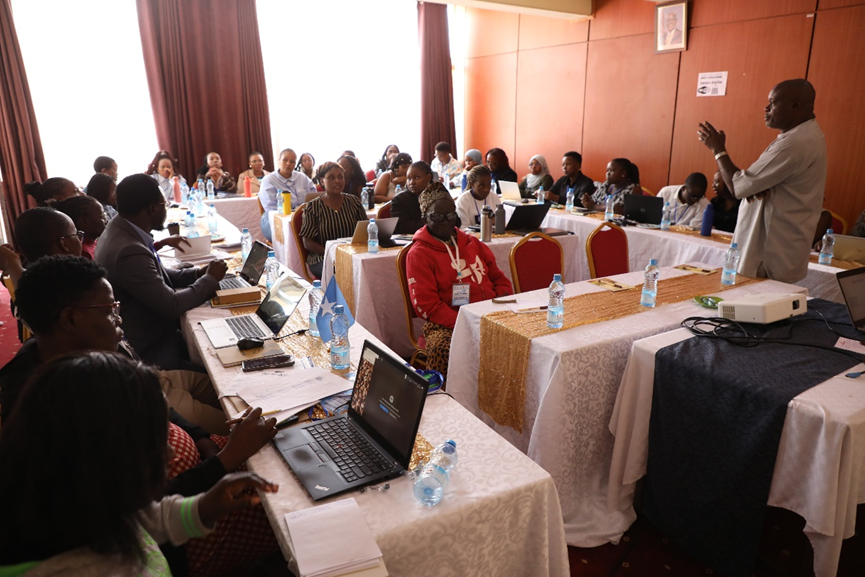
AFRIAK MMUST Contextualizes CODESRIA’s Intellectual Agenda, Tradition and Pan-Africanism
Participants at the AFRIAK MMUST have contextualized CODESRIA’s Intellectual Agenda, Tradition and Pan-Africanism. This was made possible through the presentations from AFRIAK MMUST Mentor, Prof. Kenneth Simala, interactions with Indigenous Knowledge Holders (IKH)from the community, and learning of Kiswahili – a new language to many of the fellows.
Prof. Simala immersed the participants in the CODESRIA tradition and agenda, explaining to them the different pathways that the regional body stands for. This was especially so for purposes of demystifying the essence of what it means to be African and to value africanness and African practices.
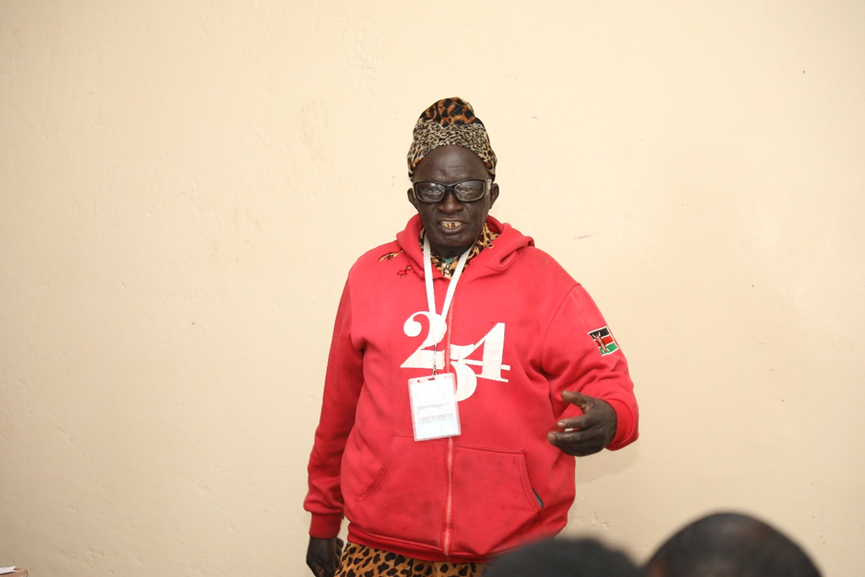
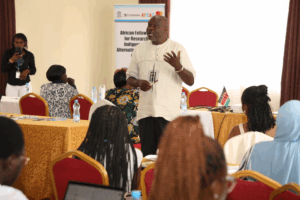
Moto Mwaka, one of the Indigenous Knowledge Holders (IKH) from the community engage the fellows during one of the sessions.
One of the highlights of the day was the exciting one-on-one interaction with Moto Mwaka, one of the renowned IKHs in the region. He explained to them what he does, and showcased some of his products, stirring a lot of interest in the fellows. Notably he is 93 years old yet he can still run very fast and engage in rigorous activities.
Regarding learning the Kiswahili language, it was interesting to witness the keen interest by participants to learn Kiswahili, a language that unites many African countries. This session was facilitated by Mr. Shadrack Opunde from the School of Arts and Social Sciences alongside 8 fellows from Tanzania.
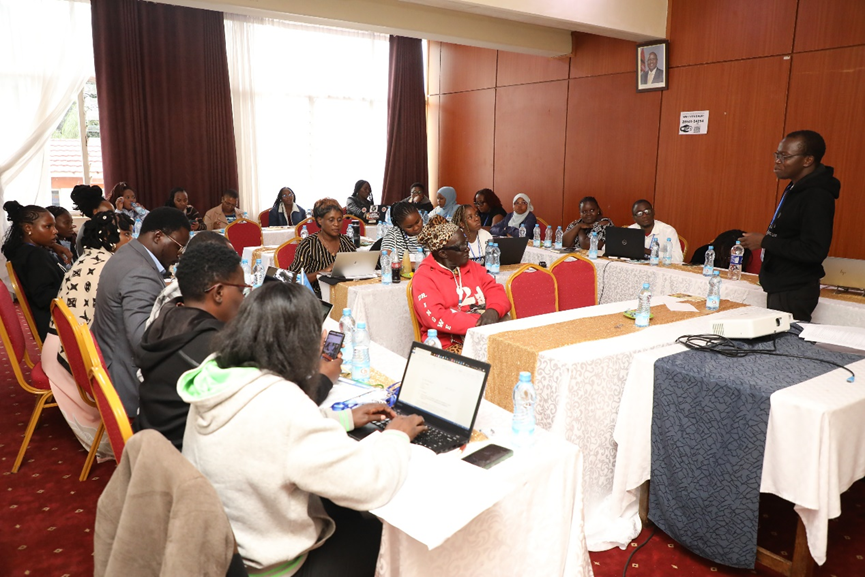
Mr. Shadrack Opunde assisting participants to learn Kiswahili.
Another interesting activity was the ‘Thematic Seminar’ by the International Science Council, which provided participants with requisite information regarding Africa, Africanness, and the African trajectory.
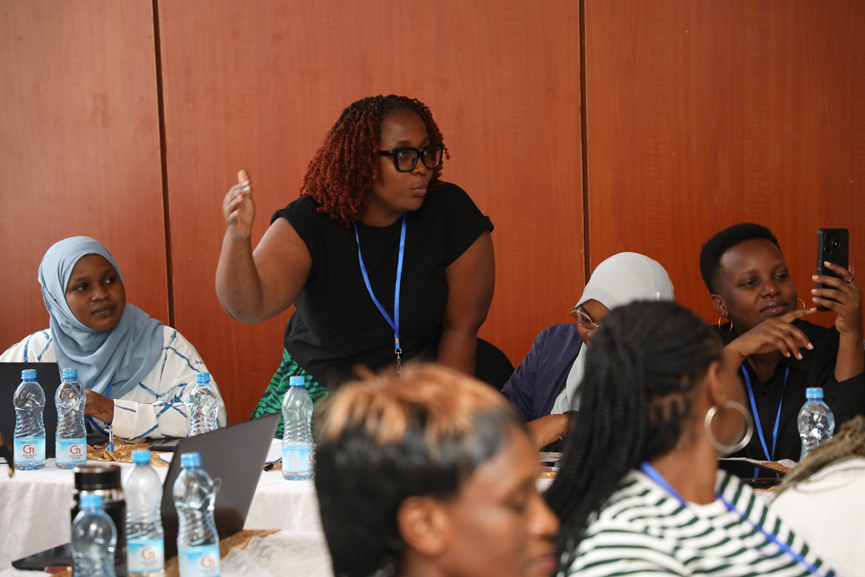
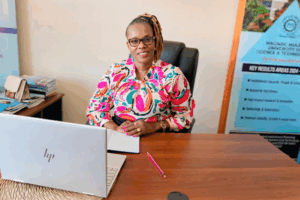
One of the AFRIAK fellows, making her contributions during one of the sessions.
Commenting on the day’s sessions, the AFRIAK MMUST Coordinator, Dr. Lucy Mandillah revealed that they were very successful and that the participants were very excited because they had learnt some basic Kiswahili.
Tomorrow 5th March, 2026, the fellows will participate in the AFRIAK research workshop, which will entail presentations of individual research concepts.
By Dr. Lydia Anyonje and Caren Nekesa
Photos by Shiundu Masafu