MMUST Faculty of Engineering Trained on Outcome-Based Education as Kenya Eyes Full Washington Accord Status!
Kenya’s education system is in the middle of a shift toward competency and Outcome-Based Learning. At the basic education level, the country is transitioning from the 8-4-4 system to the Competency-Based Education (CBE) framework, with Universities anticipating their first CBE cohort in 2029. Engineering, one of the major pathways under STEM, has not been left behind. The country has been deliberate in ensuring this sector transforms, and Masinde Muliro University of Science and Technology (MMUST) is positioning itself at the forefront of that change.
In June 2025, Kenya attained Provisional Signatory Status to the Washington Accord, the international agreement recognizing the equivalence of accredited engineering degree programmes across member countries. The Accord focuses on University programmes that prepare students for professional engineering roles, with signatories working collaboratively to define the competencies and skills expected of graduates and to ensure accreditation standards remain consistent across member countries. For Kenya, this milestone brings its engineering graduates a step closer to having their qualifications recognized in over 20 countries, including Australia, Canada, the UK, the US, and Japan, without the need for extensive requalification.
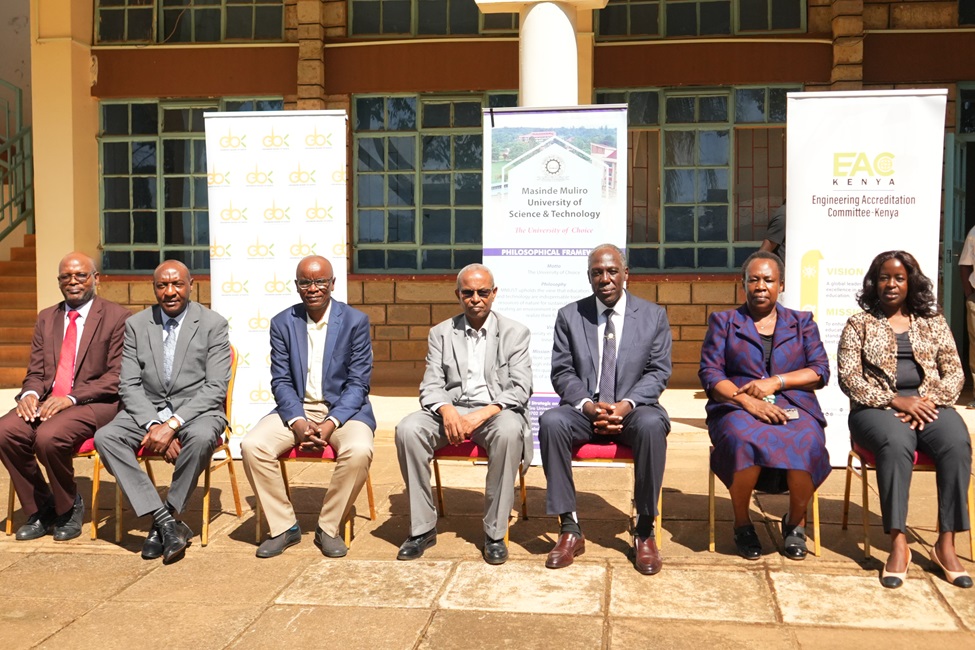
From far left, EBK’s Eng. Paul Ochola, CE; Prof. Judah Ndiku; Eng. Samuel Abich; Deputy Vice Chancellor (Academic and Student Affairs), Prof. Hussein Golicha; Prof. Simiyu Sitati, PE; the Dean-School of Engineering and Built Environment (SEBE), Prof. Eng. Bernadette Sabuni and the Director Curriculum Review and Development, Dr. Teresa Okoth.
The training, organized by the Dean-School of Engineering and Built Environment (SEBE), Prof. Eng. Bernadette Sabuni, brought together the University management, lecturers and relevant faculty members. The two-day training took place on 22nd and 23rd September, 2026. It aimed to establish a common understanding of the Washington Accord requirements and accreditation expectations, while equipping participants with the knowledge and practical approaches required to strengthen the University’s engineering programmes in line with internationally recognized standards. The training further provided the opportunity for participants to engage with key aspects of outcome-based curriculum design, implementation, assessment and continuous improvement. It was facilitated by EBK’s Eng. Paul Ochola, CE and Prof. Simiyu Sitati, PE.
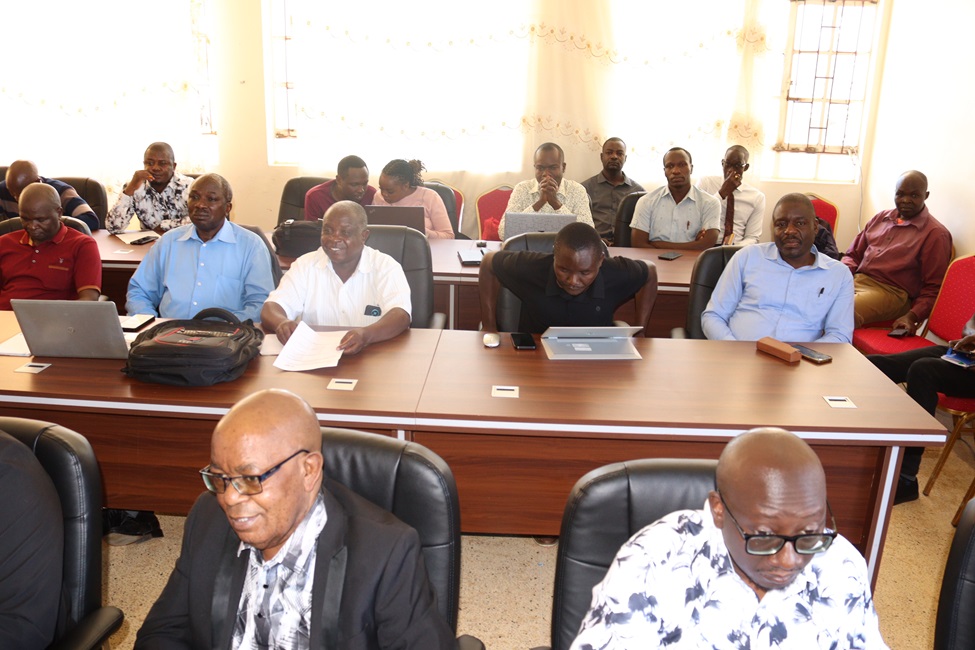
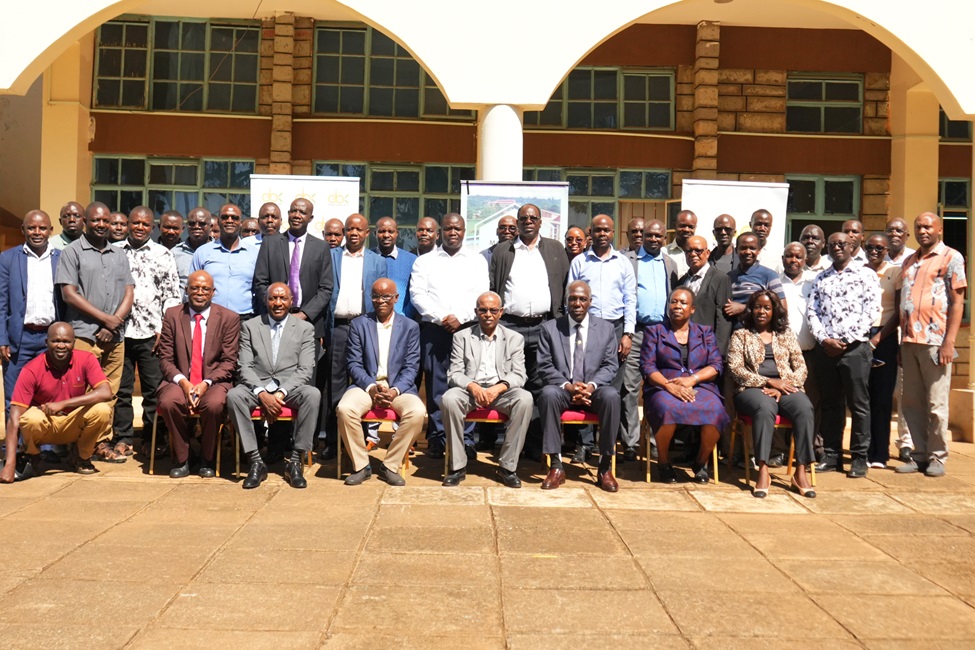
A section of the participants following the presentations.
The training was graced by the Deputy Vice Chancellor (Academic and Student Affairs), Prof. Hussein Golicha, who was representing the Vice Chancellor. Prof. Golicha appreciated the training, describing it as one of its kind, and encouraged faculty members to draw as much as they could from the sessions, so that the knowledge gained could be well implemented.
In her address, the Ag. Registrar of EBK, Eng. Grace Onyango noted that OBE is not a documentation exercise but a transformation in how engineering is taught, learned and assessed. She called for the need to strengthen the Directorate of Quality Assurance, pointing out that it is central to this process. “Kenya’s journey to full Washington Accord Signatory Status by 2029 will be determined by implementation at the institutional level. Each of us has a critical responsibility to translate this training into practice. The Board commends MMUST for approaching the regulator on its own initiative, and for the seriousness with which the School of Engineering and the Built Environment has taken its readiness,” she noted.
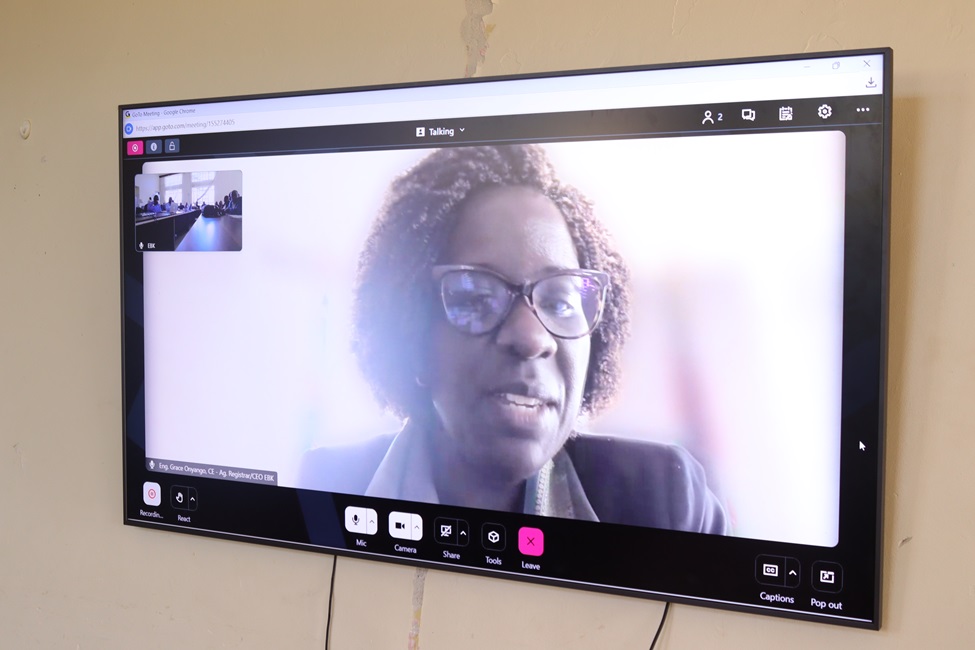
The Ag. Registrar of EBK, Eng. Grace Onyango addressing the participants during the event.
Key issues tackled included, regulatory foundations, principles of OBE, engineering accreditation standards 2024, formulation of Programme Education Objectives, Programme Outcomes, and Course Learning Outcomes. Day two focused on mapping to the Washington Accord Graduate Attributes, curriculum structuring and assessment design, institutional readiness and gap analysis.
As Kenya works towards attaining full Signatory Status to the Washington Accord by 2029, MMUST’s early engagement in this training affirms the university’s commitment to strengthening engineering education in line with internationally recognized standards. SEBE’s alignment with such a high-value, globally recognized benchmark will certainly further its efforts in producing engineering graduates whose qualifications are increasingly recognized beyond Kenya.
By Caren Nekesa
Photos by Linet Owuor