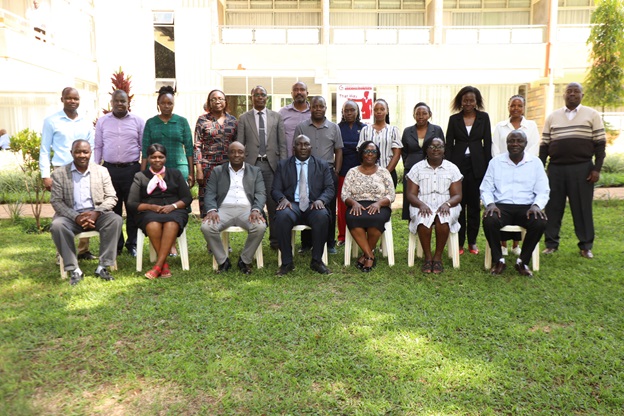
MMUST Partners with KNATCOM-UNESCO to Build Capacity for University Scientific Ethics Review Committee Members on Ethics and Bioethics Normative Instruments
Masinde Muliro University of Science and Technology (MMUST) has partnered with the Kenya National Commission for UNESCO to build capacity for Institutional Scientific Ethics Review Committee members (ISERCs) on research ethics and bioethics normative instruments. The three-day capacity building exercise, held from 4th to 6th November, 2026 at the Golf Hotel-Kakamega, was facilitated by Dr. Orpha Nyakundi (Deputy Director, KNATCOM-UNESCO) alongside Dr. Caroline Wafula (NACOSTI) and Prof. Gordon Nguka (Chairperson, MMUST ISERC). The training was flagged off by the Deputy Vice Chancellor (Planning, Research and Innovation), Prof. Christopher Ngacho, who underscored the importance of strengthening institutional research ethics committees to promote responsible research practices and uphold ethical standards.
In his opening remarks, Prof. Ngacho urged participants to focus on the practical application of the knowledge and skills acquired during the 3-day training, noting that the capacity building initiative should translate into stronger, more independent and functional Institutional Scientific and Ethics Review Committees. He further called for a collaborative approach towards strengthening research governance, saying “well-supported and functional ethics committees are essential in ensuring that research activities adhere to established ethical principles and safeguard the rights, dignity and welfare of research participants.”
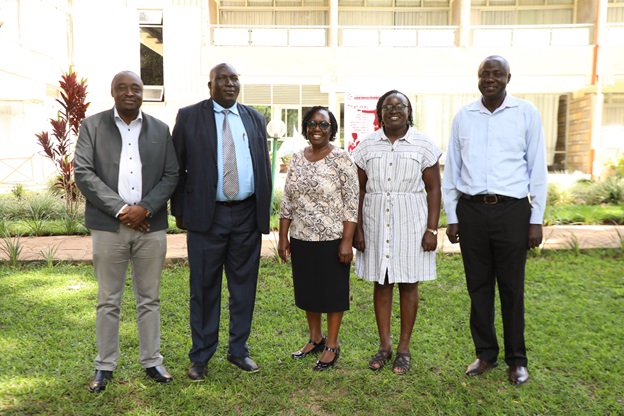
From left; Prof. Francis Orata, Prof. Christopher Ngacho, Dr. Orpha Nyakundi, Dr. Caroline Wafula and Prof. Gordon Nguka.
“By the end of the three-day training, committee members will have built the capacity to evaluate research proposals and navigate complex ethical issues. The MMUST Institutional Ethics Review Committee was constituted by the Vice Chancellor. In addition to reviewing research protocols, the committee serves an advisory role to the University on research ethics standards. We actively support capacity building across the University community, guiding researchers, particularly first-time applicants, through ethical review procedures and requirements. Upon approving a protocol, the committee issues a research clearance letter, which enables researchers to obtain an official research license from NACOSTI,” stated Prof. Nguka, who is also a member of the National Scientific Ethical Review Committee (NSEC) under NACOSTI.
Presenting on the Introduction of Research Ethics, Dr. Nyakundi emphasized that Research Ethics Committees are independent bodies mandated to provide ethical oversight for research projects. She elaborated that their duty extends beyond reviewing individuals’ proposals. “You are tasked to continuously assess scientific and technological developments to formulate recommendations and contribute to formal guidelines. Ethics committee must actively foster debate, education, public awareness and community engagement in the fields of bioethics,” she said. She also tackled other topics including Informed Consent in Research, Research involving vulnerable groups, community Engagement in Research and Institutional Support to ISERCs.
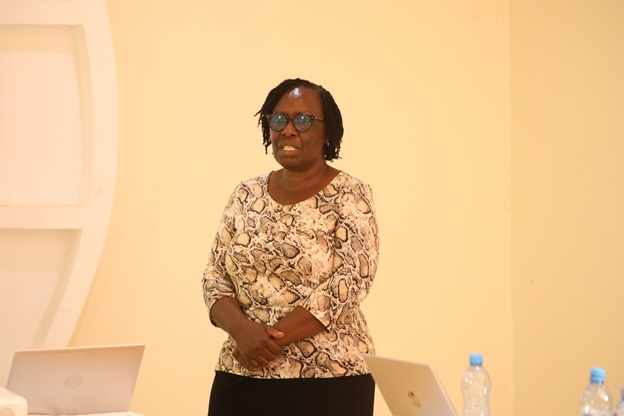
Dr. Orpha Nyakundi makes a presentation during one of the sessions.
Dr. Caroline Wafula’s presentation emphasized the critical need for researchers to keep pace with rapid technological advancements and evolving global standards. Rooted in foundational global frameworks, including UNESCO, CIOMS, the Declaration of Helsinki, NIH and NIDA, she established that human dignity remains the core of all ethical inquiry, emphasizing that scientific goals can never override fundamental rights to freedom, equality, privacy and non-discrimination. She further highlighted that equitable research practices must guarantee no participant is unfairly excluded or disadvantaged based on factors such as race, gender, disability, religion, ethnicity, or socioeconomic status.
Looking to the future of modern research, Dr. Wafula addressed how emerging fields like genomics, big data, Electronic Health Records (EHRs) and AI are redefining ethical oversight beyond traditional informed consent and physical safety. She urged investigators to proactively navigate algorithmic bias, data privacy and systemic fairness to prevent rapid technological shifts from exacerbating healthcare disparities or compromising subject confidentiality. Concluding with a call for heightened moral vigilance, institutional accountability and robust human oversight, she reinforced that technological capability must never outpace ethical responsibility.
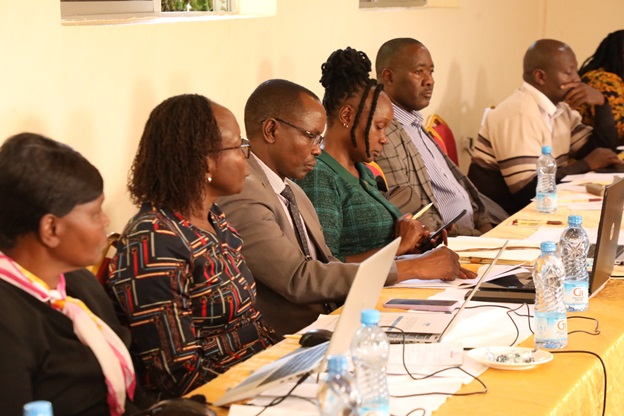
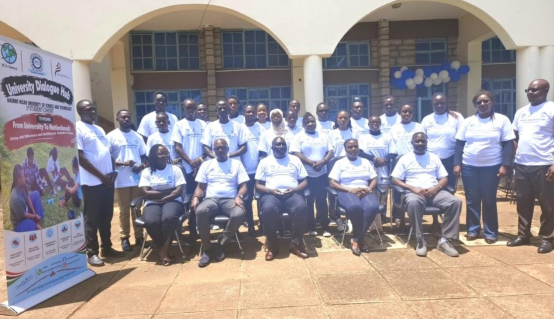
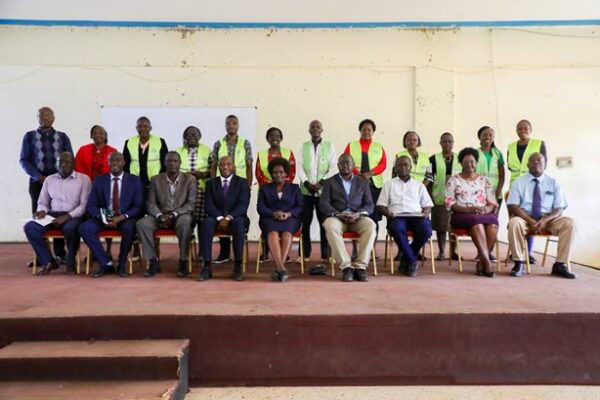
A section of the participants during one of the sessions.
MMUST-ISERC Committee members present at the training were; Prof. Gordon Nguka, Prof. Francis Orata, Prof. Mugatsia Tsingalia, Prof. Alice Ndiema, Prof. Stanley Omuterema, Dr. Philip Ogutu, Dr. Ruth Simiyu, Dr. Damaris Ochanda, Dr. Bill Ouda, Dr. Maximilla Wanzala, Dr. Roselyne Odiango, Dr. Linet Elamenya, Ms. Lindah Omenya.
The committee members reviewed the fundamentals of research ethics, key ethical principles and UNESCO normative instruments. The training covered the ethical implications of various research designs and data collection methods, the use of animals in research as well as the rationale behind different consenting processes. Members also addressed emerging ethical issues in Artificial Intelligence (AI) and the Internet of Things (IoT), focusing on strategies for effective and efficient review while ensuring robust participant protection.
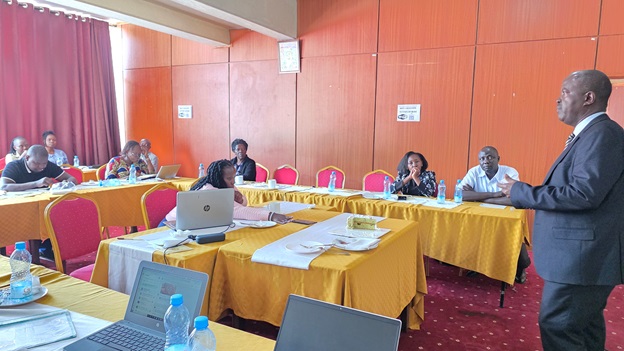
Dr. Collins Matemba gives the closing remarks.
The three-day training workshop officially concluded with remarks from the Registrar (Planning, Research and Innovation), Dr. Collins Matemba. He highlighted that such training directly aligns with the University’s mandate to strengthen institutional capacity.
By Wangari Wambugu and Linet Owuor
Photos by Shiundu Masafu and Herald Fedha