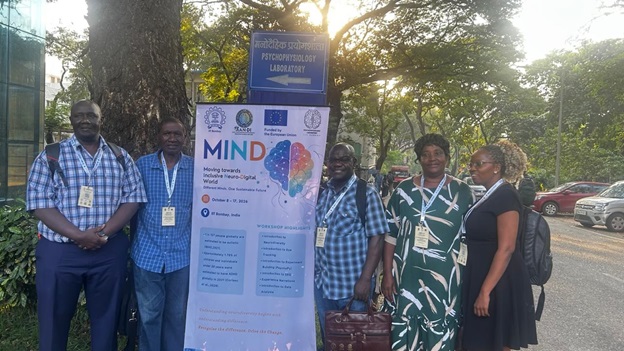
MMUST Participates in 2 Major Workshops in India, Strengthening Its Research Capacity and Global Academic Partnership
Masinde Muliro University of Science and Technology has participated in two (2) major capacity-building Workshops held in India, marking a significant step towards strengthening its research capacity and expanding international academic collaborations. Hosted by the Indian Institute of Technology Bombay (IITB) from 7th to 17th October, 2026 and the University of Kashmir from 18th to 24th October, 2026, the Workshops were organized under the Erasmus+ project, ‘Digital Transformation for Neurodiversity Inclusion in Africa and Asia (AAN-DI),’ which is co-funded by the European Commission. The AAN-DI project aims to strengthen institutional capacity, advance research and promote inclusive digital environments for neurodivergent populations. The two engagements saw researchers, academics and education stakeholders from Africa, Asia and Europe convene to explore innovative approaches to neurodiversity, digital wellbeing and inclusion. The MMUST delegation to India comprised Dr. Edward Khasakhala (Principal Investigator), Prof. Kennedy Bota (Co-Principal Investigator), Dr. Josephine Nyamwange (Project coordinator), Prof. Peter Odera (Researcher), and Ms. Alice Kathunzi (Postgraduate student).
The Workshops also brought together key project leaders and Principal Investigators (PIs) from partner institutions, including Prof. Susannah Leppänen and Prof. Paavo Leppänen (Project Directors from the University of Jyväskylä, Finland); Prof. Salmerón Lalo (PI, University of Valencia, Spain); Prof. Hazel Miseda (Vice Chancellor of Great Lakes University of Kisumu (GLUK) and the institution’s PI); Prof. Azzuddin Khan (PI, IIT Bombay); and Prof. Shawkat Ahamed Shah (PI, University of Kashmir). The participation of these project leaders and institutional representatives provided a vital platform for strengthening partnerships, sharing institutional experiences and identifying opportunities for future collaborative research and capacity development.
Specifically, the MIND Workshop at IIT Bombay provided participants with practical exposure to emerging research technologies and methodologies in cognitive neuroscience and psychophysiology. Key areas covered included Electroencephalography (EEG), eye-tracking technology, experimental design using PsychoPy and data analysis. Participants were introduced to EEG as a research tool for examining brain activity and investigating cognitive processes such as attention, information processing and cognitive engagement, with practical sessions demonstrating its potential for understanding cognitive functioning and individual differences.
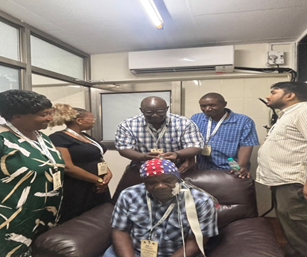
MMUST delegates during a practical session on EEG.
The eye-tracking sessions focused on techniques for examining visual attention and patterns of engagement with information. These approaches offered insights into how individuals with different cognitive profiles interact with digital learning materials and technological environments. Participants also explored PsychoPy, a software application for designing and implementing psychological experiments. The practical engagements, complemented by data analysis sessions, highlighted the importance of integrating appropriate research technologies and analytical approaches in investigating cognitive and behavioural processes.
The Workshop further introduced participants to neurodiversity, emphasizing the recognition of neurological differences and the need for inclusive approaches that accommodate diverse cognitive abilities, learning preferences and individual support requirements.
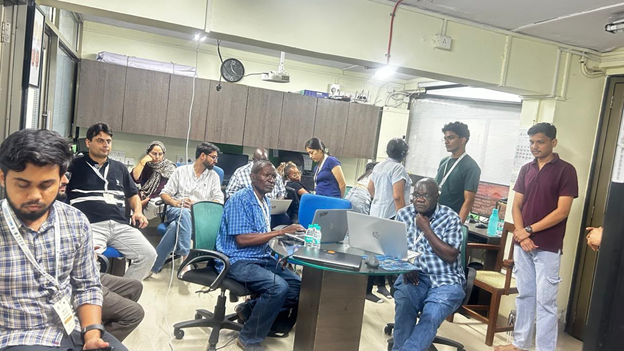
Participants during one of the sessions.
Following the IIT Bombay engagement, the MMUST team participated in the International Workshop on Digital Wellbeing and Inclusion for Neurodiversity, hosted by the University of Kashmir in Srinagar. The Workshop was organized by the University’s Department of Psychology in collaboration with the Institute of Mental Health and Neurosciences (IMHANS), Government Medical College, Srinagar. It featured key presentations exploring the epigenetics of neurodevelopmental conditions, biological perspectives on neurodiversity, AI-based approaches to identifying neurodevelopmental issues, and emerging research on digital wellbeing and inclusion.
A significant highlight was the session on digital and online literacy for learners with neurodevelopmental conditions, facilitated by experts from the University of Jyväskylä, Finland. Discussions examined the challenges neurodivergent learners may encounter when accessing, evaluating and using digital information. Participants explored the importance of strengthening digital competencies and creating accessible online learning environments that respond to diverse cognitive and learning needs.
The Workshop also featured a teacher sensitization programme involving educators from the Department of School Education, Jammu and Kashmir. This session underscored the importance of equipping teachers with relevant knowledge and skills to support neurodivergent learners and promote inclusive educational practices. Another key highlight was the presentation on the NeuroWiz Hub, a co-designed digital ecosystem for neurodivergent adults. The discussions emphasized the value of actively involving end-users in developing digital solutions that reflect their experiences, preferences and support needs, offering valuable insights into the Hub’s ongoing development under the AAN-DI project.
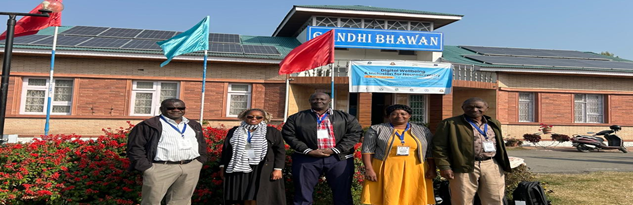
MMUST team at the University of Kashmir in Srinagar.
Further discussions addressed neurodiversity policy, institutional frameworks, stakeholder collaboration and the translation of research findings into practical, inclusive interventions. Beyond the sessions, the University of Kashmir programme enabled participants to explore interdisciplinary research facilities and institutional approaches to mental health and neuroscience through visits to the Centre for Interdisciplinary Research and Innovations (CIRI), the Allama Iqbal Library, the University’s Botanical Garden, and the Institute of Mental Health and Neurosciences (IMHANS).
The final technical sessions focused on baseline survey tools for assessing neurodiversity and the application of free and open-source software to promote digital well-being and inclusion. These sessions yielded practical insights into research assessment methodologies and the development of evidence-informed digital interventions.
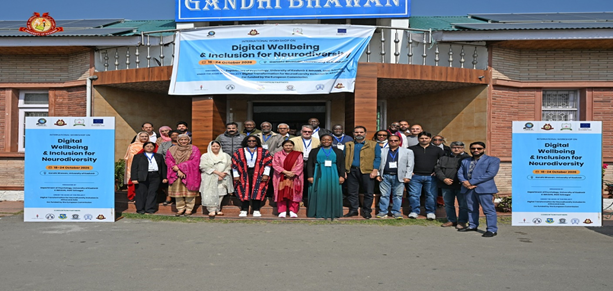
Participants at the University of Kashmir.
A major outcome of the two Workshops was the growing momentum towards hosting the World Conference on Digital Inclusion for Neurodiversity at MMUST in May 2027. The upcoming Conference is expected to provide an international platform for researchers, policymakers, educators, technology developers, practitioners and other stakeholders to share research findings, showcase innovations and discuss practical strategies for advancing digital transformation and inclusion for neurodivergent populations.
The Conference will build on the knowledge, partnerships and experiences gained through the AAN-DI project and the capacity-building Workshops held in India. It will also provide an opportunity for MMUST to strengthen its position as a regional and international hub for research, dialogue and innovation in digital inclusion and neurodiversity.
Beyond cementing MMUST’s growing footprint in global academic partnership, the upcoming Conference marks a defining milestone in the University’s drive to translate international research and capacity-building investments into tangible institutional and societal impact.
By Wangari Wambugu