MMUST Students Undertake Field Study in Landslide-Hit Chesongoch Community
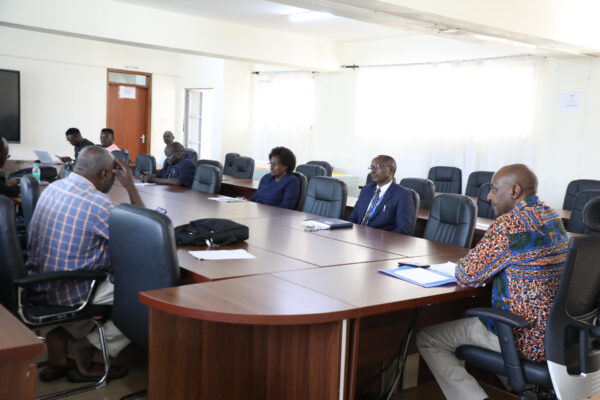
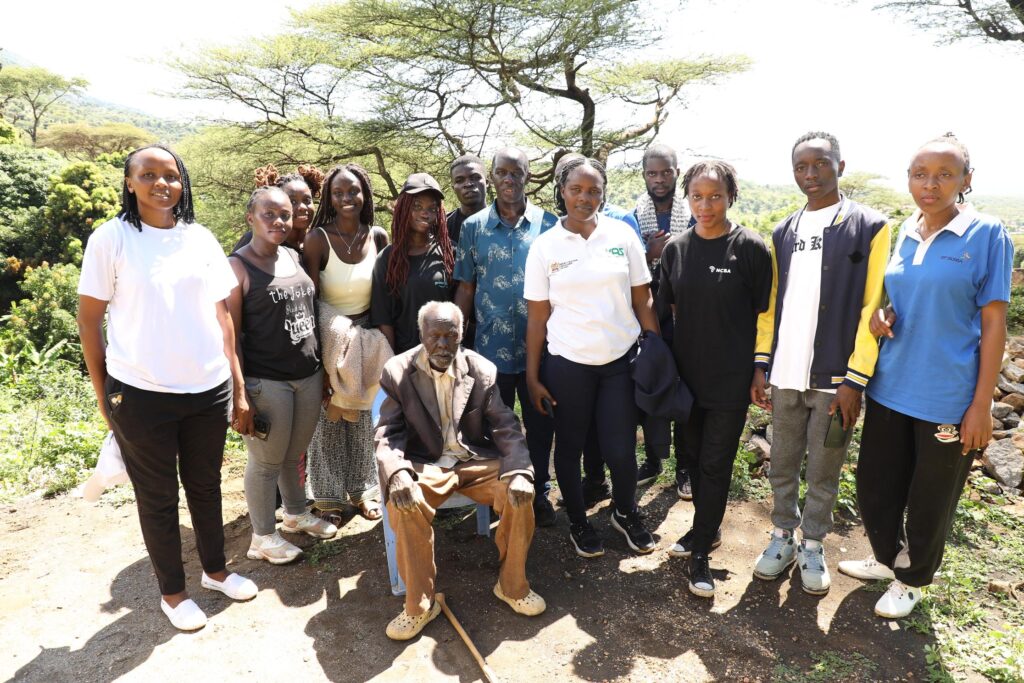
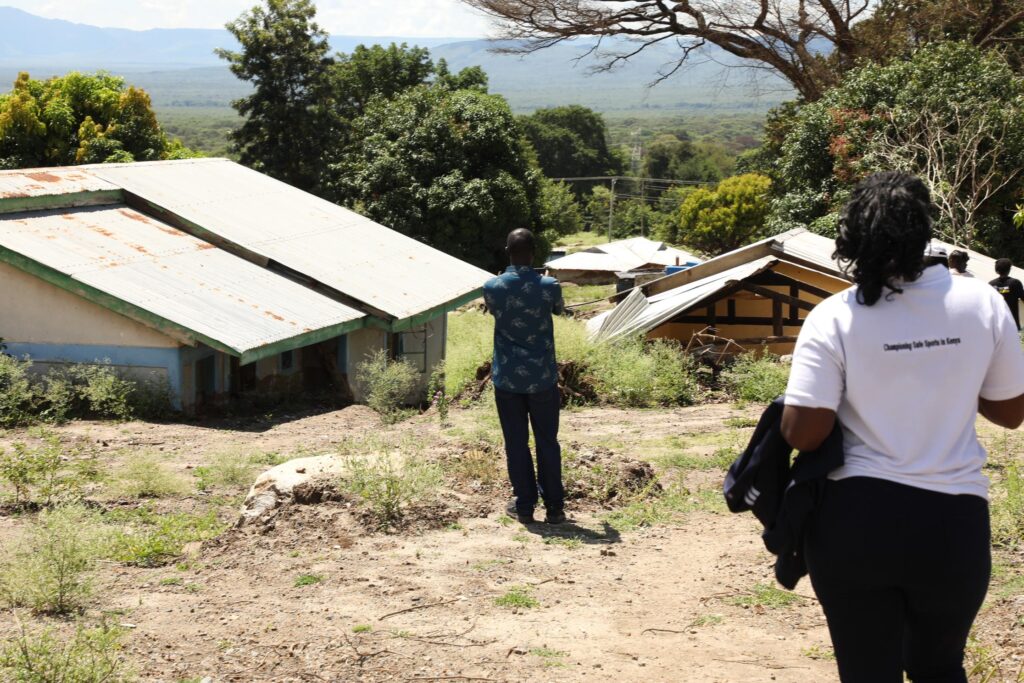
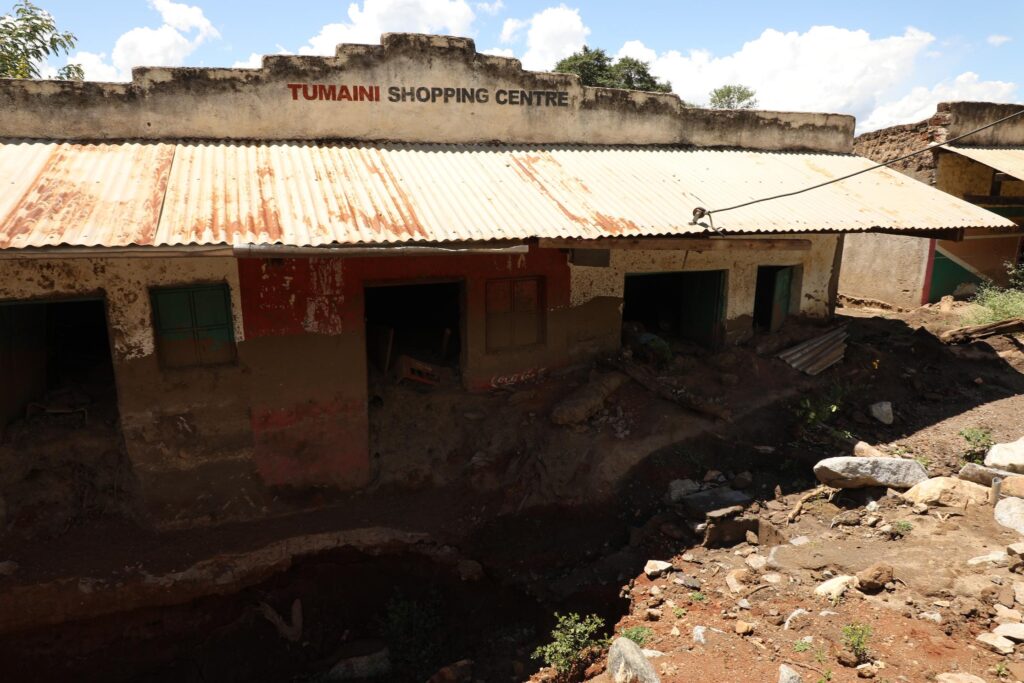
Students and staff from the School of Disaster Management and Humanitarian Assistance (SDMHA) at Masinde Muliro University of Science and Technology (MMUST) conducted a two-day academic field visit to Chesongoch Division in Kerio Valley Sub-County, an area severely affected by a landslide that occurred on November 1, 2025. The visit, held on May 1–2, brought together approximately 100 participants under the leadership of Dr. Ombachi Nicholas, Chairperson of the Department of Emergency Management Studies, and was coordinated by a technical team comprising Dr. Betty Opilo, Ms. Janerose Kimuma, and Messrs. Peter Otsianda and Leonard Nyongesa.
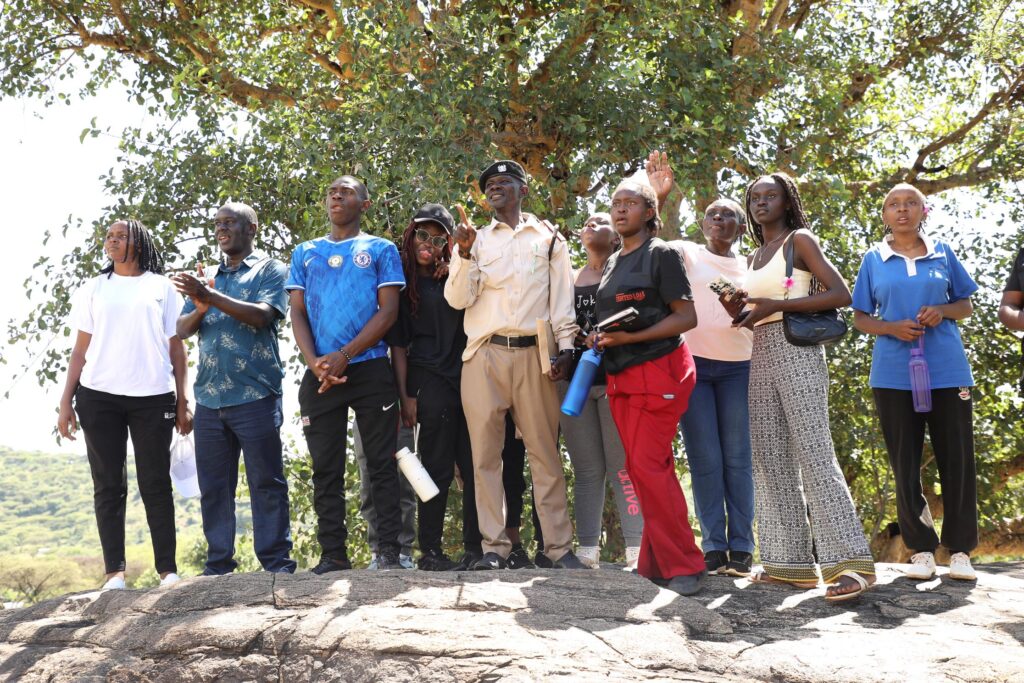
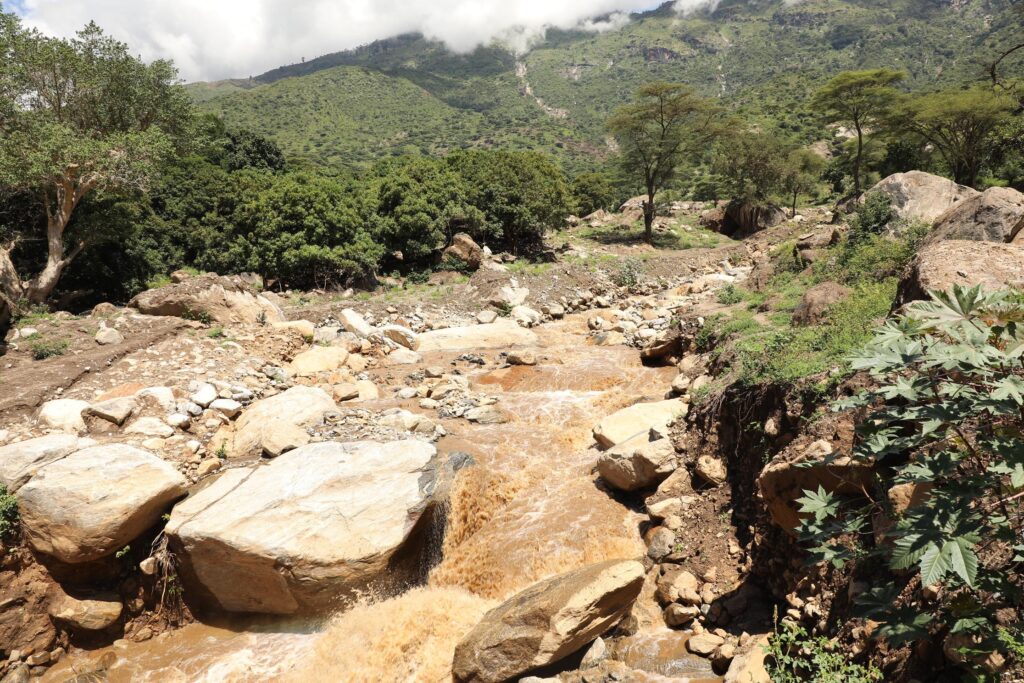
The primary aim of the visit was to provide students with hands-on experience in disaster risk management within a real-world context. During the exercise, participants conducted on-site assessments along the Chesongoch River, examining key issues such as hazard identification and mapping, community vulnerability, environmental degradation, recovery programmes, and early warning systems. The students also explored indigenous knowledge and coping mechanisms, as well as the role of local administration in disaster preparedness and response, effectively linking classroom theory to practical application across the disaster risk management spectrum.
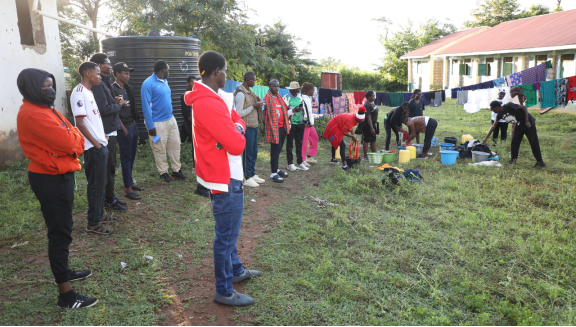
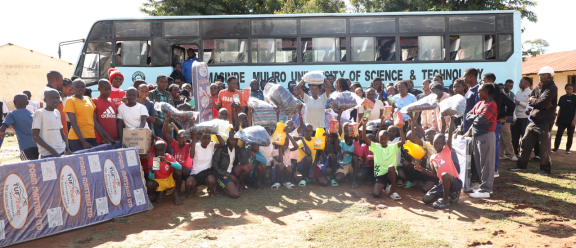
MMUST Disaster Management and Humanitarian Assistance students doing cleaning for a section of Mudslide victims and children of Chesongoch Primary School
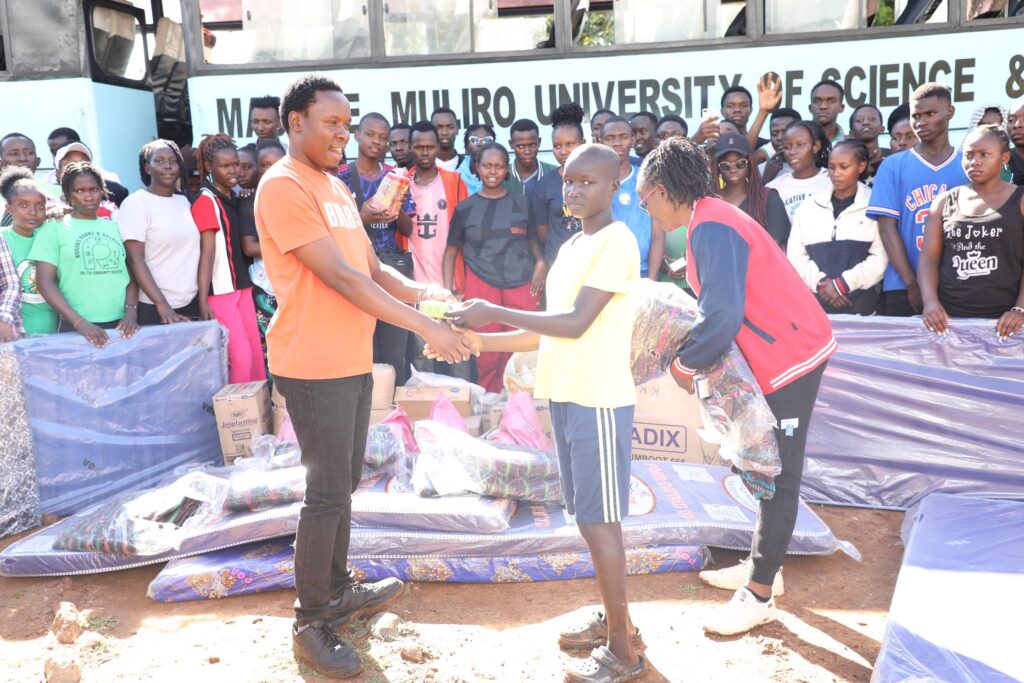
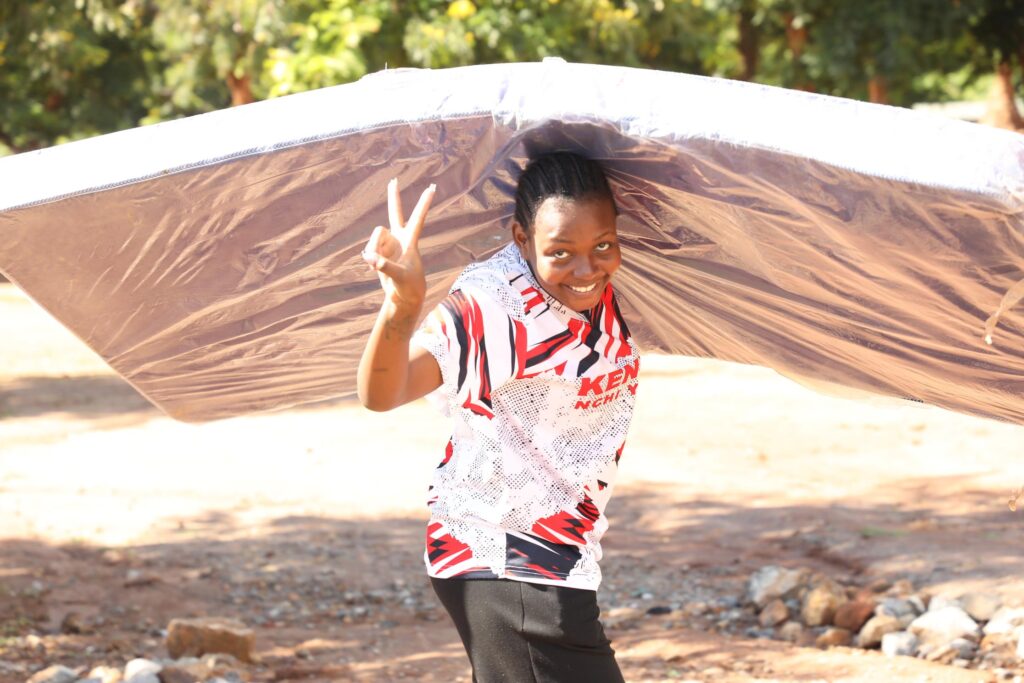
In addition to academic activities, the MMUST team engaged directly with affected families, offering psychosocial support and demonstrating solidarity with the community. The group donated food and non-food items to vulnerable households and pupils at Chesongoch Comprehensive School, underscoring the humanitarian dimension of the visit. The team was warmly received by local leaders, including area Chief Mr. Clement Cheserek, the head teacher of Chesongoch Comprehensive School, and representatives of internally displaced persons, and the exercise concluded successfully with the team departing safely on the afternoon of May 2.
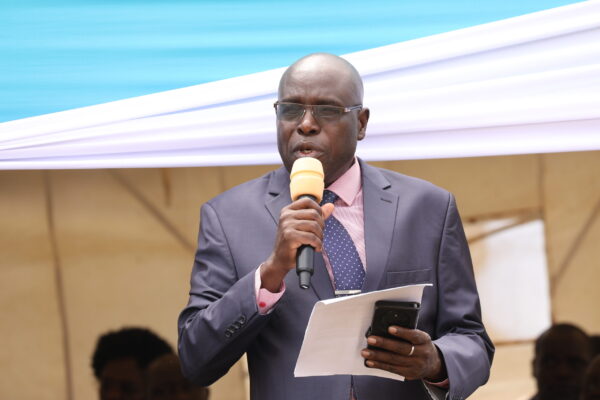
Speaking after the visit, Dr. Ombachi described Elgeyo Marakwet County as a “living laboratory” for disaster risk management due to its unique terrain and recurring hazards. He commended the students for their resilience and dedication, particularly as they navigated difficult conditions including rugged landscapes, bee stings, and road blockades, and encouraged them to develop evidence-based recommendations that can inform future disaster preparedness and mitigation
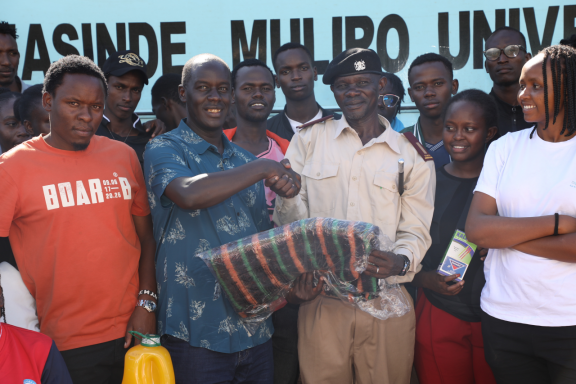
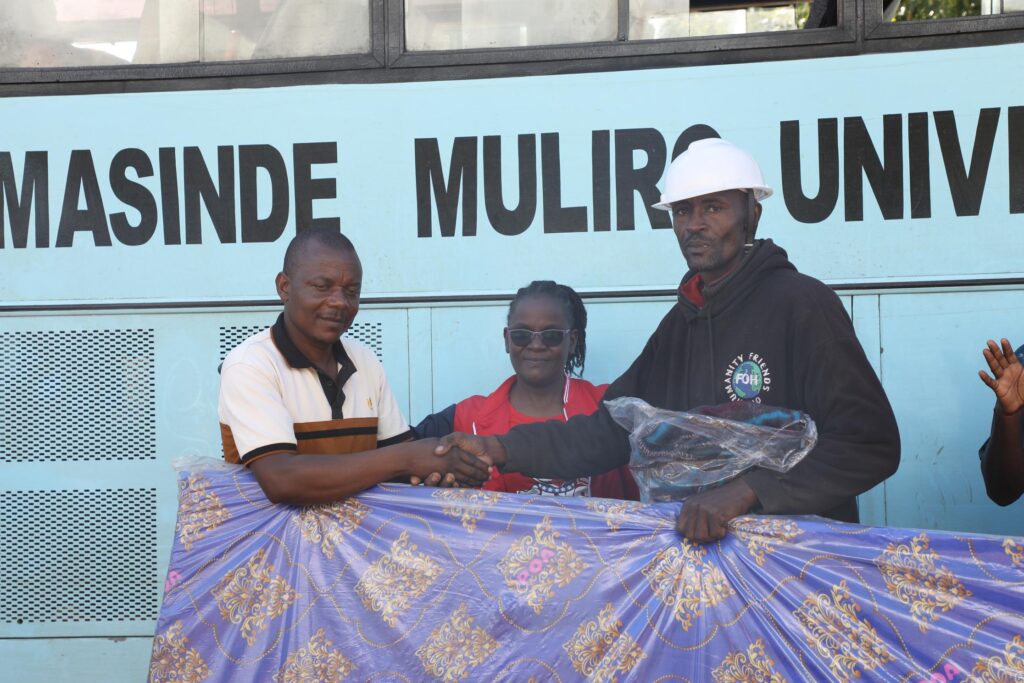
Dr. Ombachi Nicholas, Chairperson of the Department of Emergency Management Studies and head of delegation to Chesongoch handing over a section of the donation to the area Chief Mr. Clement Cheserek
Area Chief Mr. Clement Cheserek expressed deep appreciation for the university team, noting that their visit had a meaningful impact on the community. He stated that the team’s presence brought comfort, encouragement, and a strong sense of solidarity to families affected by the mudslide. He commended the group for their willingness to listen, learn, and engage with residents, describing it as a demonstration of genuine compassion and commitment to humanitarian service. The chief further praised the team’s resilience, observing that their ability to traverse rough, rocky terrain and endure challenges such as bee stings while remaining focused reflected remarkable courage and determination. He added that the support shown by the university would remain a source of hope and strength for victims as they continue to recover and rebuild their lives, and warmly welcomed the team back to the region, acknowledging the difficult road conditions while affirming that Chesongoch remains their home.
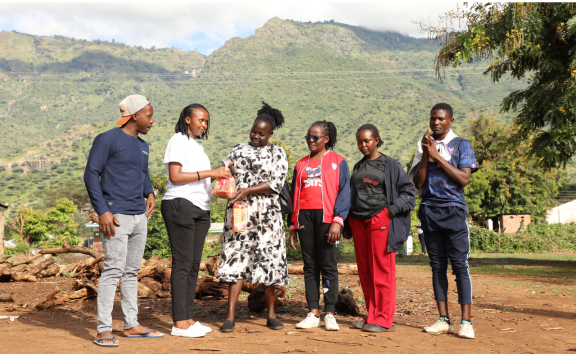
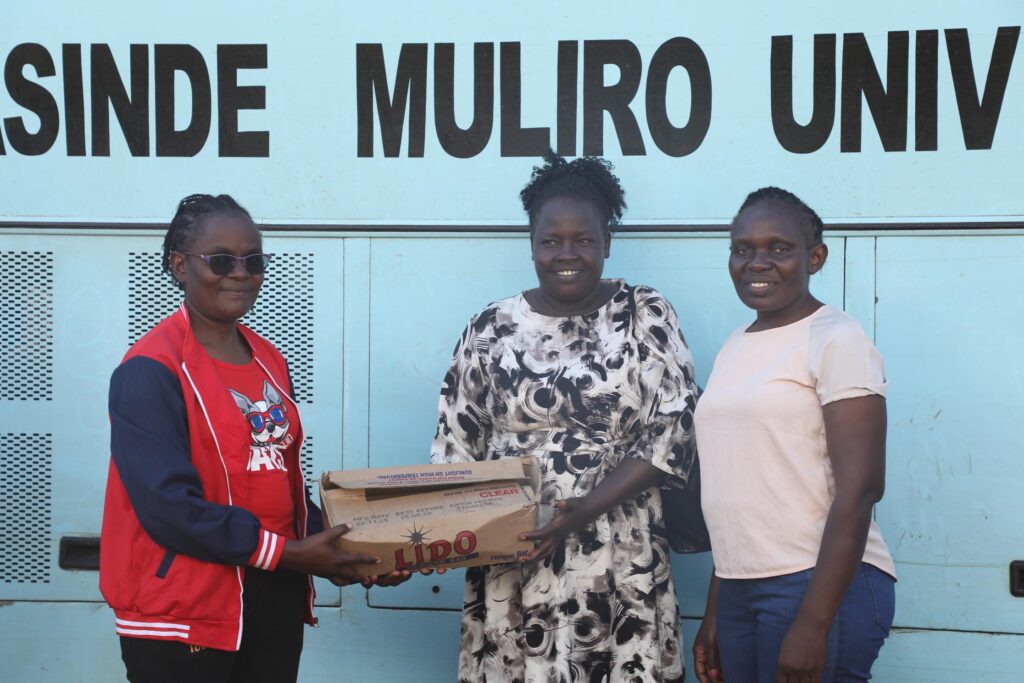
Ms. Wavinya Muisyo, the SDMHA School Representative in student leadership flanked by members of staff and students, hands over part of the donation to a community member
Ms. Wavinya Muisyo, the SDMHA School Representative in student leadership, who also participated in organizing and coordinating the trip, explained that the initiative involved careful planning of activities, ensuring student safety, and working closely with local leaders while mobilizing and delivering donations to affected families. She noted that the visit enabled students to connect classroom theory with real-life disaster situations, better understand the human impact of such events, and demonstrate care and solidarity with the community. Ms. Muisyo emphasized that disaster management students can play a key role in offering practical solutions, including community education on early warning signs, promoting environmental conservation such as tree planting, encouraging safer settlement practices, and strengthening disaster preparedness. She also expressed gratitude to the university leadership, the School Dean, Heads of Departments, and staff for their continued support and for providing students with the opportunity to gain practical experience.
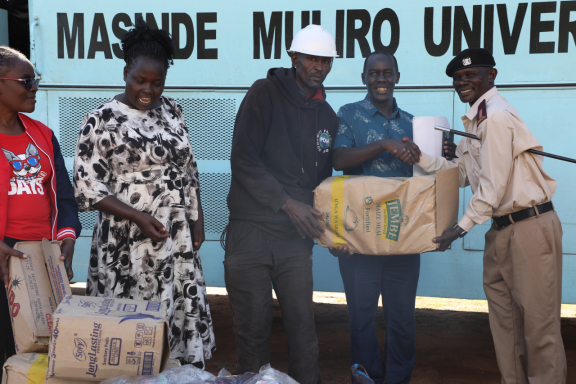
Dr. Ombachi Nicholas, Chairperson of the Department of Emergency Management Studies and head of delegation to Chesongoch handing over a section of the donation to the area Chief Mr. Clement Cheserek and members of the community
Members of the community also expressed appreciation for MMUST’s support, noting that the university continues to offer hope and practical solutions as they work to rebuild their lives. They called on the students to produce a structured report that could contribute to preventing similar disasters in the future.
The Chesongoch field visit highlighted MMUST’s commitment to bridging academic excellence with community engagement, reinforcing its role in training professionals who are not only technically competent but also responsive to humanitarian needs.
By Shiundu Masafu