MMUST-LREB Research Dissemination Conference Kicks Off as Experts Call for Collaborative Action on Regional Challenges
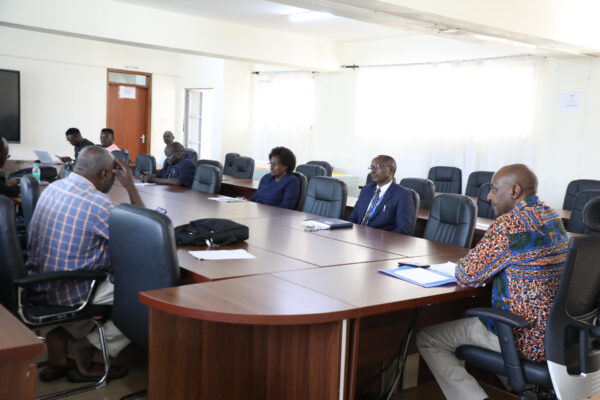
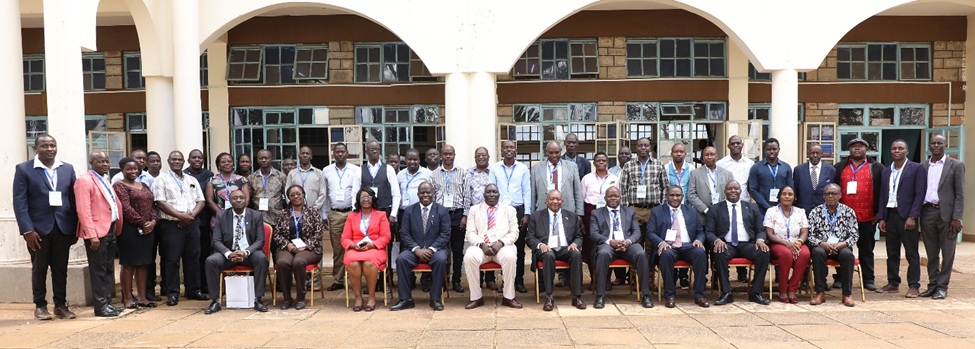
Masinde Muliro University of Science and Technology in collaboration with the Lake Region Economic Bloc (LREB), on 28th May, 2026, officially kicked off the MMUST-LREB Research and Innovation Dissemination Conference, with experts calling for strengthened collaboration among stakeholders in addressing regional challenges. The two-day conference, set to conclude on 29th May, 2026, has brought together institutions of higher learning from across the Bloc; research and innovation agencies including the Ministry of Education (State Department for Higher Education and Research), National Research Fund (NRF), the National Commission for Science, Technology and Innovation (NACOSTI), as well as partner Universities from Uganda. The conference was officially opened by the Director Higher Education- State Department for Higher Education and Research, Dr. David Watene, who represented the PS, Dr. Beatrice Inyangala. The event themed, ‘Driving Sustainable Development through Research-Driven Innovations, Resilience and Inclusive Growth’, was organized by the Directorate of Research and Postgraduate Support, under the leadership of Prof. Francis Orata.
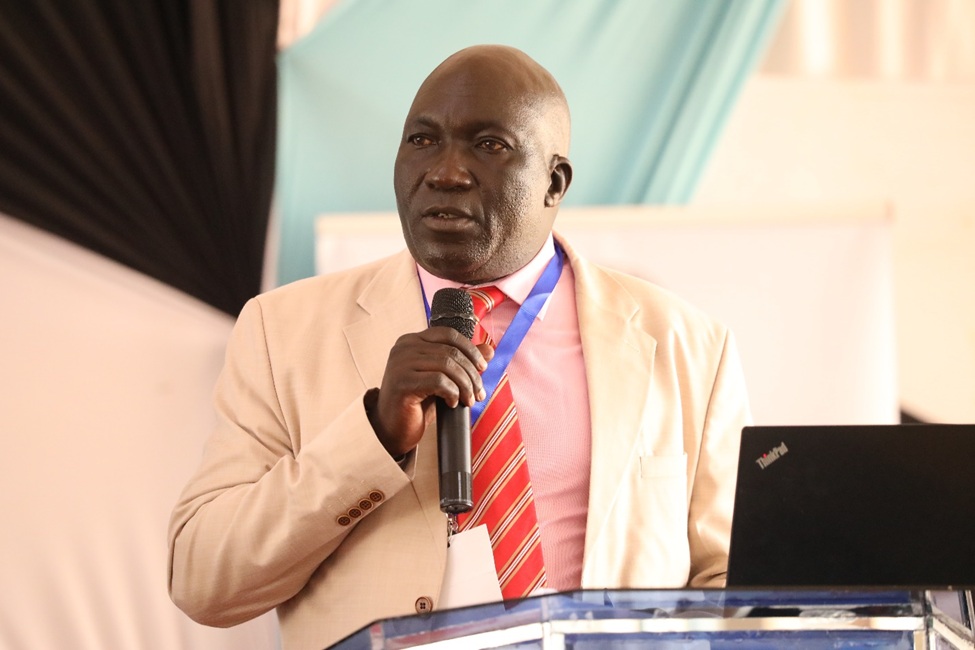
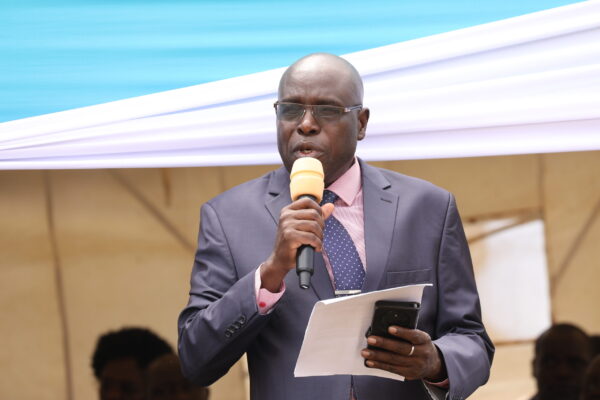
The Deputy Vice Chancellor (Planning, Research and Innovation) Prof. Christopher Ngacho, speaks on behalf of the Vice Chancellor during the event.
Representing the Vice Chancellor at the event, the Deputy Vice Chancellor (Planning, Research and Innovation) Prof. Christopher Ngacho, noted that the research and innovations showcased at the conference directly addresses the pillars of Kenya’s development, including agriculture, healthcare, sustainable infrastructure, trade, environmental conservation, and education. He stressed that beyond academic discourse, the Conference seeks to provide practical, evidence-based solutions aimed at improving the livelihoods of Kenyan citizens.
“MMUST is proud to have a pool of researchers with requisite knowledge and experience required to undertake highly-impactful studies. This institution was founded on the belief that science and technology should drive development, and today, we are witnessing that vision coming to life. Your presence here highlights our shared commitment to using knowledge and research to transform lives and bring real progress to our communities,” read the Vice Chancellor’s speech.
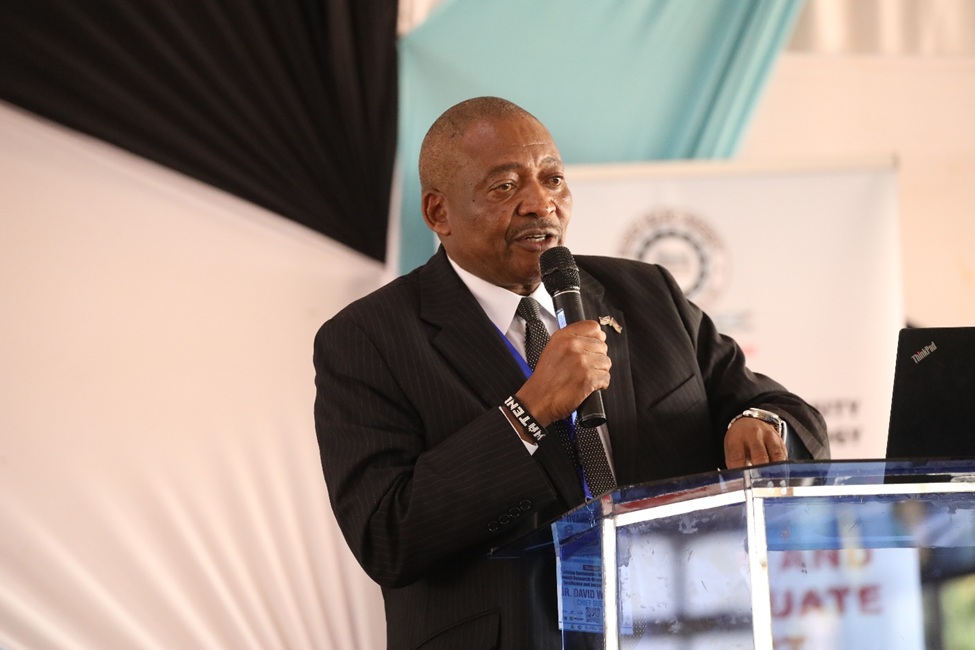
The Director Higher Education- State Department for Higher Education and Research, Dr. David Watene (representing the PS, Dr. Beatrice Inyangala), makes his remarks.
In his address, the Chief Guest, Dr. David Watene noted that the conference demonstrates visionary leadership and affirms the critical role universities play in advancing regional development through Science, Technology, Research and Innovation (STR&I). He revealed that nations investing in STR&I are shaping the future of the global economy, advsing that Kenya must deliberately position research and innovation as strategic national assets for competitiveness, industrialization, food security, healthcare, environmental sustainability, and inclusive socio-economic transformation.
Further, he observed that in an increasingly interconnected and rapidly evolving world, research, innovation and technology have become key drivers of societal and economic progress. “The government of Kenya recognizes Science, Technology and Innovation as critical keys of socio-economic transformation and sustainable development, as reflected in the Bottom-up Economic Transformation Agenda, Kenya vision 2030, and Africa’s Agenda 2063. I commend the University Management, the Division of Planning, Research and Innovation, and all partners for convening this conference aimed at fostering this Region’s economic growth,” read Dr. Inyangala’s speech, adding that Universities and research institutions have a responsibility to generate technologies and policy solutions that directly respond to our socio-economic needs.
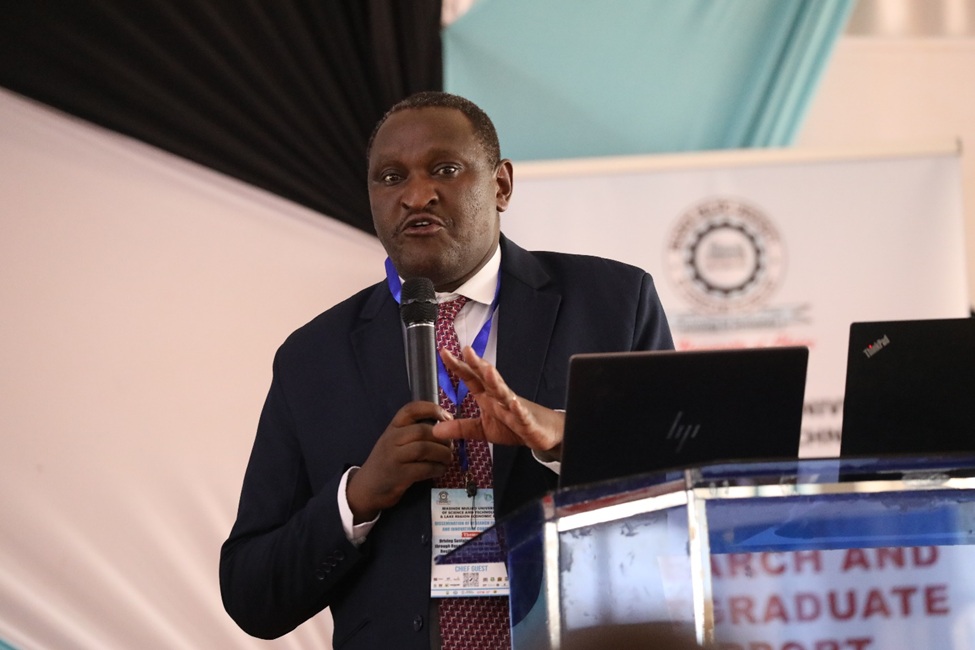
Ag. CEO NACOSTI, Dr. David Ngigi engages the participants during the conference.
“Research and innovation are the drivers of our economy nationally and globally. To succeed, universities, research institutions, and the community must work together, for while universities possess a huge human resource capacity, research institutions house state-of-the-art infrastructure. By combining these strengths, we maximize the impact of our findings. Moving forward, we need to establish multi-sectoral and multi-institutional research consortia, to successfully position ourselves for larger global funding opportunities and addressing the challenges we face as a region,” said the Ag. CEO NACOSTI, Dr. David Ngigi.
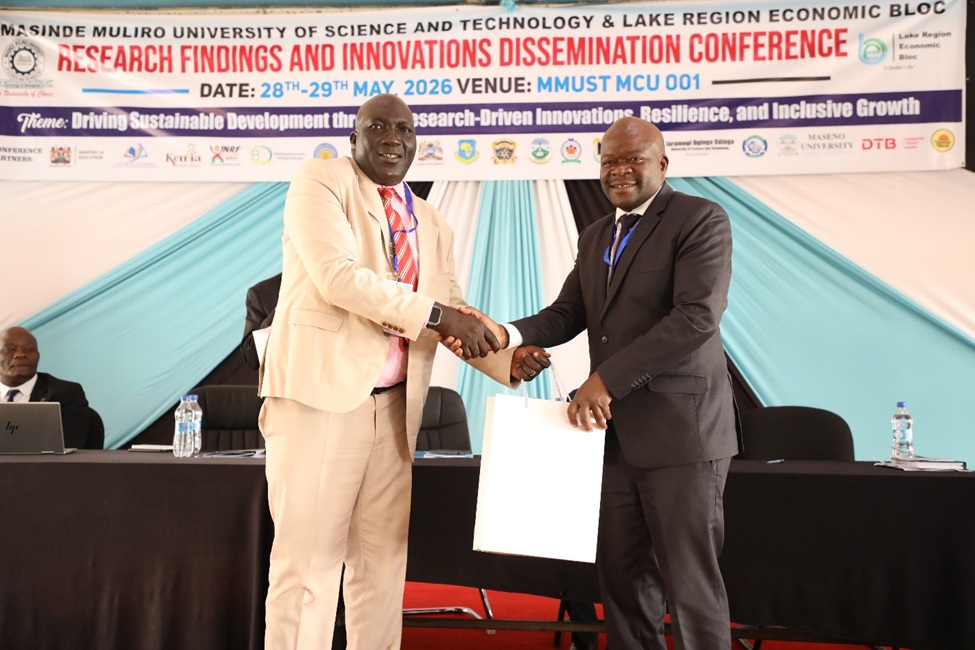
The CEO NRF, Prof. Dickson Andala (right) receives a present from Prof. Christopher Ngacho.
Similarly, the CEO NRF, Prof. Dickson Andala challenged universities within the region to break away from individual silos and embrace collaborative efforts. “We have been working in silos as universities in the region, but imagine how much we can achieve if we work in unison to tackle challenges affecting us as a Bloc. Our research needs to grow into tangible solutions, this is the only way to showcase the value of our work to society,” he stated, adding that while the government is ready to increase funding, researchers must accelerate their pace and demonstrate clear value. Further, Prof. Andala spoke on the need to work with the private sector to facilitate commercialization of innovations.
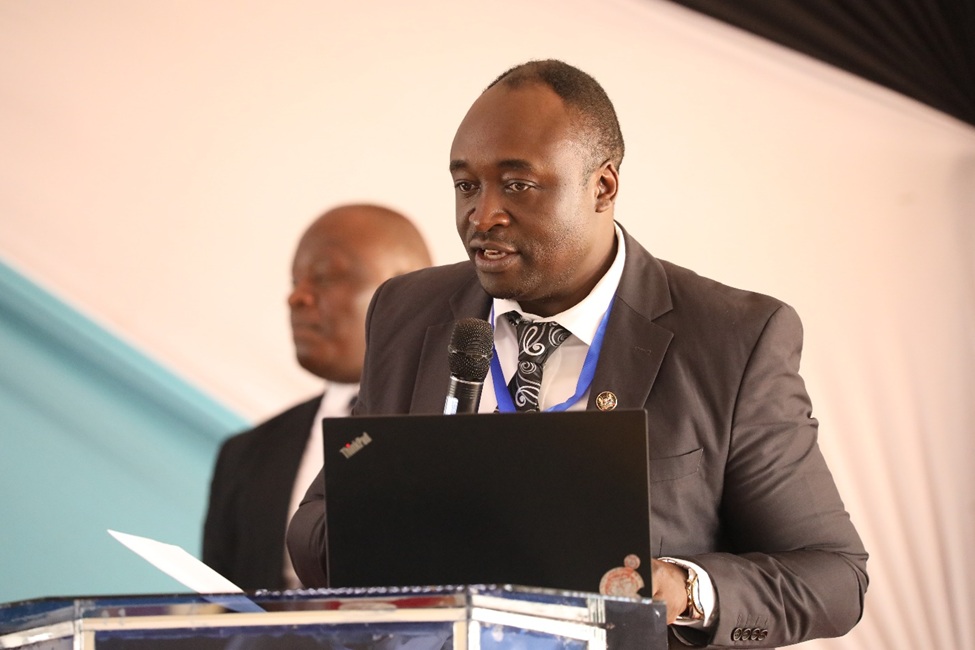
The Director Research and Postgraduate Support, Prof. Francis Orata makes his remarks.
On his part, the Director Research and Postgraduate Support, Prof. Francis Orata, expressed optimism for the future, revealing that this inaugural event marks the beginning of an annual conference. “We envisage an annual conference of this kind in the coming years. Within the LREB region, we have been working in silos. This conference was initiated to bring stakeholders together annually to showcase progress, share achievements, confront challenges, and support one another in developing solutions for the region’s development,” he explained. Prof. Orata further emphasized the importance of inclusivity, adding, “We want this conference to be inclusive and not an academic-only event. We must include all key stakeholders such as artisans, entrepreneurs, and the Jua Kali sector groups that are often left out of purely academic forums but remain absolutely key in matters innovation.”
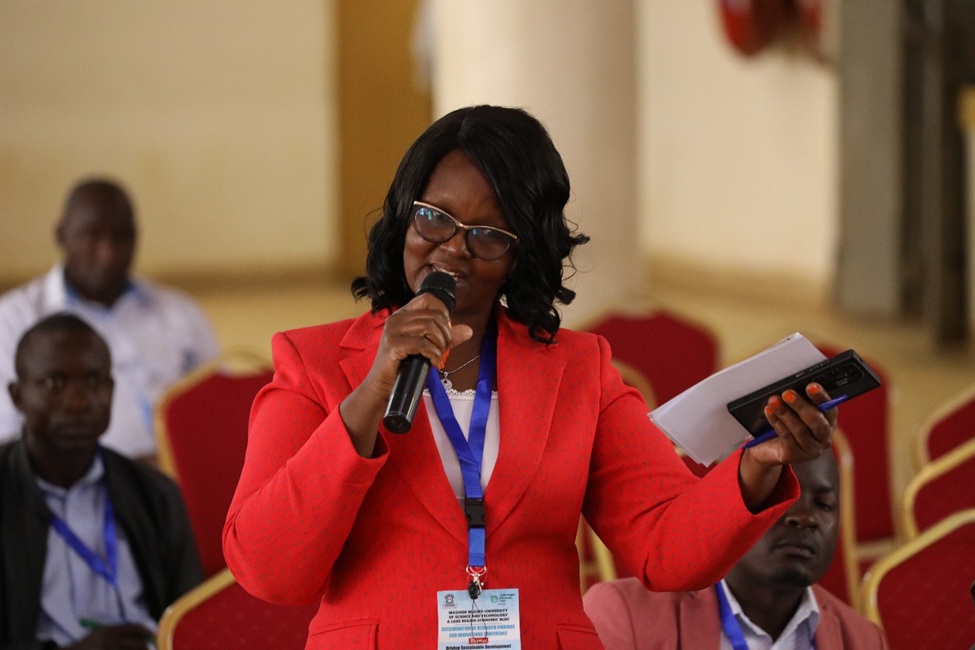
One of the researchers, Dr. Annette Okoth makes a point during the discussions.
Undoubtedly, MMUST is headed in the right direction. As the event concludes, we remain hopeful that the insights shared and partnerships forged will pave the way for a more resilient, self-sustaining, and economically vibrant Lake Region Bloc!
By Caren Nekesa, Ingarate Baridi, and Fredrick Ekesa
Photos by Shiundu Masafu