MMUST’s School of Disaster Management and Humanitarian Assistance Hosts Global Disaster Experts to Reimagine Disaster Risk Education and Research
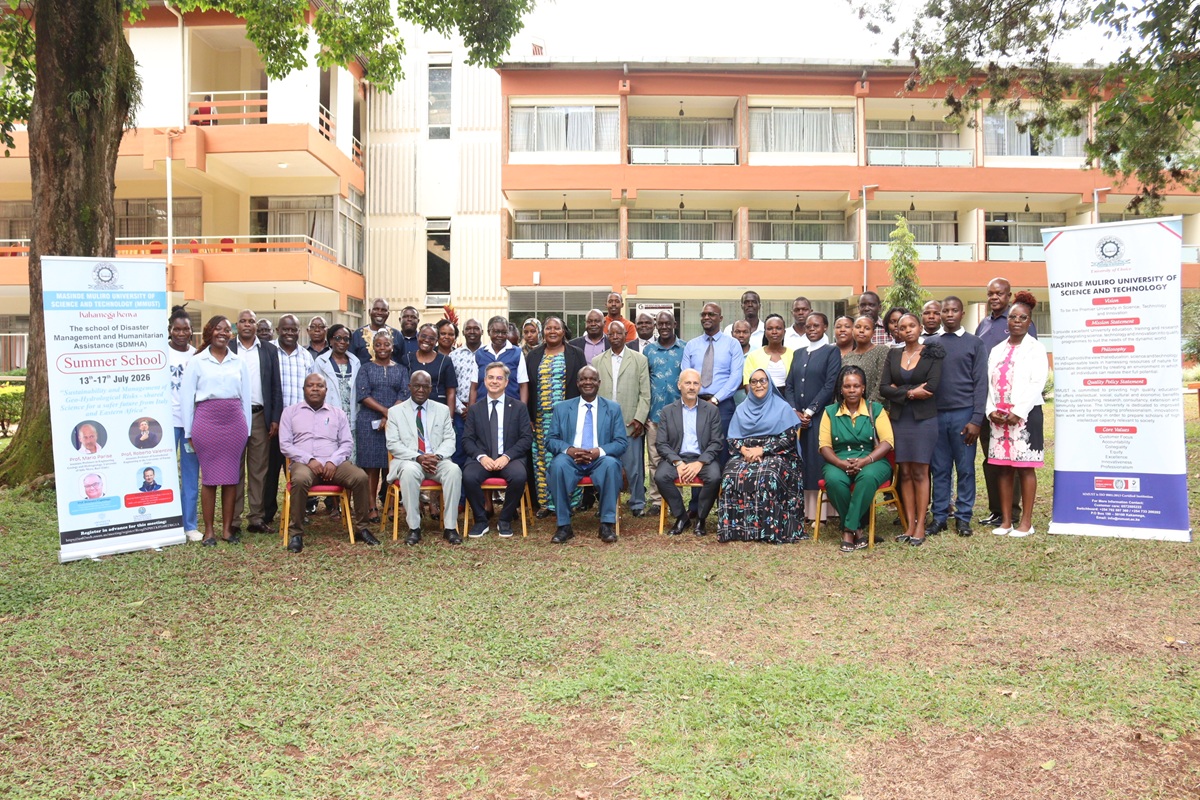
MMUST’s School of Disaster Management and Humanitarian Assistance (SDMHA) is hosting a week-long International Summer School which will stretch from 13th to 17th July 2026. The event brought together leading scholars, postgraduate students, policymakers and practitioners to advance knowledge and collaboration in disaster risk management. The Summer School is a continuation of collaborations initiated through three Transnational Education (TNE) programmes- WAGON2AFRICA, UNITAFRICA and ACHIEVE-IT- which have strengthened academic partnerships between institutions in Kenya and Italy. The event themed ‘Sustainability and Management of Geo-Hydrological Risks-shared Science for a safer future from Italy and Eastern Africa’ has brought together internationally renowned experts, including Prof. Mario Parise (Associate Professor of Engineering Geology and Hydrogeology at the University of Bari Aldo Moro)-Italy, and Prof. Roberto Valentino (Associate Professor of Geotechnical Engineering at the University of Parma)- Italy.
The workshop seeks to promote shared scientific knowledge and innovative approaches to build safer and more resilient communities by drawing on experiences from both Italy and Kenya. It has attracted postgraduate students from diverse disciplines, including geological sciences, geography, civil and hydraulic engineering, natural sciences, sociology and economics.
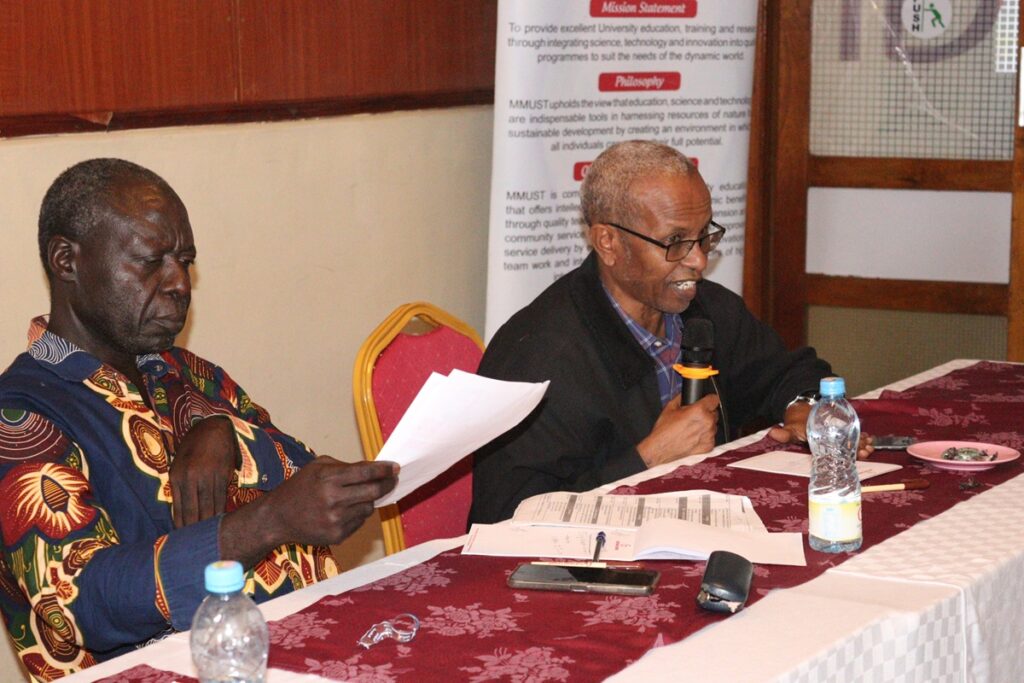
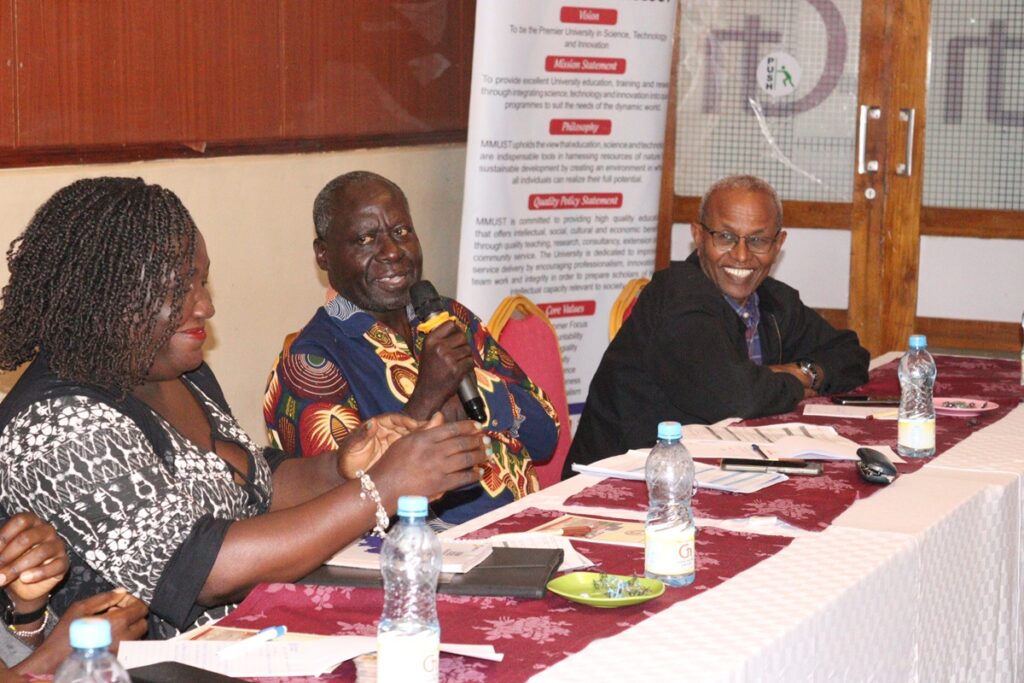
The Deputy Vice Chancellor (Academic and Student Affairs), Prof. Hussein Golicha speaks at the event.
The Deputy Vice Chancellor (Academic and Student Affairs), Prof. Hussein Golicha lauded the researchers steering this initiative, saying that this partnership between MMUST and the Italian institutions will certainly strengthen our research capacity, foster academic excellence, and expose students to global best practices in disaster preparedness. He encouraged the participants to take full advantage of the workshop by engaging actively in discussions, sharing experiences, and building lasting professional networks.
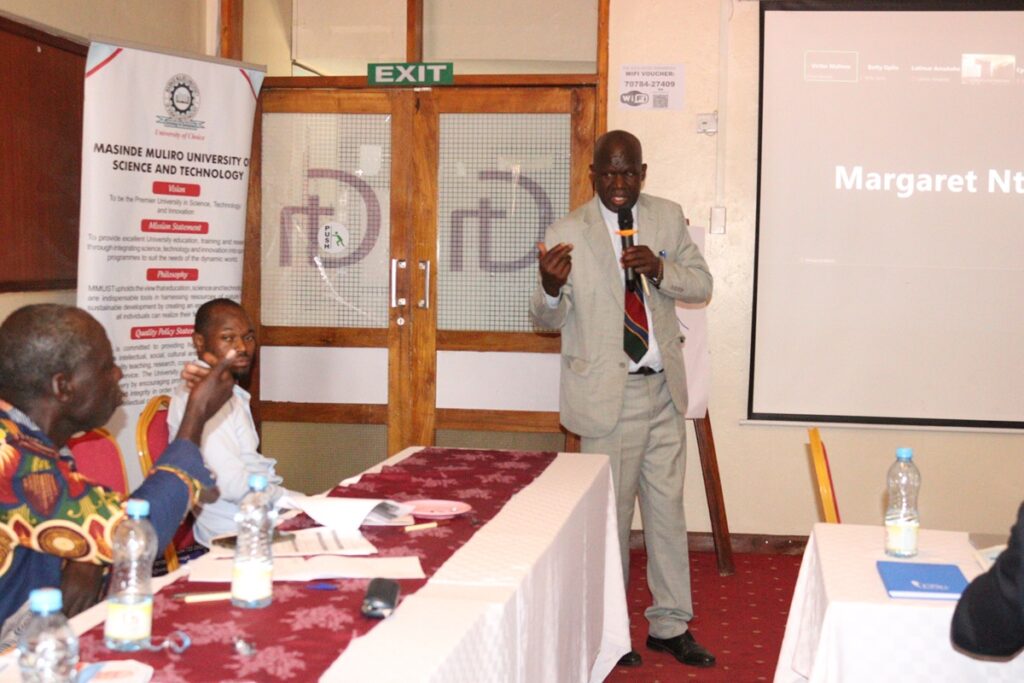
The Dean of the School of Disaster Management and Humanitarian Assistance- Dr. Ferdinand Nabiswa speaks during the Summer School.
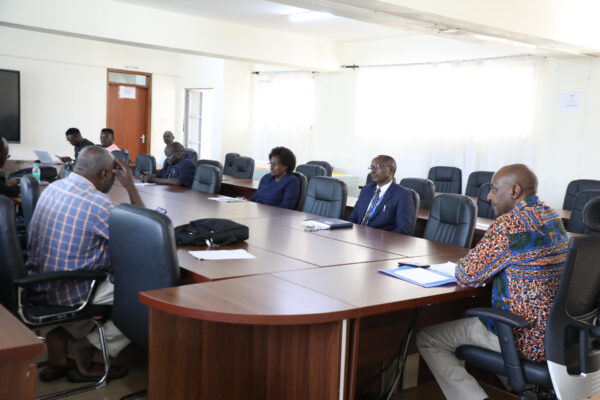
Speaking during an interview with the DCCM team, the Dean of the School of Disaster Management and Humanitarian Assistance- Dr. Ferdinand Nabiswa, described the Summer School as a strategic platform for strengthening research, innovation and curriculum development. Dr. Nabiswa observed that one of the key issues emerging from the opening day discussions is the absence of a centralized repository for disaster risk management research beyond postgraduate theses and journal publications.
“This Summer School is not just an ordinary session. It is an international platform that enables us to harness global perspectives and best practices to inform the repackaging of our academic programmes. Through these collaborations, we are strengthening our curriculum, enriching research and ensuring that our graduates are better equipped to respond to emerging disaster risks both locally and globally,” stated Dr. Nabiswa. The other Summer School lead hosts are Dr. Umulkher Ali and Dr. Victor Odari.
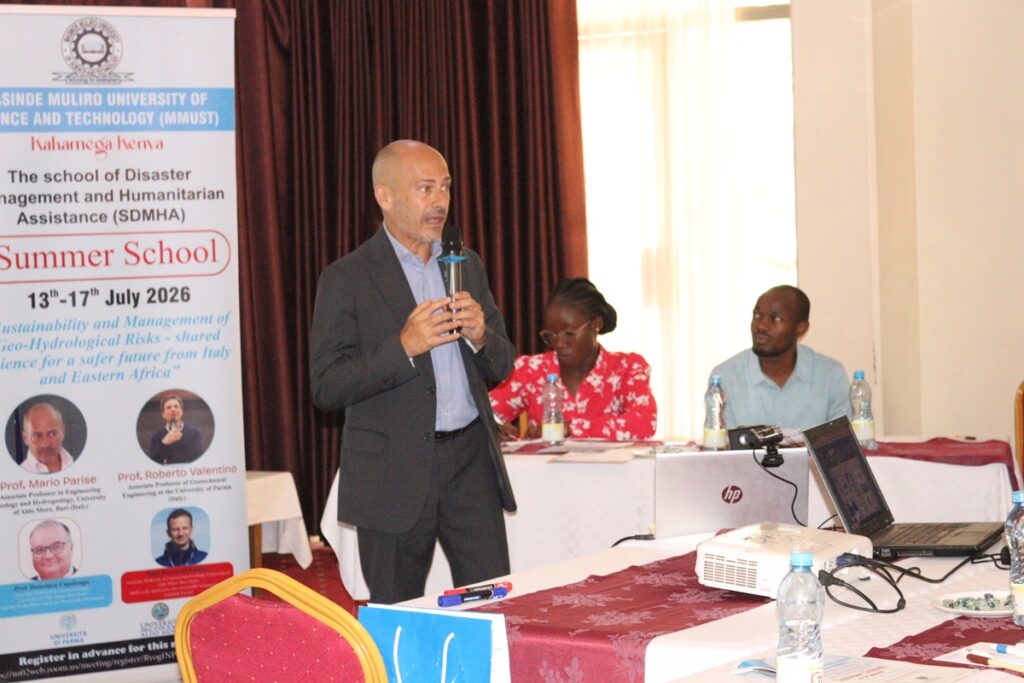
Prof. Mario Parise explains a point.
Some of the exhilarating presentations during the first day of the summer school included ‘Outlook of Disaster Risk Mitigation in Kenya: Legal and Organizational Perspectives– Prof. Eng. Sibilke Makhanu-MMUST, ‘Natural Disasters: from Susceptibility to Risk’ by Prof. Mario Parise University of Aldo Moro, Bari), ‘Slope Stability Analysis: Different Approaches for Different Landslides’ by Prof. Roberto Valentino-University of Parma, and ‘Leveraging Earth Observations for Climate Change Vulnerability Assessment: Land Degradation and Landslide Risk in Kenya and East Africa’ by Dr. Moses Akali.
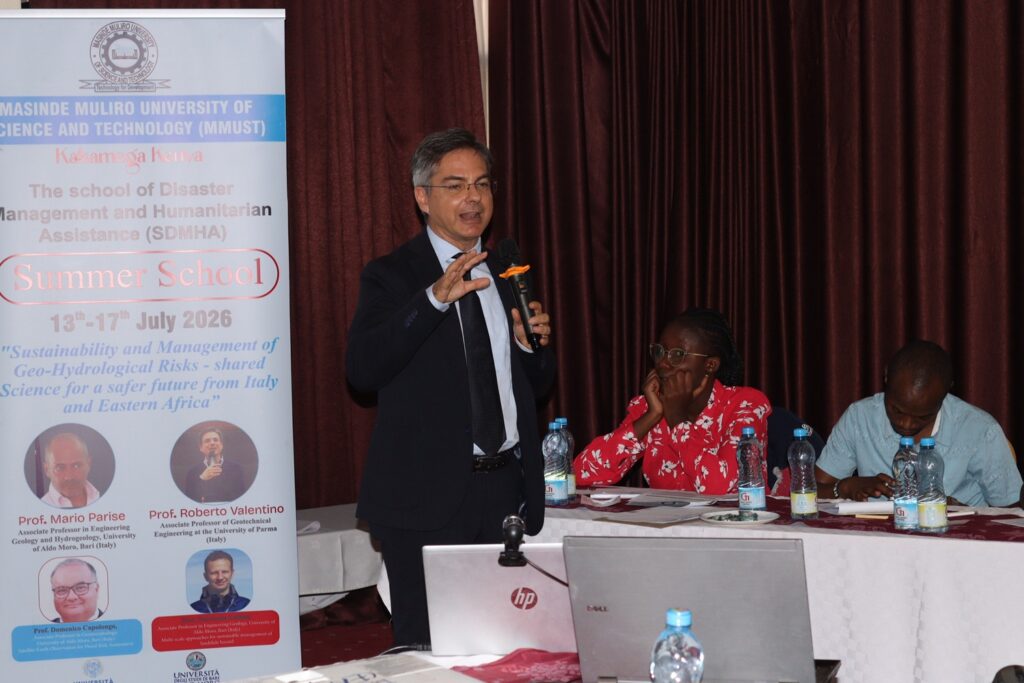
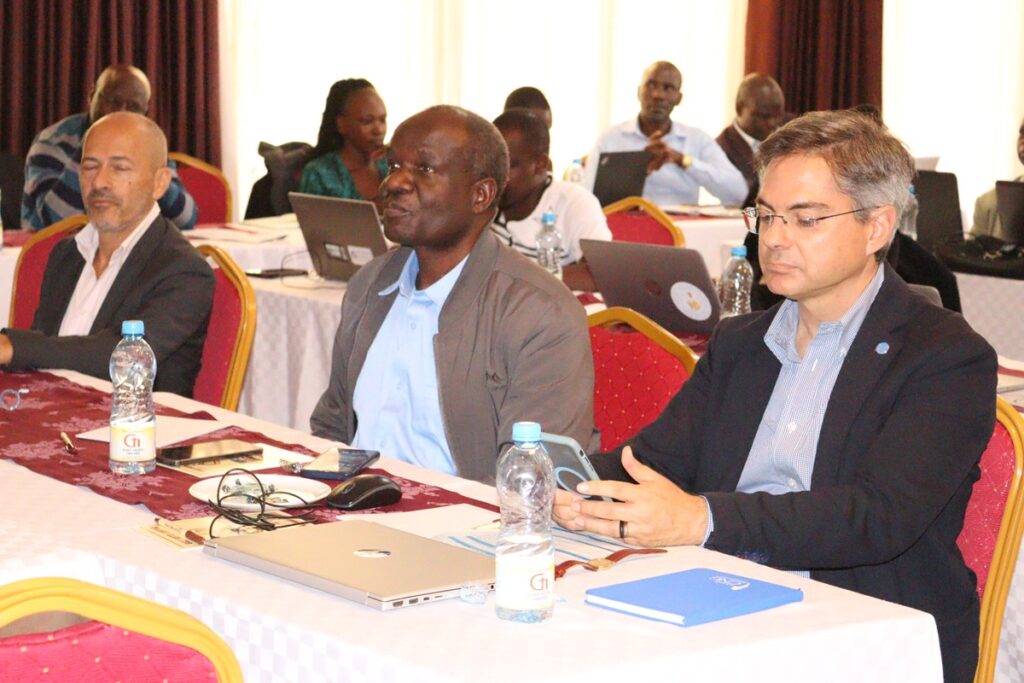
Prof. Roberto Valentino makes a presentation during the event.
Tomorrow, this intense and exciting summer school will see participants visit the Geo-hydrological risk hot-spots in the Nandi Escarpment.
By Dr. Lydia Anyonje and Linet Owuor
Photos by Wangari Wambugu