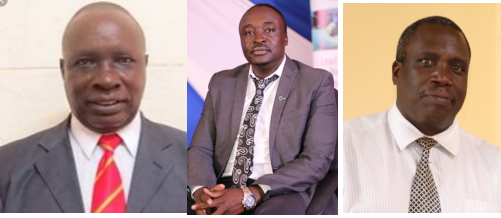
MMUST’s Professors William Shivoga, Francis Orata, and Dr. Anthony Sifuna Shatter Myths in Medical Research as They Scoop Close to Half a Billion Shillings in Funding!!!
he recent scoop of Euros 2,831,047.93 ( Ksh 444,474,525) by MMUST’s Professors William Shivoga, Francis Orata and Dr. Anthony Sifuna has shattered the myths about the research capacity of researchers in Africa. The three scholars won this funding by UK AID to facilitate them to undertake a project on ‘Africa AMR-STOP: Strategies for Tackling, Optimizing, and Preventing Environmental Antimicrobial Resistance in East and Southern Africa’. The research project will be implemented in partnership with the University of Pretoria, Busitema University, Makerere University, Uganda, Jaramogi Oginga Odinga Referral Hospital, and KIWASCO.
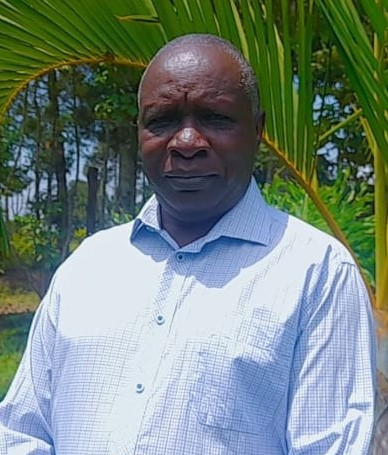
The Project Lead Co-PI, Prof. William Shivoga.
The big idea behind the Africa AMR-STOP Project was conceived and conceptualized by three researchers (Prof. Shivoga, Prof. Orata and Dr. Sifuna) at Masinde Muliro University of Science and Technology (MMUST), then later partners were brought on board. The concept was shared to the partners in Uganda, South Africa and the United Kingdom for the writing of the proposal, which was submitted to the National Institute of Health and Care Research (NIHR) of UK in 2023 for funding.
Earlier MMUST had awarded the team some seed money of Kshs. 1,000,000, which they used to get preliminary information that later gave birth to this mega project. The three highly prolific researchers clearly had the right mix of expertise to guarantee them this award. Prof. William Shivoga’s speciality is Aquatic Ecology while Prof. Francis Orata and Dr. Anthony Sifuna are Toxicological and Environmental Chemistry, and Biochemistry respectively. The project also involves 20 research scientists, 2 post-doctoral and 6 PhD students, water, health and environment professionals traversing 11 organizations and 4 countries including Kenya, Uganda, South Africa and the United Kingdom.
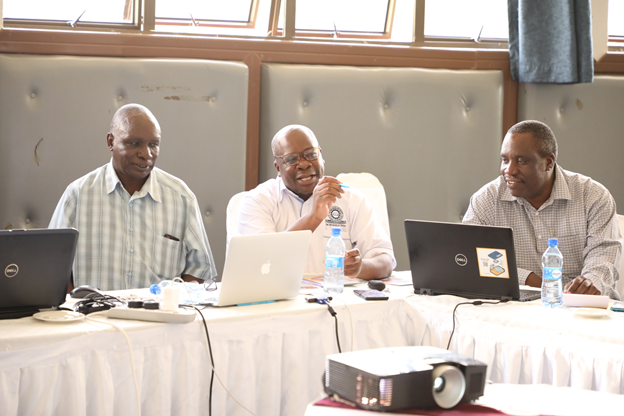
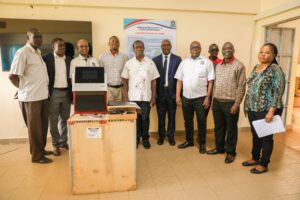
From left, Prof. William Shivoga, Dr. Joseph Owino and Dr. Anthony Sifuna at a past AMR research event.
The UK-Africa Consortium consists of interdisciplinary experts comprising the following disciplines: Mathematical Models/Numerical Methods, Aquatic/Microbial Ecology, Global Health, Molecular Microbiology, Computer Science, Health Economics, Anthropology, Medical Microbiology, Environmental Chemistry, Clinical Pharmacy, Clinical Microbiology, Bioinformatics, Public Health, Medicine, Health Policy and Civil Engineering.
Speaking to the Directorate of Corporate Communications and Marketing (DCCM) crew, the project PI, Prof. Shivoga pointed out that AMR is an urgent public health problem with a serious threat to human, animal and environmental health, and that it is particularly severe in low- and middle-income countries.
“We are conducting this research to tackle the Antimicrobial Resistance (AMR) that has been spreading in the Lake Victoria Basin. AMR is caused by water pathogens and our aim is to remove the Antibiotic Residues and Antimicrobial Resistance Genes (ARGs) from the waste water treatment plants. This will ensure that they do not sip into the water consumed by human beings,” said Prof. Shivoga.
Commenting on the magnitude of the project, Prof. Orata who is also the Director of Research and Postgraduate Support at MMUST, revealed that the funding of this project which stretches from 1st February 2026 to 31st December 2030, will enable the equipping of a fully fledged micro-biology and molecular laboratory. “With this specialized laboratory, we will monitor and conduct surveillance of AMR genes and antibiotic residues in Lake Victoria basin. We will source the samples from Uganda, South Africa and Lake Victoria (Kenya) and analyze them here at MMUST,” explained Prof. Orata.
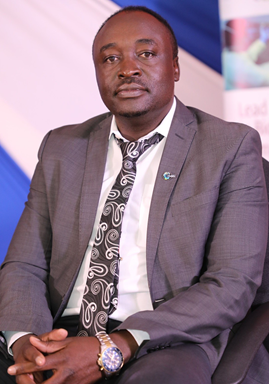
The Director of Research and Postgraduate Support, Prof. Francis Orata.
On his part, Dr. Anthony Sifuna who is a Medical Biochemist by training, noted that the project’s One-Health approach has the potential to mitigate and manage environmental AMR by enhancing health and well-being of residents in the study area.
“Our research project will reduce and slow down the spread of AMR, restore sustainable access to clean and safe water, and reduce the impact of infectious diseases on humans, animals and plants,” stated Dr. Sifuna, who is also the Dean School of Medicine at MMUST.
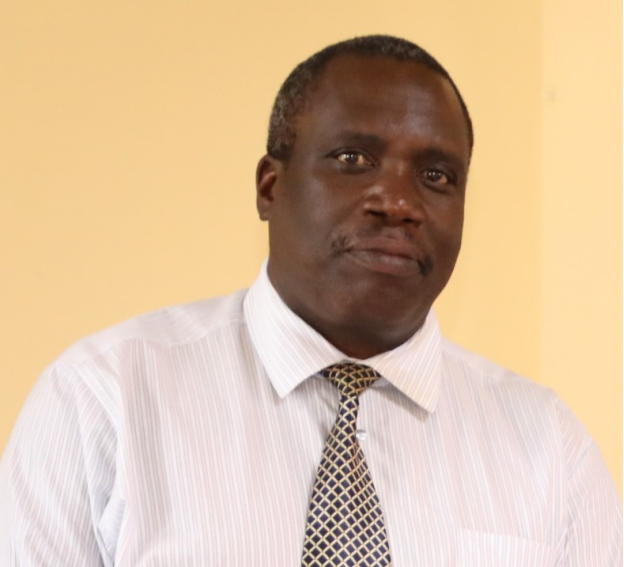
The Dean School of Medicine, Dr. Anthony Sifuna.
The Africa AMR-STOP Project comprises of six work packages, namely, surveillance of ARGs and antibiotics; innovation- eco-hydro wetlands; community involvement and engagement; establishment of information and data exchange to establish a database; capacity building involving training at PhD level, Professionals in health and pharmacists; and economic evaluation.
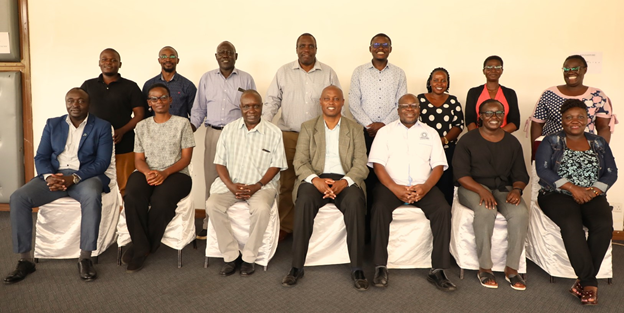
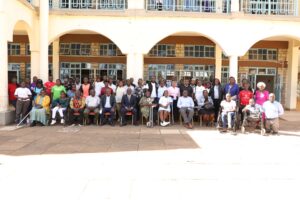
Prof. Francis Orata (seated far left), PI Prof. William Shivoga (seated third from left), Dr. Anthony Sifuna (standing fourth from the left), Prof. Charles Mutai (seated centre) with other participants at an earlier AMR event.
This is one of the largest funding awards that researchers at MMUST have attained in a long time. Through this funding, Prof. Shivoga, Prof. Orata and Dr. Sifuna have effectively shattered the previous myths touted regarding the true capacity of researchers in Africa. The project demonstrates that support to researchers through seed money from their universities can catapult scholars from Africa into winning the real big money!!!
By Dr. Lydia Anyonje and Caren Nekesa
Photos By Shiundu Masafu