MMUST Strengthens Graduate Research Capacity with Successful Completion of 10-Week Supervisors’ Training
Masinde Muliro University of Science and Technology (MMUST) has successfully concluded an intensive 10-week postgraduate supervision training programme aimed at strengthening the quality of graduate education and enhancing research supervision across the University. The programme saw seventy (70) academic staff drawn from various departments across the University actively engage in a comprehensive training designed to enhance supervisory skills, research mentorship, and the overall quality of postgraduate education. The programme was funded by the British Academy and implemented through a strategic collaboration between MMUST, University of Southampton in the United Kingdom, University of Edinburg and Nelson Mandela University in South Africa.
The certificate award ceremony held on 5th March 2026, at Golf Hotel- Kakamega marked the culmination of the programme. The event was graced by Dr. Kennedy Olung’o, a member of Council in charge of the Academic Committee, who lauded the initiative as a strategic step towards strengthening the University’s research ecosystem. He emphasized that enhancing supervisory capacity is critical in improving the quality, relevance, and completion rates of postgraduate research.
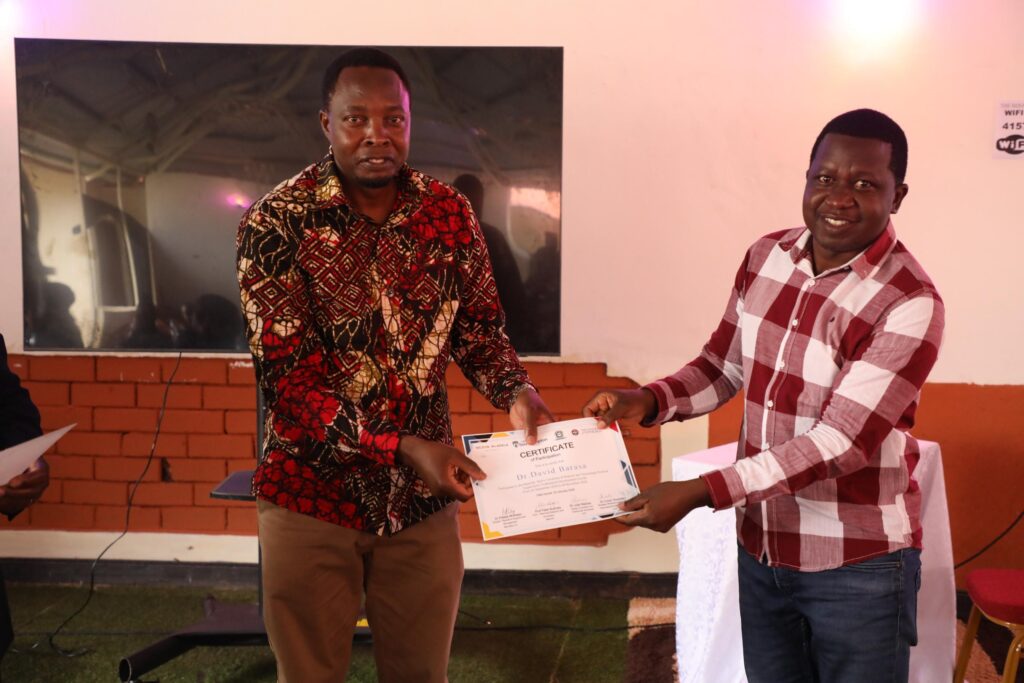
Dr. Kennedy Olung’o awards certificate to Dr. David Barasa.
Also in attendance was Prof. Janet Kassilly Barasa, First Lady of the County Government of Kakamega, who commended MMUST for investing in the professional development of its academic staff and for prioritizing quality research supervision. She noted that strong mentorship and rigorous research training are essential in nurturing scholars capable of generating knowledge that addresses societal challenges.
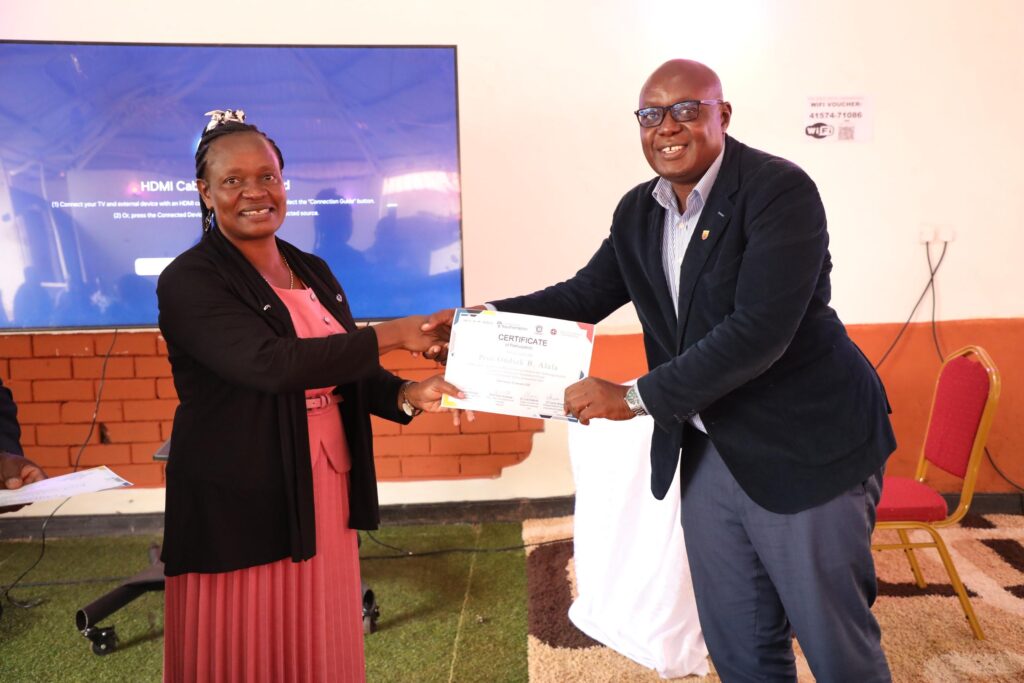
Prof. Janet Kassilly Barasa awards certificate to Prof. Benedict Alala.
Representing the Vice Chancellor, the Deputy Vice Chancellor (Academic and Student Affairs), Prof. Hussein Golicha noted that the training reflects the University’s commitment to strengthening the quality of postgraduate education and research. He emphasized that effective supervision is a critical pillar in nurturing competent scholars and producing impactful research that responds to societal needs.
Addressing the participants virtually, the Project Principal Investigator, Dr. Palesa Mothapo congratulated the participants for successfully completing the training programme. She commended MMUST for embracing the initiative and demonstrating a strong commitment to strengthening postgraduate supervision and advancing research excellence through international collaboration. The main facilitator of the programme, Dr. Julie Reeves of the University of Southampton pointed out that with the dynamism of postgraduate supervision, it is crucial for supervisors to undergo such training.
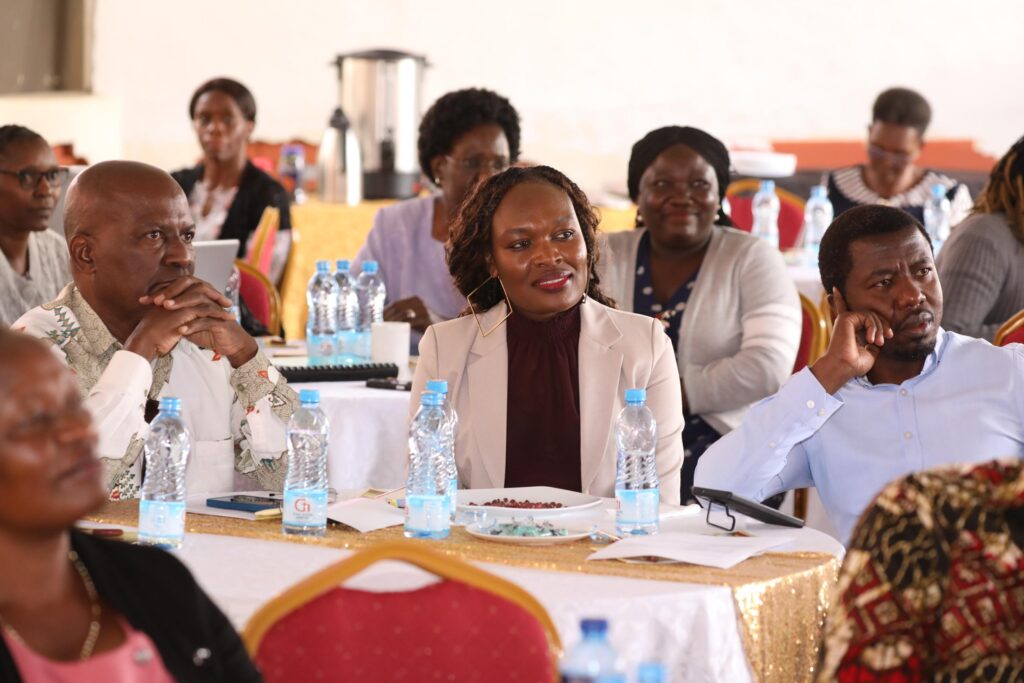
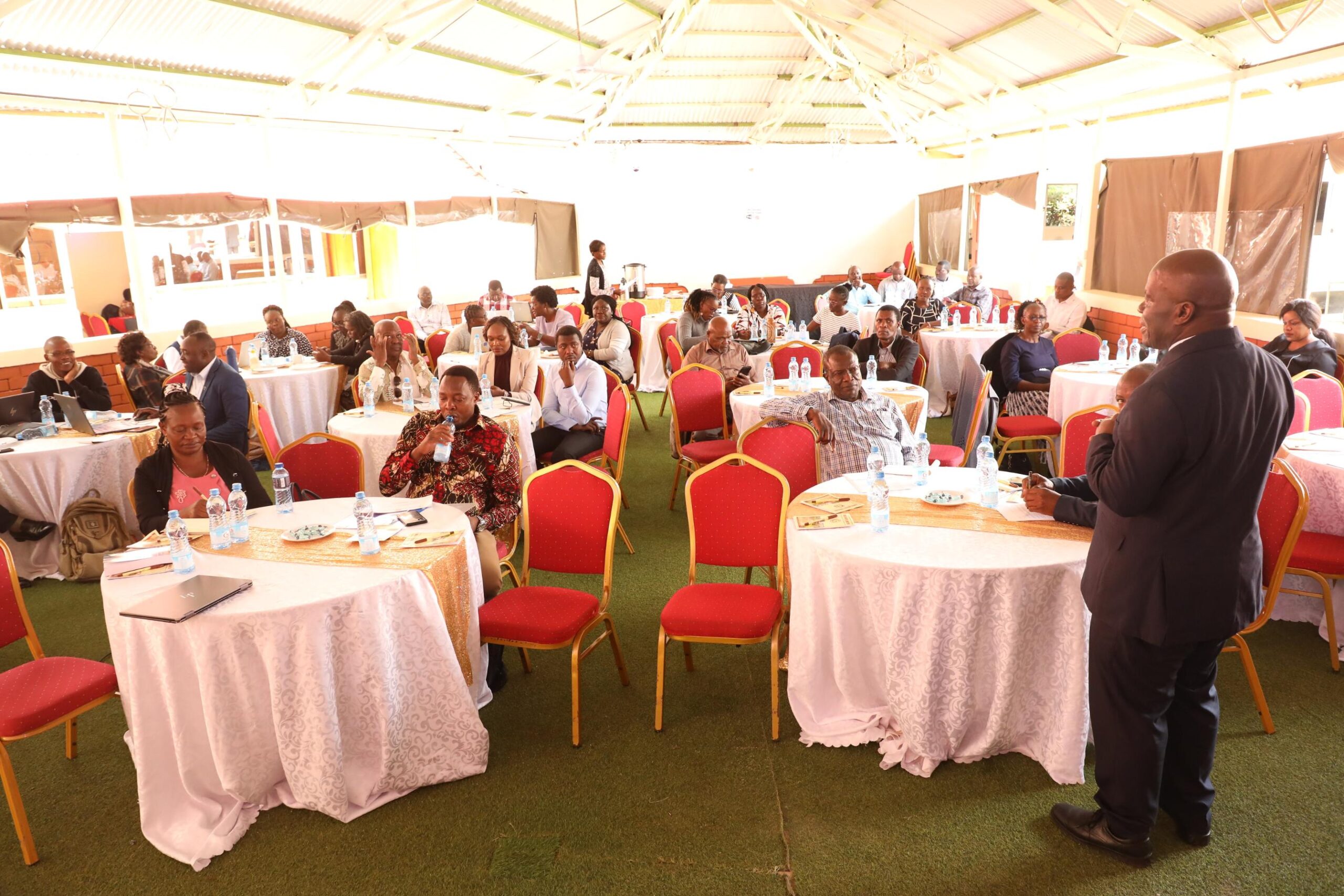
A section of the participants at Golf Hotel.
The Acting Deputy Vice Chancellor (Planning, Research and Innovation), Prof. Peter Bukhala, who is the project’s Co- Principal Investigator and is steering the project at MMUST, revealed that a team of researchers from Nelson Mandela University will visit MMUST on 15th to 17th April 2026 to conduct further training on research management. The delegation will be led by the Vice-Chancellor of Nelson Mandela University, Prof. Sibongile Muthwa, alongside the Director of Research Support and Management, Dr. Palesa Mothapo. The training will focus on strengthening researchers’ capacity in key aspects of research management and administration. Prof. Bukhala noted that the primary beneficiaries of the upcoming training will be the seventy (70) scholars who have successfully completed the doctoral supervision programme, further equipping them with essential skills to enhance research quality and management.
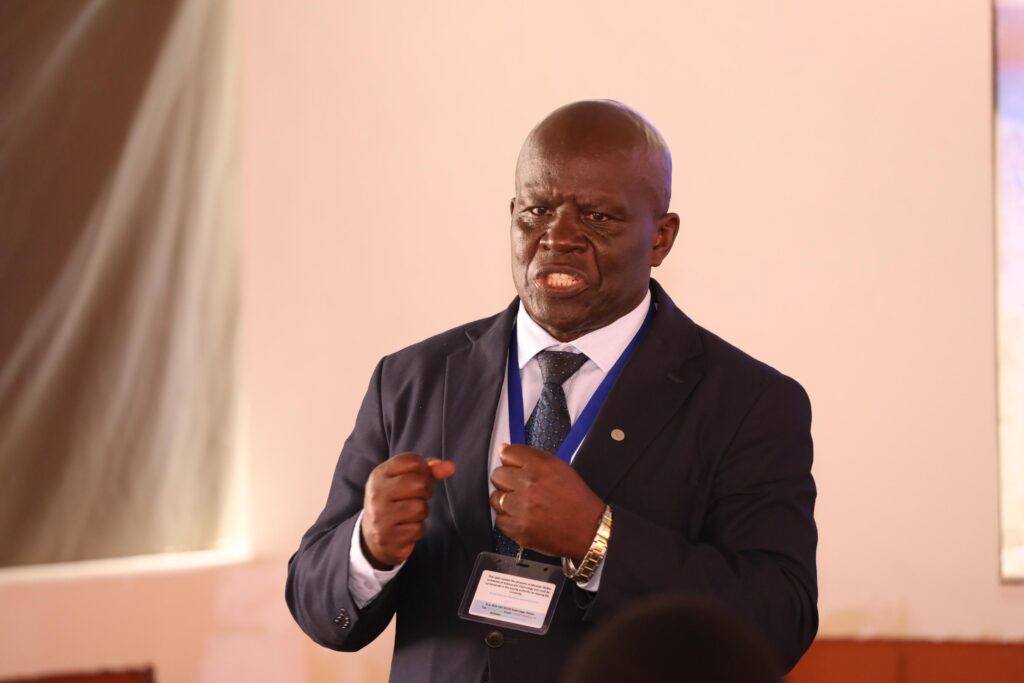
The Acting Deputy Vice Chancellor (Planning, Research and Innovation), Prof. Peter Bukhala makes his remarks at the event.
Attesting to the significance and impact of the training, several scholars who participated in the programme shared their reflections on how the experience has reshaped their approach to postgraduate supervision. Dr. Tecla Sum described the training as highly informative, noting that it helped demystify the long-held notion of ‘superior’ and ‘inferior’ supervisors. She explained that the sessions emphasized collegiality and collaboration, encouraging supervisors to work together in guiding postgraduate students more effectively.
Similarly, Dr. David Barasa observed that the programme provided participants with valuable insights into doctoral supervision from a global perspective, enabling them to benchmark their practices against international standards. According to Dr. Annette Okoth, the training significantly transformed her approach to mentoring postgraduate students. She noted that it encouraged a shift in perspective, where supervisors and students interact as knowledge co-creators.
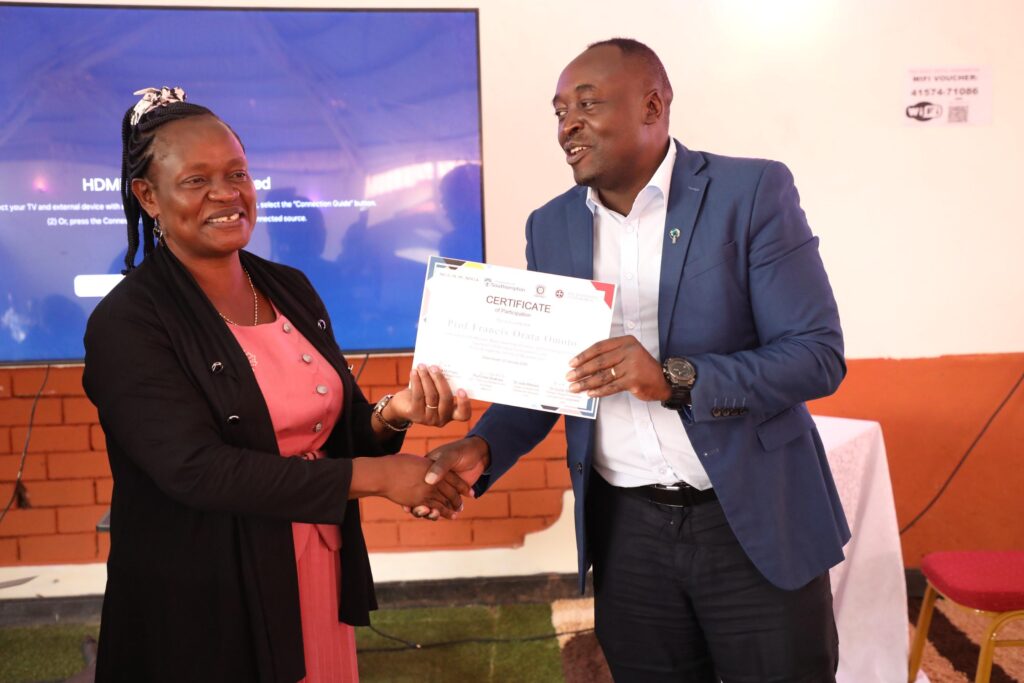
The Director, Research and Postgraduate Support Prof. Francis Orata receives his certificate.
Echoing these sentiments, Dr. Rose Opiyo highlighted the importance of intellectual humility in research and academic mentorship. “This training confirmed that no one has a monopoly of knowledge. As scholars, we have learned the importance of intellectual humility and collaborative learning,” she stated.
On their part, Prof. Benedict Alala and Dr. Rose Auma noted that the programme provided a valuable platform for peer learning and experience sharing among academic staff. They observed that through the sessions, participants were exposed to diverse supervisory approaches and styles that will enhance the quality and effectiveness of postgraduate supervision at the University.
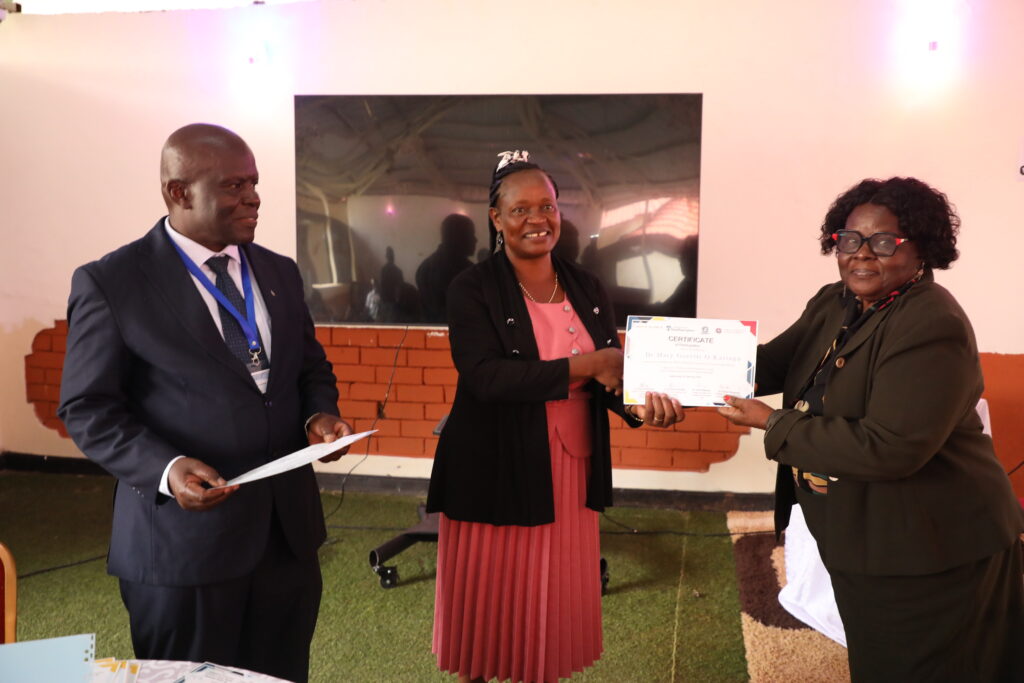
One of the researchers, Dr. Mary Goretty Kariaga receives her certificate.
Encouraging participants to apply the knowledge gained, Prof. Mugatsia Tsingalia urged the scholars to utilize the skills acquired during the training to enhance the quality of postgraduate supervision at the University. He noted that effective supervision goes beyond authority and control, instead it involves mentorship, collaboration, and mutual respect between supervisors and students. “Supervision is not about command and control; it is about guidance, mentorship, and walking the academic journey together with the student,” he noted, adding that the knowledge gained from the programme should translate into improved doctoral supervision.
The successful completion of this programme underscores MMUST’s continued commitment to academic excellence, capacity building, and the advancement of a vibrant research culture. By empowering its academic staff with modern supervisory competencies, the University aims to elevate the standards of postgraduate training and position itself as a leading hub for research and innovation in the region and beyond.
By Linet Owuor
Photos by Shiundu Masafu

You may also like