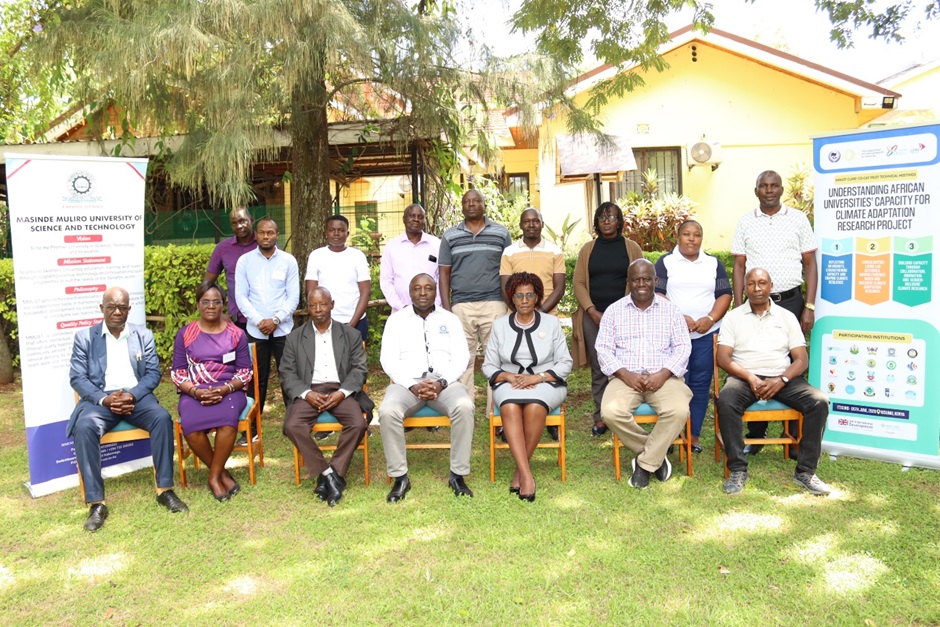
MMUST Exceeds Expectation by Successfully Piloting Climate-Focused Organizational Capacity Assessment Tool (CLARE CO-CAT)!
Masinde Muliro University of Science and Technology (MMUST) has successfully piloted the Climate Adaptation Capacity Assessment Tool (CLARE CO-CAT), which provides a structured and evidence-driven means for universities to identify strengths, gaps, and opportunities in climate research, as well as guide capacity-building interventions. The assessment saw the University score highly across the ten (10) interrelated competency domains as a result of the good infrastructure that supports climate adaptation research. The key thematic areas assessed included: Climate Science & Technical Capability; Adaptation Science & Systems Thinking; Interdisciplinary & Cross-Sectoral Collaboration; Gender, Equality, & Inclusion (GEI); Policy & Institutional Engagement; Communication & Stakeholder Engagement; Leadership & Strategic Direction; Monitoring, Evaluation, Learning & Adaptation (MELA), Organisational Learning & Knowledge Systems, and Resource Mobilization & Financial Sustainability. The three-days technical meetings, which kicked off on 3rd June, 2026, involved a rigorous review of policy documents, institutional plans, research outputs, training initiatives, partnerships, and activities undertaken by the University to address climate change and adaptation challenges.
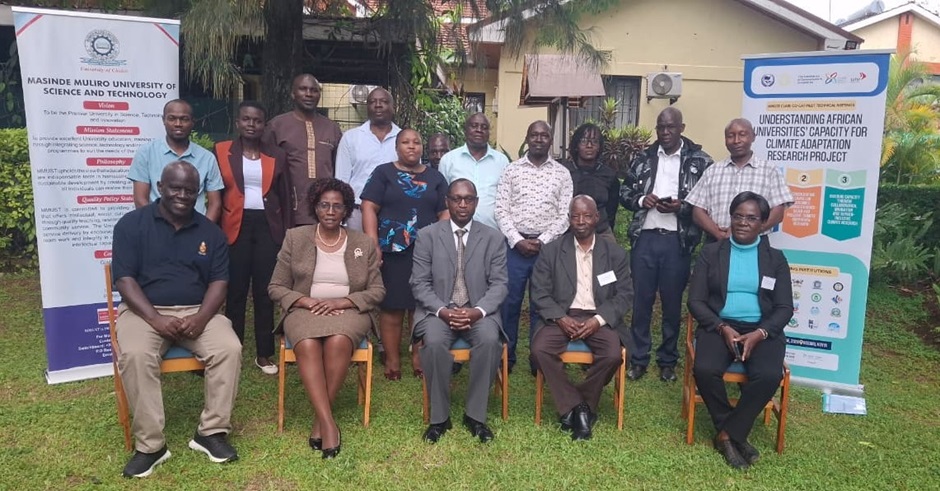
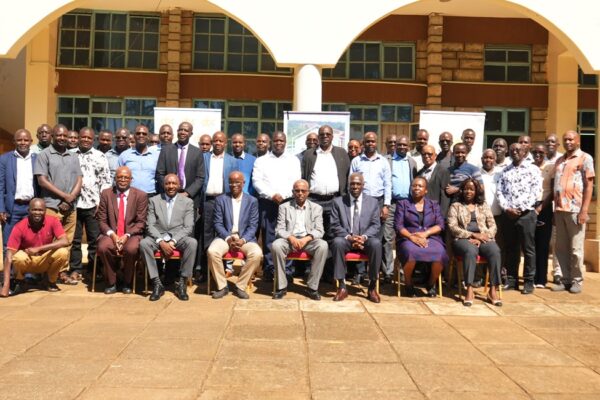
The Dean School of Business and Economics, Dr. Dishon Wanjere (seated centre) together with the participants during the meeting.
Addressing the participants on the second day of the training, 4th June, 2026, the Dean School of Business and Economics, Dr. Dishon Wanjere, who was standing in for the Vice Chancellor, Prof. Solomon Shibairo, highlighted that excellence in climate-focused research does not depend solely on individual scholars but on strong institutional systems such as governance frameworks that enable inquiry, funding models that sustain research, quality assurance mechanisms that measure impact, and leadership cultures that prioritize collaboration and inclusion. He commended the project ‘Understanding African Universities’ Capacity for Climate Adaptation Research’, saying that it recognizes this fundamental truth.
“If we succeed, CO-CAT will become more than a framework, as it will evolve into a continental reference point for institutional readiness in climate adaptation research. It will enhance our ability to attract sustainable research partnerships. And most importantly, it will position African universities as credible leaders in socially inclusive climate resilience. As the Vice-Chancellor of Masinde Muliro University of Science and Technology, I am proud that MMUST is part of this continental endeavour,” read the Vice Chancellor’s speech.
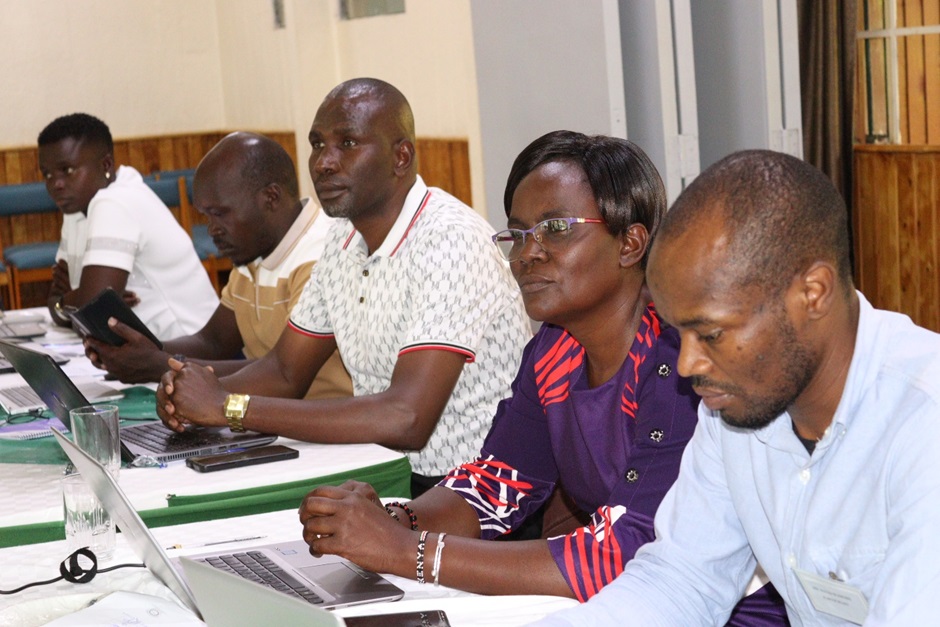
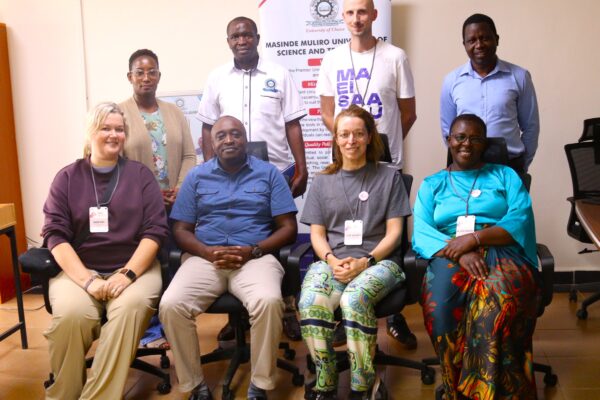
A section of the participants during the event.
Representing the Deputy Vice Chancellor (Planning, Research and Innovation), the Director of Research and Postgraduate Support, Prof. Francis Orata, lauded the initiative, saying that it is a very good programme that MMUST is involved in. He commended the School of Disaster Management and Humanitarian Assistance (SDMHA) for consistently leveraging research opportunities to broaden its impact and enhance its visibility, including through this particular initiative, which has positioned MMUST as the only Kenyan University in the consortium.
“As scholars, we have a responsibility to inform society about what is causing climate change and its effects on our environment and livelihoods. Through research and innovation, universities can contribute meaningful solutions to these global challenges,” said the Environmental Chemistry and Toxicology expert, Prof. Orata. Further, he congratulated the team for enabling the membership of MMUST to the Association of African Universities (AAU).
The Director of Research and Postgraduate Support, Prof. Francis Orata addressing the participants on behalf of the Deputy Vice Chancellor (Planning, Research and Innovation) on the third day of the meeting.
Speaking during the exercise, the Project Principal Investigator, Dr. Edward Mugalavai emphasized the role of the tool, echoing that it provides a structured and evidence-driven mechanism for universities to identify strengths, gaps, and opportunities in climate adaptation research and training.
“This tool enables institutions to objectively assess their climate adaptation capacities and guide targeted capacity-building interventions. The scores generated reflect the good work we are doing in MMUST. We are optimistic that MMUST will participate in the next phase of this project, the Monitoring, Evaluation and Learning, where we shall engage and share experiences with other like-minded institutions,” stated Dr. Mugalavai.
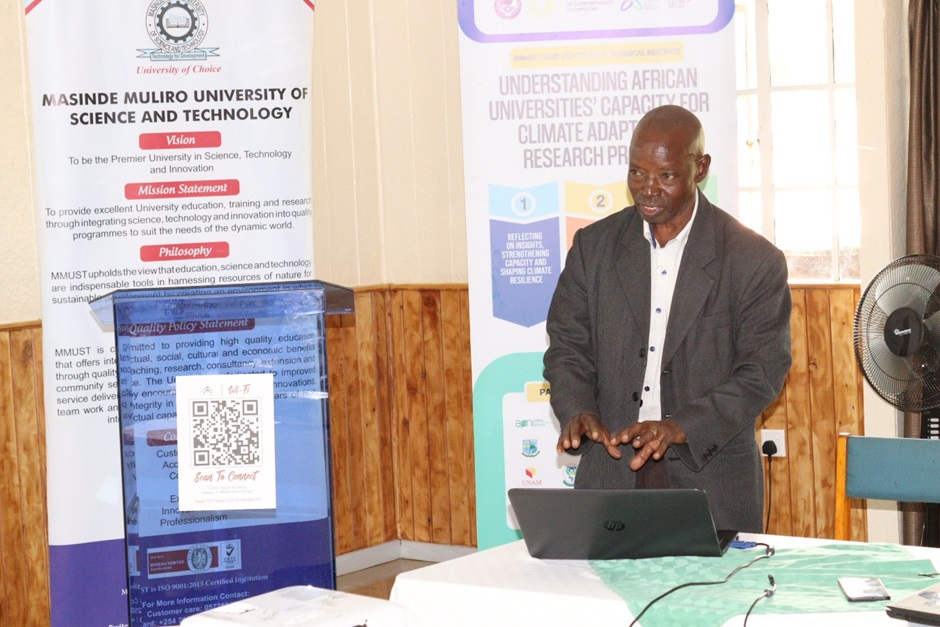
The Project Principal Investigator, Dr. Edward Mugalavai engaging participants during one of the sessions.
“A score of 36 out of 40 based on enormous evidence gathered from MMUST documents and repository on climate adaptation research is very good. We have exceeded expectations,” remarked the Project Co-PI- Prof. Josephine Ngaira, as she congratulated the team for their dedication throughout the exercise. Further, Prof. Ngaira guided members to establish a small committee to fine-tune the assessment report and provide evidence before submission.
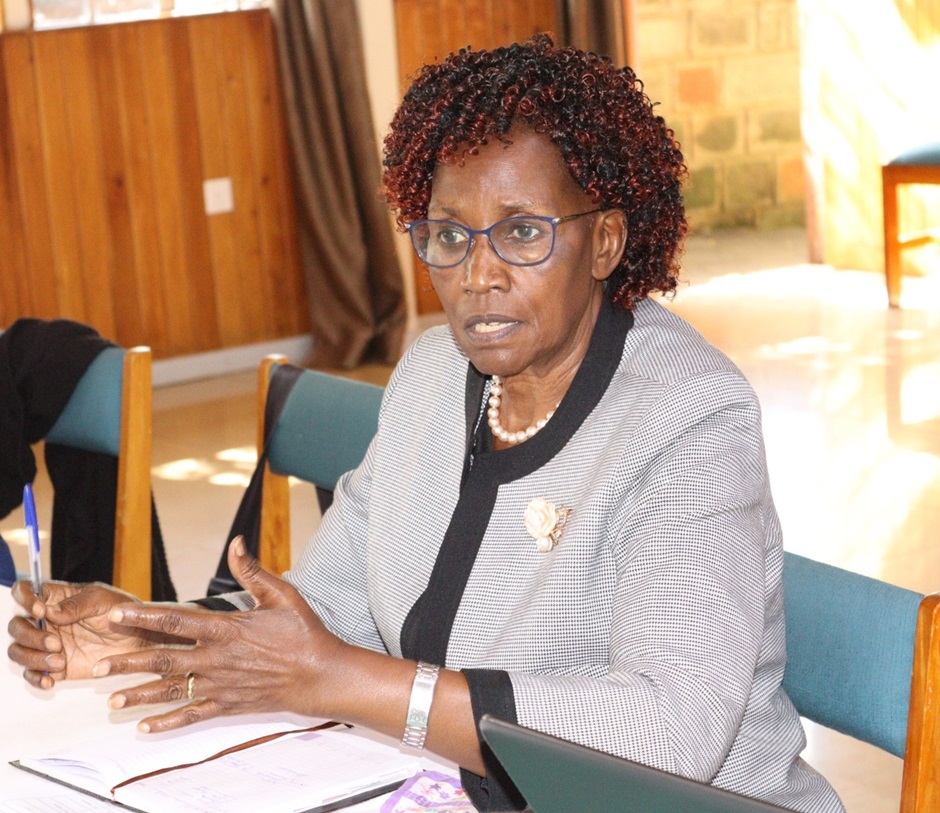
The Project Co-PI- Prof. Josephine Ngaira making a point during one of the sessions.
On her part, the Kakamega County Director for Disaster Management, Ms. Abigael Chepkorir commended the Project Principal Investigator and Co-Principal Investigator for spearheading the initiative and noted that MMUST continues to demonstrate leadership in the areas of disaster management, humanitarian assistance, and climate adaptation research.
“MMUST is a leader in Disaster Management and Humanitarian Assistance. Through research and collaborative projects such as this one, the University will certainly continue to grow its impact and influence,” she said.
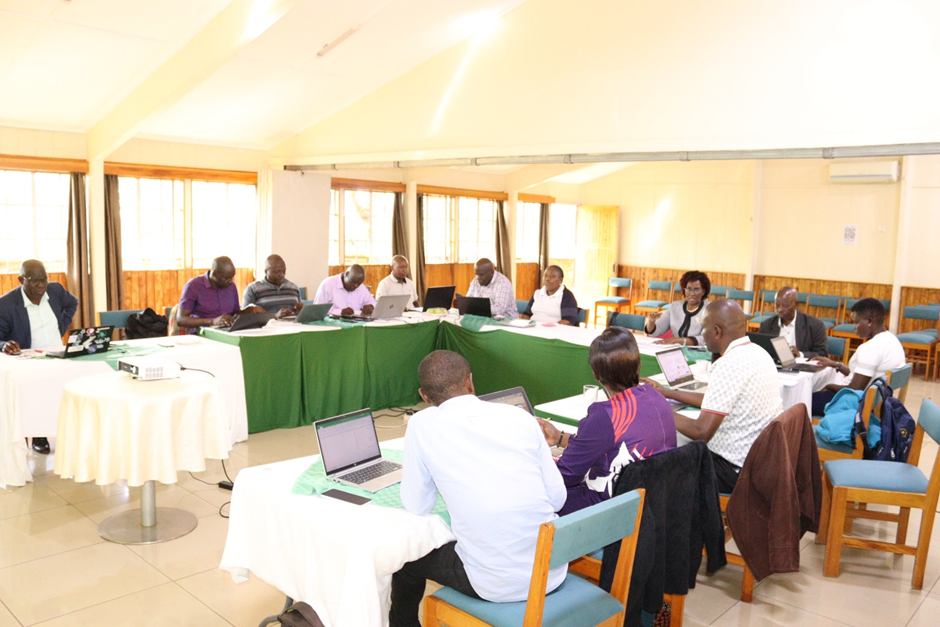
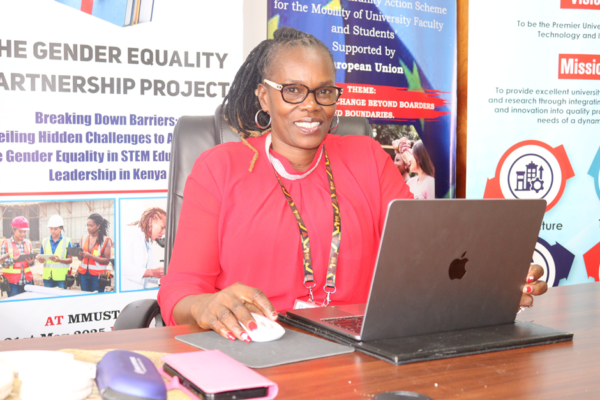
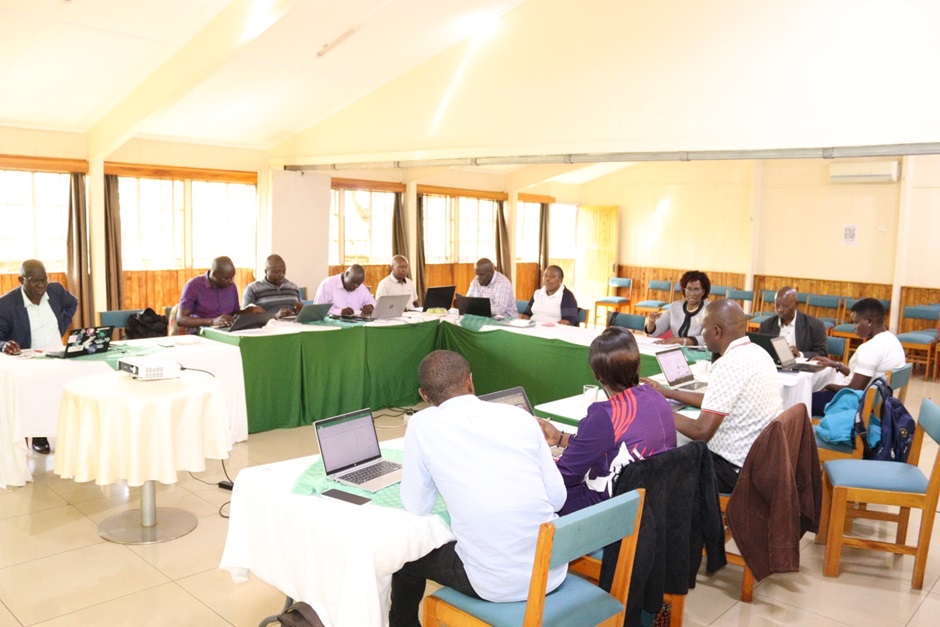
Participants sharing perspectives during the meeting.
The successful piloting of the CO-CAT tool highlights MMUST’s commitment to strengthening its climate adaptation capacity, enhancing evidence-based decision-making, and positioning itself as a leading institution in climate change research, training, and community engagement. The findings will go a long way in informing future interventions aimed at building resilient institutions capable of addressing the growing challenges posed by climate change.
Story and photos by Caren Nekesa