Rev. Fr. Dr. Kizito Muchanga Represents MMUST at Prestigious Beijing Seminar on Culture and Governance
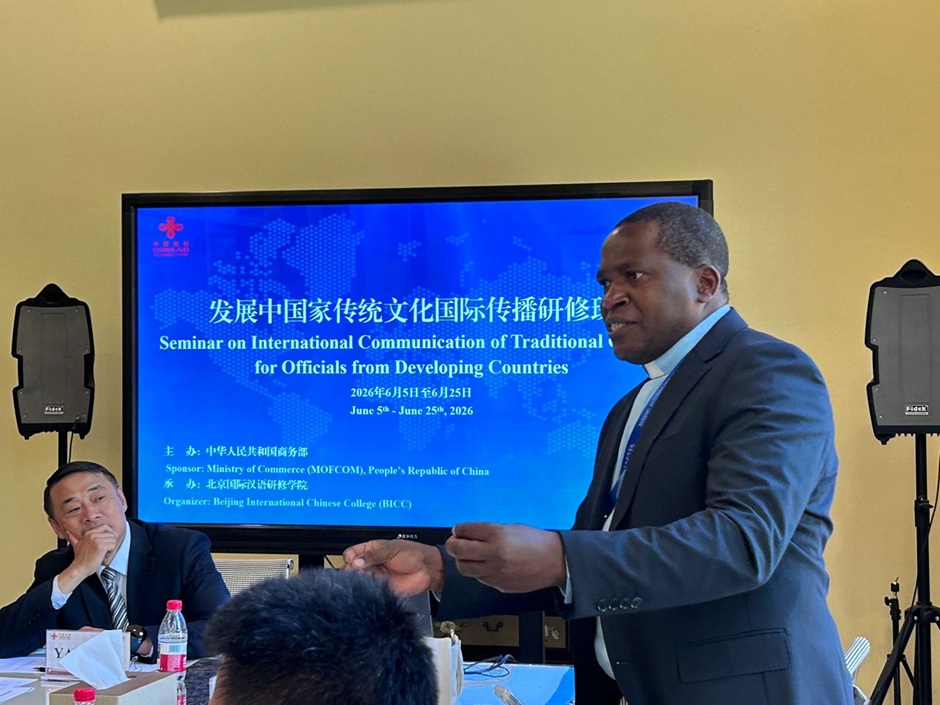
Rev. Fr. Dr. Kizito Muchanga Lusambili, a distinguished academic and thought leader from Masinde Muliro University of Science and Technology (MMUST), represented the institution at a prestigious international seminar in Beijing, China. The seminar, which was held from 5th to 26th June, 2026, focused on ‘Communication and Traditional Culture for Officials from Developing Countries’. This forum brought together delegates from across the Global South, for a cross-cultural dialogue and exchange of governance ideas rooted in traditional cultural values. It provided an opportunity for the scholar to interact with professionals from different cultural and political orientations across the globe.
The seminar was organized by the Beijing International Chinese College with sponsorship from the Ministry of Commerce of the People’s Republic of China. It aimed to deepen understanding among developing nations regarding the interplay between effective communication, cultural heritage, and governance practices; areas that are critical for building resilient societies and advancing sustainable development. The seminar also encouraged deeper ties between China and participating nations, creating pathways for ongoing collaboration in cultural exchange, governance capacity building, and sustainable development initiatives.
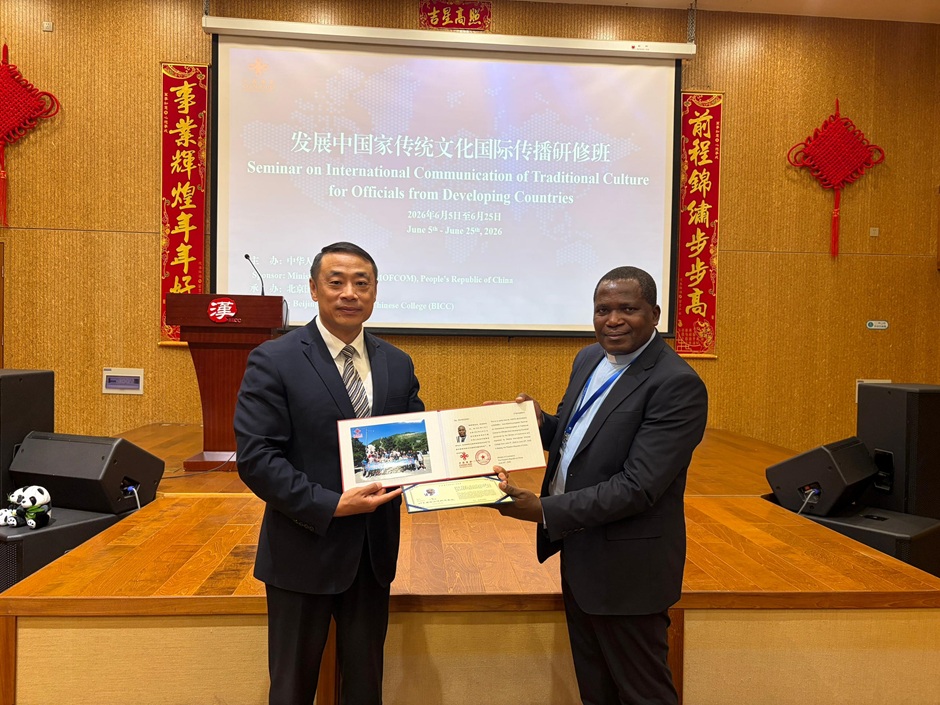
Dr. Muchanga receives a certificate of participation from one of the Chinese officials.
Representing the seminar delegates, Dr. Muchanga delivered key remarks on how traditional culture can shape modern governance and social cohesion. Drawing from comparative civilizational experiences, he highlighted China’s historical strengths and Africa’s unique cultural assets. In his presentation, Dr. Muchanga outlined three pillars underpinning the endurance of Chinese civilization: cultural continuity, familial patriotism, and governance meritocracy.
“China’s 3,000-year cultural heritage is actively preserved through education and ritual, ensuring a lasting connection to foundational values. Furthermore, the deeply ingrained concept of filial piety seamlessly expands from family devotion into a broader national loyalty, fostering strong social cohesion. China’s modern meritocratic system ensures leaders rise through proven competence and achievement, maintaining effective governance and societal trust. African civilizations also had their own traditions of social organization, justice, and community solidarity,” read his presentation.
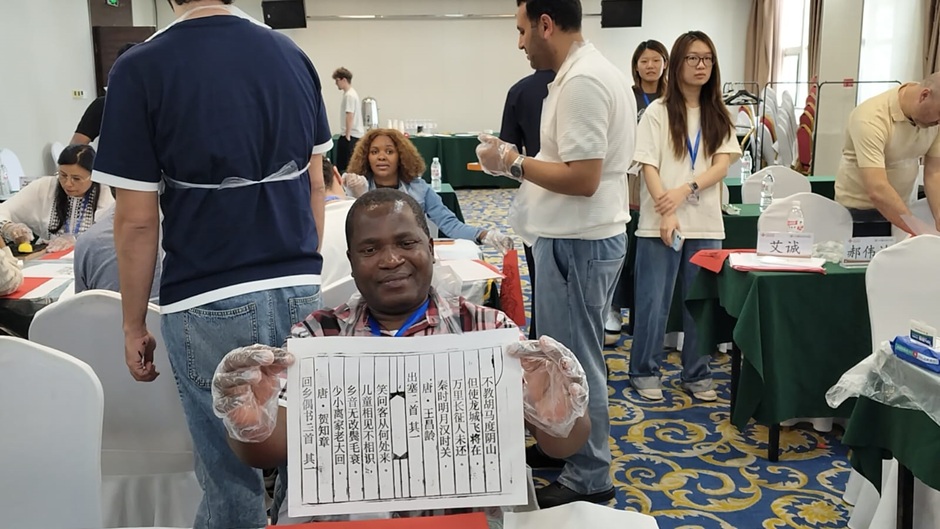
Dr. Muchanga participates in a Chinese calligraphy session.
He cited notable African elements including Great Zimbabwe, Kilwa, and the philosophy of Ubuntu. However, he cautioned that Africa is burdened by what he termed ‘internal amnesia’, a metaphor for the continent’s frequent neglect or loss of indigenous knowledge and traditions as pathways to development.
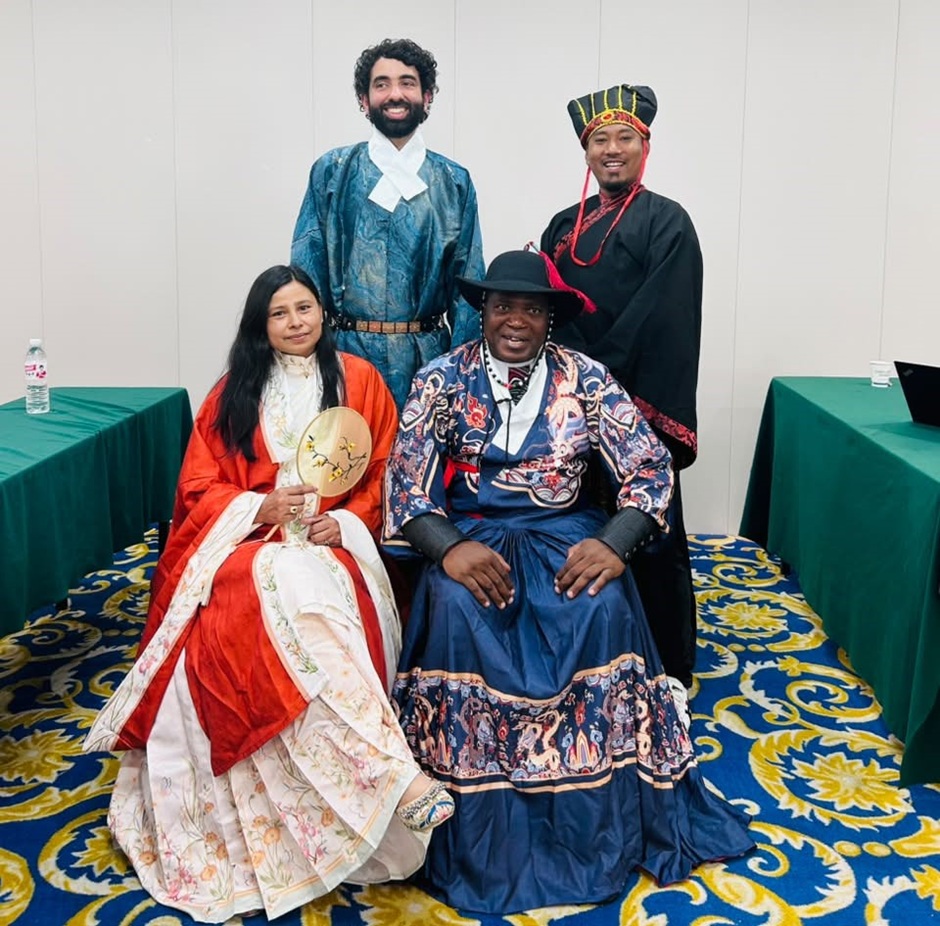
Rev. Fr. Dr. Kizito Muchanga in Chinese attire.
MMUST continues to enhance its reputation as an institution committed to advancing knowledge that bridges academic theory and practical governance issues. By participating in a globally significant seminar in Beijing, Rev. Fr. Dr. Kizito has showcased the University’s commitment to supporting cultural exchange and knowledge generation beyond borders. Ultimately, this engagement encourages policymakers and academics to utilize indigenous traditions as dynamic foundations for overcoming post-colonial development challenges and driving future progress.
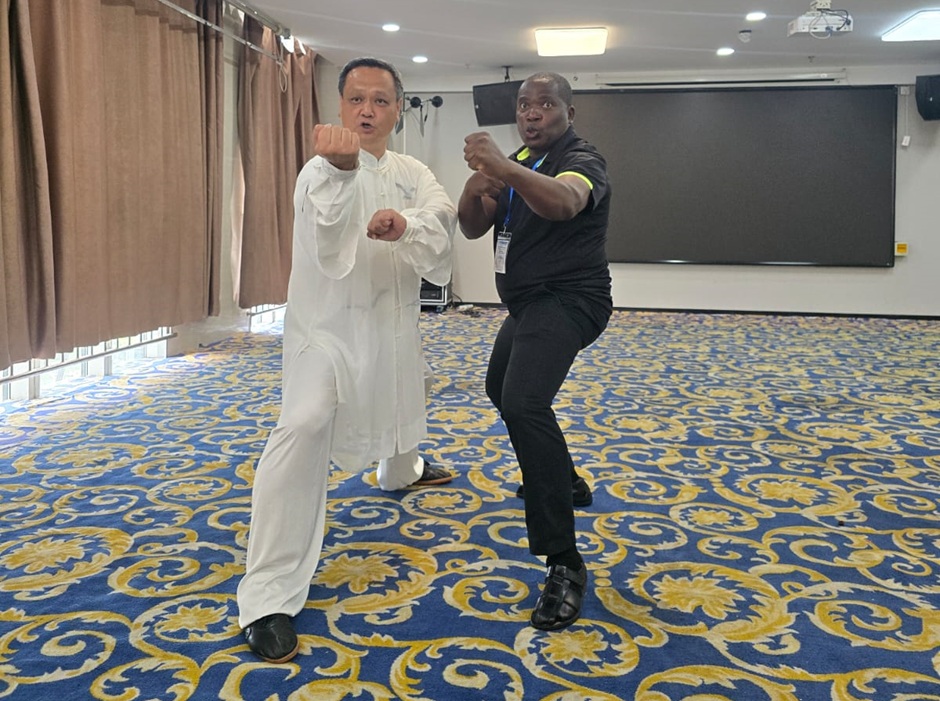
Dr. Muchanga tries out martial arts.
By Dr. Lydia Anyonje and Wangari Wambugu