MMUST Participates in Retirement Benefits Authority’s Stakeholder Engagement and Research Dissemination to Enhance Pension Awareness
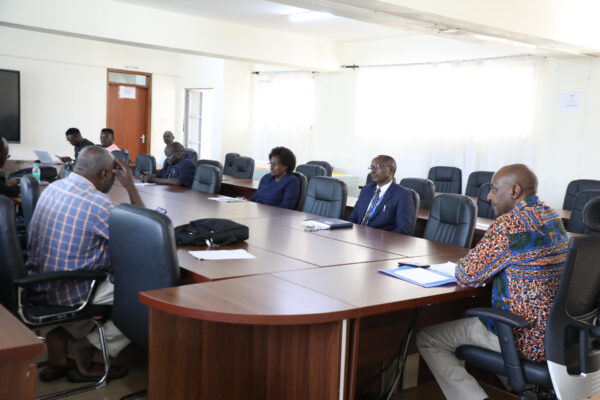
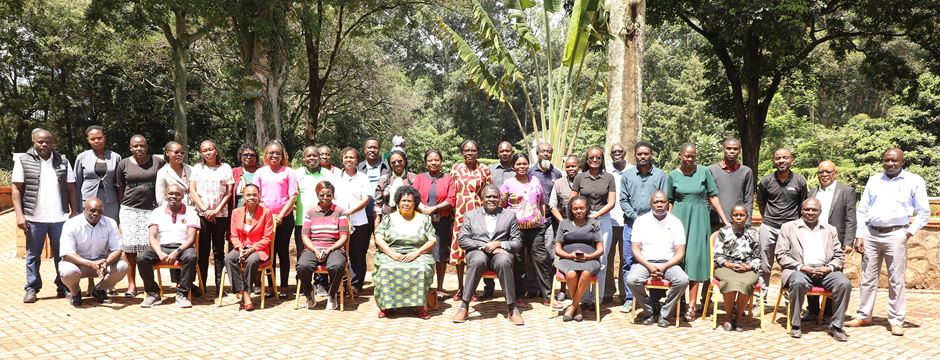
On 8th April, 2026, Masinde Muliro University of Science and Technology (MMUST) joined the Retirement Benefits Authority (RBA) for a strategic stakeholder engagement and research dissemination forum at the Golf Hotel, Kakamega. Led by the Chair Board of Trustees of the MMUST Staff Retirement Benefits Scheme, Prof. Joseph Nasongo, the MMUST team reviewed critical RBA research, including the Pensioner’s Survey 2024, Financial Sustainability Assessment of Retirement Schemes in Kenya, and an Analysis of RBA Complaints (2018-2023). The engagement was steered by RBA’s team, spearheaded by Senior Research Officer, Ms. Katile Mukunzi. The presentations and discussions sought to empower members with vital insights into retirement livelihoods and the long-term adequacy of pension benefits.
According to Ms. Mukunzi, the Pensioner’s Survey 2024, was designed to evaluate retirees’ livelihood situation and the adequacy of their benefits. A key focus was the Income Replacement Ratio, the percentage of an individual’s pre-retirement income that is paid out through a pension. The findings revealed a significant ‘dependency burden’ among Kenyan retirees. The study established that 83% of the respondents support one or more dependents, with a surprising 39% supporting adult children over the age of 25. Consequently, 45% of post-retirement income is spent on daily upkeep and shelter for dependents, while 34% is directed toward school fees.
The study further revealed a divide in financial perception: 57% of retirees felt their savings were insufficient, while 41% felt secure. Although 74% of respondents have diversified their income through other sources, 59% still rank their pension as their most vital financial lifeline. Importantly, the research highlighted a significant ‘regret factor’ among those already in retirement; 67% of retirees expressed that they should have increased their savings during their active years. This speaks to the gap between past expectations and current economic realities, suggesting that the sufficiency gap experienced by many retirees could be mitigated through more aggressive saving strategies earlier in one’s career.
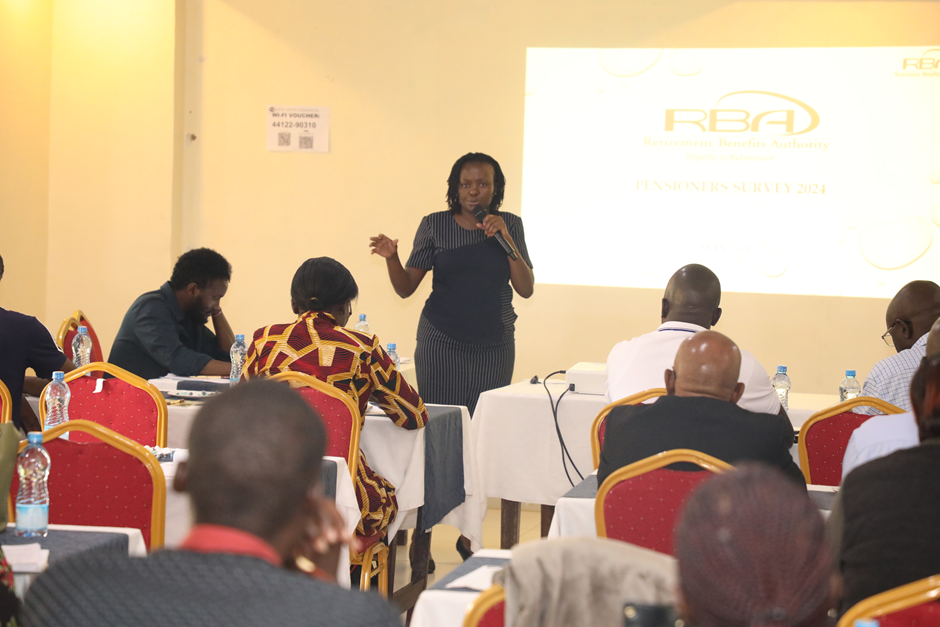
RBA’s Senior Research Officer, Ms. Katile Mukunzi facilitate during one of the sessions.
In an interview with the Directorate of Corporate Communications and Marketing (DCCM), Ms. Mukunzi identified healthcare as a primary ‘financial shock’ for pensioners. “Medical coverage and dependency are the largest consumers of retirement funds. We discovered that only 71% of retirees possess medical insurance, and 81% of those rely solely on the Social Health Authority (formerly NHIF),” noted Ms. Mukunzi. To mitigate these risks, she added “the RBA is advocating for the establishment of Post-Retirement Medical Funds and the introduction of sub-accounts. We are encouraging schemes to allow members to start saving early by allocating a portion of their pension contributions specifically for medical funds. This ensures that upon retirement, the scheme can procure a medical cover for the member. By securing such covers early enough, we avoid the high costs associated with seeking insurance at the age of 60.”
Commenting on the study ‘Financial Sustainability Assessment of Retirement Schemes in Kenya’, Ms. Mukunzi highlighted that unremitted contributions remain a major national challenge, growing to 5% of net assets by 2024. This trend, she noted, continues to strain scheme liquidity and member benefits. However, she commended the MMUST’s management of its staff welfare funds, noting that its scheme stands out as a model of compliance.
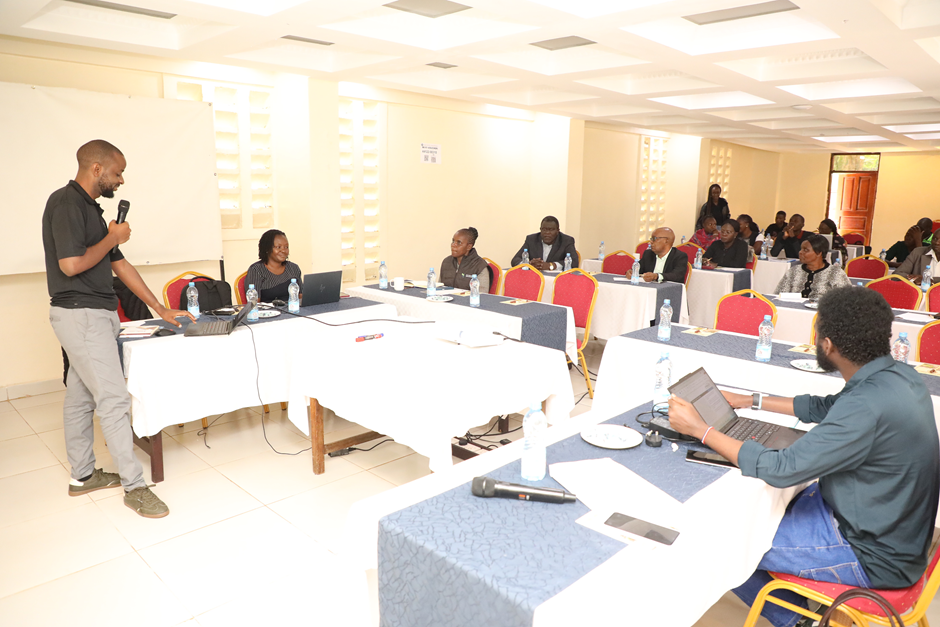
RBA’s Research Officer, Mr. Edwin Ngungi makes a presentation during the event.
“The MMUST scheme is performing exceptionally well. One of its strongest points is the absence of unremitted contributions; investments are handled professionally and in strict adherence to investment guidelines. The declared interest rates also remain within the market benchmark. I believe participants are now more aware of the importance of tracking scheme performance and reviewing their statements regularly. Conducting these personal assessments allows individuals to determine if their current savings align with their post-retirement expectations and needs,” she stated.
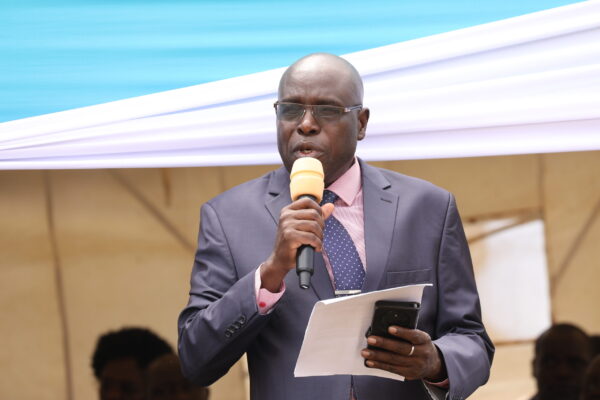
On his part, Prof. Nasongo stressed that the engagement served as a vital feedback loop between the regulator and the scheme. “When members are informed, our work as Trustees becomes easier and better understood. Accountability demands that members understand how and where their funds are being invested, and the rationale behind our strategic decisions,” said Prof. Nasongo. He assured members that the Board of Trustees remains deliberate and intentional in collaborating with expert service providers to maintain strong performance.
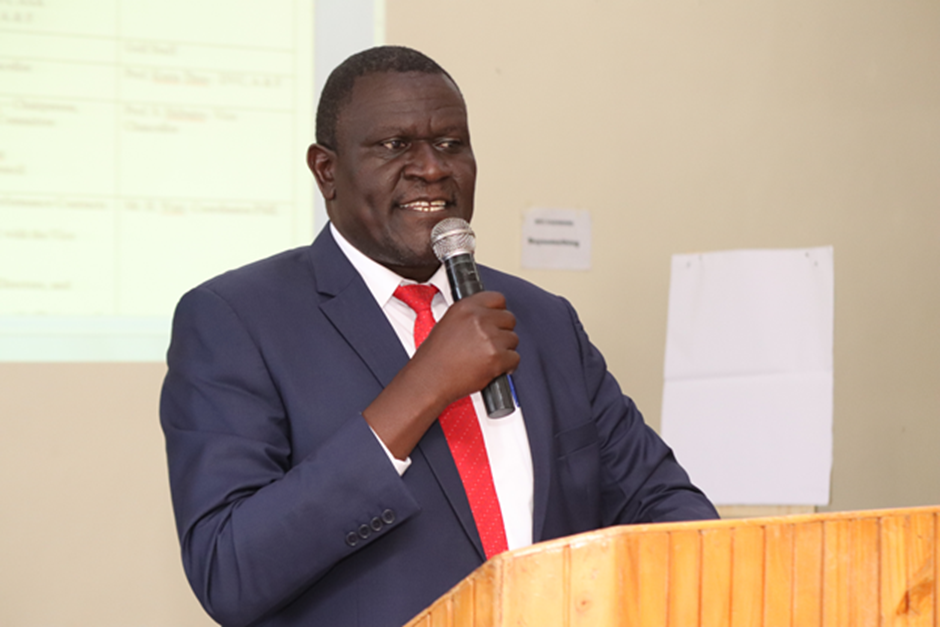
The Chair Board of Trustees of the MMUST Staff Retirement Benefits Scheme, Prof. Joseph Nasongo at a past event.
“In the previous financial year, we distributed a 17.95% return, followed by 16% in 2025. As the markets remain favorable, our commitment is to remain within double-digit returns, targeting 15% going forward,” he revealed. Prof. Nasongo expressed support for exploring the feasibility of Post-Retirement Medical Funds, noting that even modest monthly contributions could grow significantly through the power of compounding to cover future healthcare costs. “We will consider this and bring everyone on board to ensure that the funds we hold in trust benefit every member.
Other Research Officers from the Retirement Benefits Authority include Mr. Elema Boru and Ms. Ruth Ndunda.
Ultimately, these surveys serve as more than just data points, they are a reference for the future. Accessing such information prior to retirement ensures that employees are not just saving, but are actively preparing for a secure and dignified life after service. Certainly, with this information, members of the MMUST Staff Retirement Benefits scheme are now better equipped to take charge of their financial destinies!
By Caren Nekesa
Photos by Shiundu Masafu