MMUST and Rainbow for Africa-UK Partnership to Birth State-of-the-Art Ultrasound Simulation Laboratory at MMUST
MMUST’s partnership with Rainbow for Africa UK (R4AUK) is set to establish a state-of-the-art ultrasound simulation laboratory at MMUST. This was revealed during the three-day training, held from 29th June to 1st July, 2026 at MMUST. The two organizations have been jointly conducting Point-of-Care Ultrasound (POCUS) trainings spearheaded by the School of Medicine through the Department of Obstetrics and Gynecology. The exercise combined theoretical sessions at MMUST with practical hands-on training at Kakamega County General Teaching and Referral Hospital. More than 30 participants including doctors, nurses, clinical officers and student practitioners from Kakamega, Busia, Vihiga, TransNzoia and Bungoma Counties attended the programme. It aimed to enhance these frontline healthcare providers’ competencies in POCUS, thereby contributing to the reduction of maternal and neonatal morbidity and mortality through timely diagnosis and intervention.
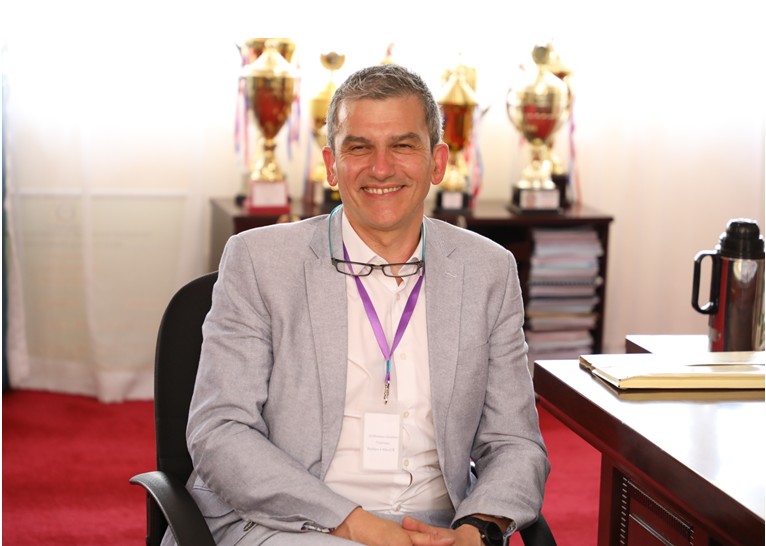
The President of Rainbow for Africa UK, Dr. Massimo Gozzelino at a past event in MMUST.
Speaking during the event, the President of Rainbow for Africa UK, Dr. Massimo Gozzelino, highlighted his organization’s commitment to bridging healthcare gaps by making quality healthcare more accessible through innovative technologies. He revealed plans to establish a state-of-the-art ultrasound simulation laboratory at MMUST, expressing confidence that it would become the first facility of its kind in Kenya.
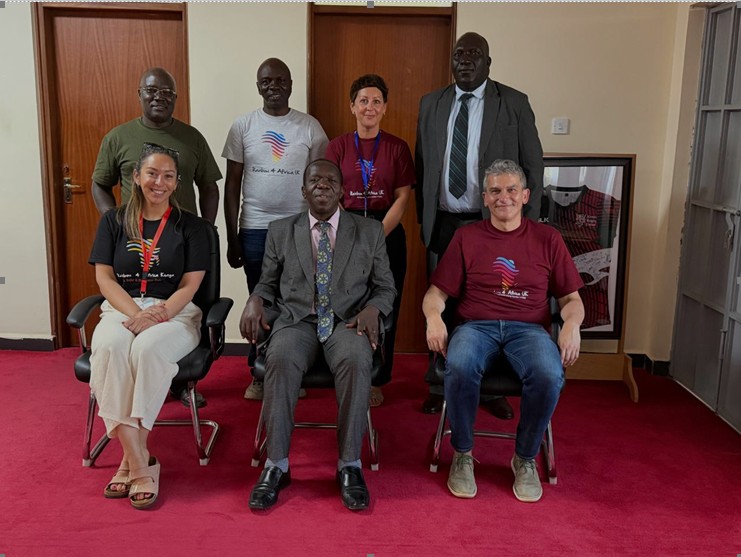
MMUST VC, Prof. Solomon Shibairo (second from left) and DVC Planning, Research and Innovation, Prof. Christopher Ngacho (Far right), together with delegates from Rainbow for Africa UK.
Commenting on the viability of the initiative, the Vice Chancellor, Prof. Solomon Shibairo affirmed MMUST’s commitment to ensuring that the goal of the partnership with Rainbow for Africa UK and Rainbow for Africa Kenya is met. “We thank Rainbow for Africa and its establishment in UK and Kenya for selecting MMUST as the location of the state-of-the-art ultrasound simulation laboratory. As we look forward to the completion of the student’ classrooms and laboratories in the ongoing health sciences project, we are happy that this facility will come in handy. It will benefit not only MMUST staff and students but also the community,” he stated.
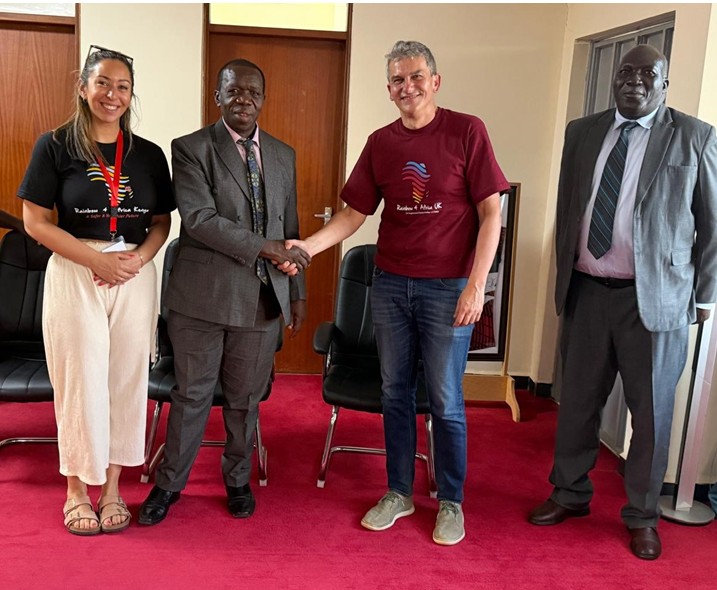
Prof. Solomon Shibairo and the President of Rainbow for Africa UK, Dr. Massimo Gozzelino shake hands. Looking on is DVC Planning, Research and Innovation, Prof. Christopher Ngacho.
Reiterating that the facility will be a valuable resource for the University, the Deputy Vice Chancellor (Planning, Research and Innovation), Prof. Christopher Ngacho noted that besides diagnosis and treatment, the laboratory will aid in advancing the research agenda in the School of Medicine and the affiliated Schools and Departments.
“We are aware that a state-of-the-art ultrasound simulation laboratory will play a key role in modern medical, engineering, and scientific research. It will provide a controlled, highly advanced environment with potential to bridge the gap between theory and clinical application,” said Prof. Ngacho.
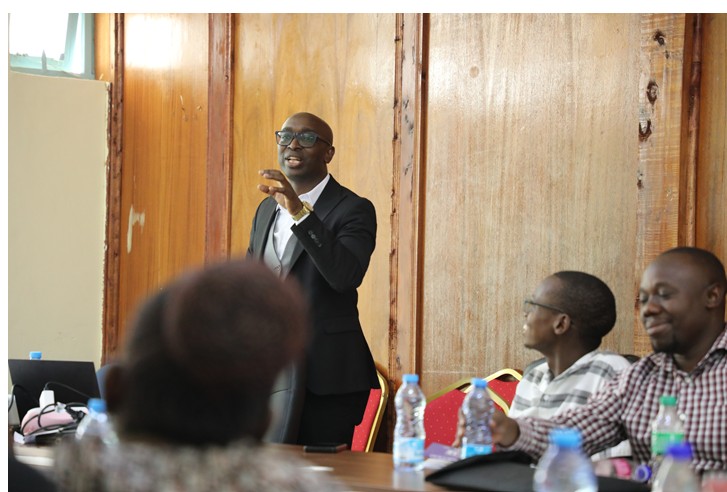
The Chairperson of the Department of Obstetrics and Gynaecology at MMUST, Dr. Mutakha Godfrey makes a presentation.
The Chairperson of the Department of Obstetrics and Gynaecology at MMUST, Dr. Godfrey Mutakha, affirmed that the collaboration between MMUST and Rainbow for Africa UK is a major milestone in improving maternal and neonatal healthcare across the region. He welcomed the proposal to establish a Centre of Excellence for Point-of-Care Ultrasound training at the University, noting that the facility would not only contribute to reducing maternal and neonatal mortality but also position MMUST as a regional leader in Obstetrics, Gynaecology and ultrasound training.
“This partnership is creating a sustainable model for capacity building. The proposed Centre of Excellence will enable continuous training, research and innovation while strengthening healthcare delivery in Western Kenya,” he remarked.
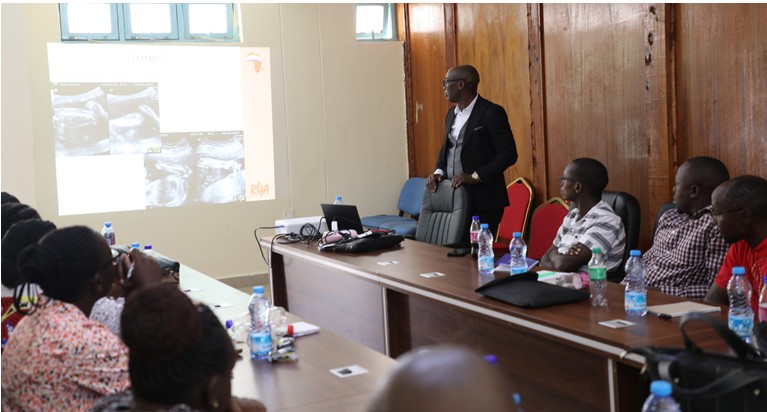
Participants keenly following presentations.
Echoing Dr. Gozzzelino’s vision, the Chairperson of Rainbow for Africa UK Kenya, Dr. Francis Wanyama noted that the POCUS programme extends beyond maternal healthcare by strengthening emergency medical response. He explained that the skills acquired by the healthcare providers will enable them to rapidly assess trauma patients, detect internal bleeding and diagnose life threatening lung conditions at the point of care.
“According to the World Health Organization, expectant mothers should ideally undergo ultrasound examinations during the first, second and third trimesters. Unfortunately, this remains unattainable in many underserved regions, including in Western Kenya. Through this programme, Rainbow for Africa is complementing county governments’ efforts by equipping nurses, clinical officers, primary care physicians and maternity healthcare providers with practical point of care ultrasound skills,” he stated.
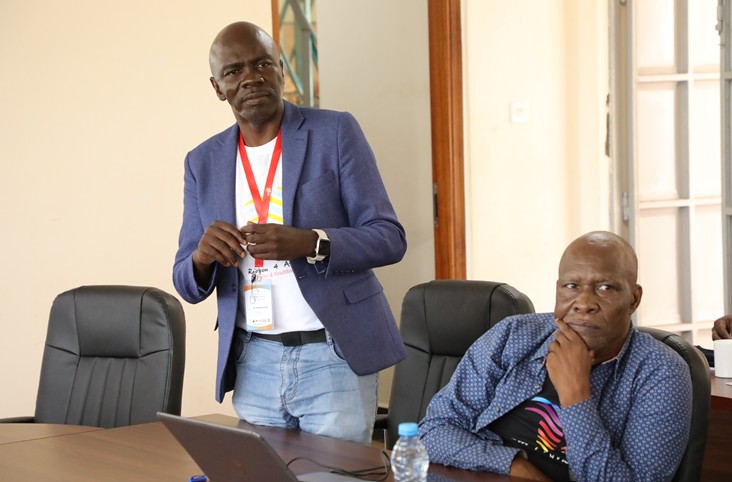
Dr. Francis Wanyama speaks at a previous POCUS training session.
The workshop featured experienced ultrasound practitioners from the United Kingdom, Tracy Cockburn and Jennifer Hughes, who served as lead trainers. They guided participants through theoretical instruction and practical ultrasound sessions. They were joined by Dr. David Andambi, a radiologist at Kakamega County General Teaching and Referral Hospital (KCGTRH), who facilitated practical sessions, sharing his expertise in diagnostic imaging and obstetric ultrasound to enhance participants’ clinical skills.
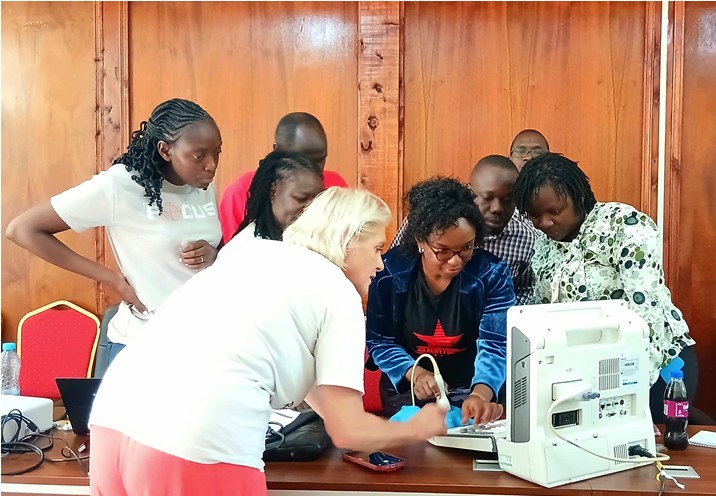
A section of participants engage in group work activity.
The continued collaboration between MMUST and Rainbow for Africa UK is steadily strengthening the capacity of healthcare professionals across Western Kenya. As the two work towards establishing a Centre of Excellence for Point-of-Care Ultrasound training at MMUST, the initiative is expected to expand access to quality maternal and neonatal healthcare, advance medical education and research, and further reinforce the University’s role as a leader in community-responsive healthcare research and innovation!
By Dr. Lydia Anyonje, Caren Nekesa; Simiyu N. Frida
Photos by Gerald Steve